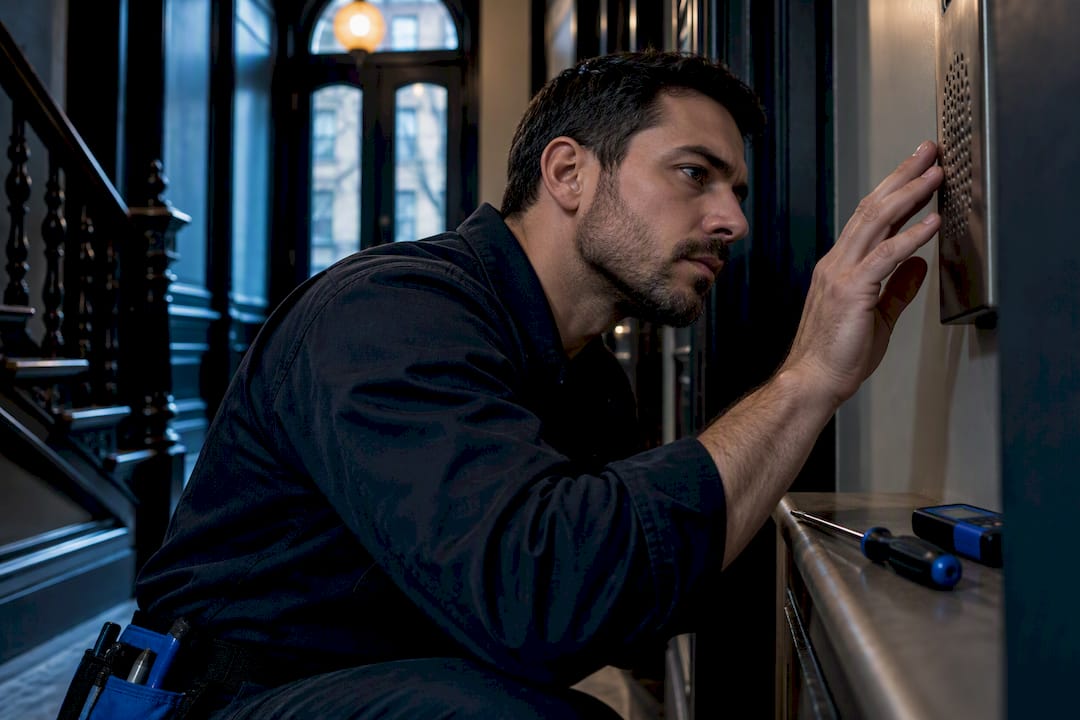
A security vulnerability assessment is defined as a structured evaluation of a commercial property’s physical and electronic defenses to identify conditions that increase the likelihood of unauthorized access, theft, or safety incidents. Property owners and managers who assess security vulnerabilities in commercial property before an incident occurs spend far less on remediation than those who react after the fact. The process covers six integrated domains: perimeter barriers, access controls, lighting, camera systems, locking mechanisms, and environmental protections. Industry frameworks such as TVRA (Threat, Vulnerability, and Risk Assessment) and standards including ASIS POL.GUIDE-2008 and ANSI/API 780-2013 provide the methodology. YDA Security Systems NYC applies this exact approach across Manhattan, Brooklyn, Queens, and Staten Island to help property owners build a defensible, documented security posture.
What are the critical domains to assess for commercial property security vulnerabilities?
Effective commercial property security assessments cover six critical domains, treating security as an integrated ecosystem rather than a collection of isolated components. Evaluating each domain separately misses the interactions between them. A blind spot in camera coverage, for example, becomes far more dangerous when it overlaps with a poorly lit secondary entrance.
The six domains every property owner must evaluate are:
-
Perimeter barriers. Fences, walls, gates, and bollards define the first line of defense. Assess for gaps, damaged sections, unlocked gates, and areas where landscaping creates concealment that reduces sightlines.
-
Access points and entry controls. Every door, loading dock, stairwell, and service entrance is a potential vulnerability. Uncontrolled access points are among the most frequent contributors to unauthorized entry in NYC commercial buildings.
-
Lighting effectiveness. Poor lighting reduces deterrence and degrades camera image quality simultaneously. Assess coverage at all entry points, parking areas, and pathways after dark.
-
Camera system coverage. Verify that cameras cover all critical zones without blind spots, that recording retention meets your operational needs, and that image resolution is sufficient for identification purposes.
-
Locking mechanisms and alarm systems. Evaluate door hardware, deadbolts, electromagnetic locks, and alarm response times. Weak locking controls at loading docks and secondary entrances are a common vulnerability in commercial buildings.
-
Environmental and sensitive area security. Server rooms, file storage areas, and utility rooms require access restrictions beyond standard office controls. These areas often receive the least scrutiny during informal inspections.
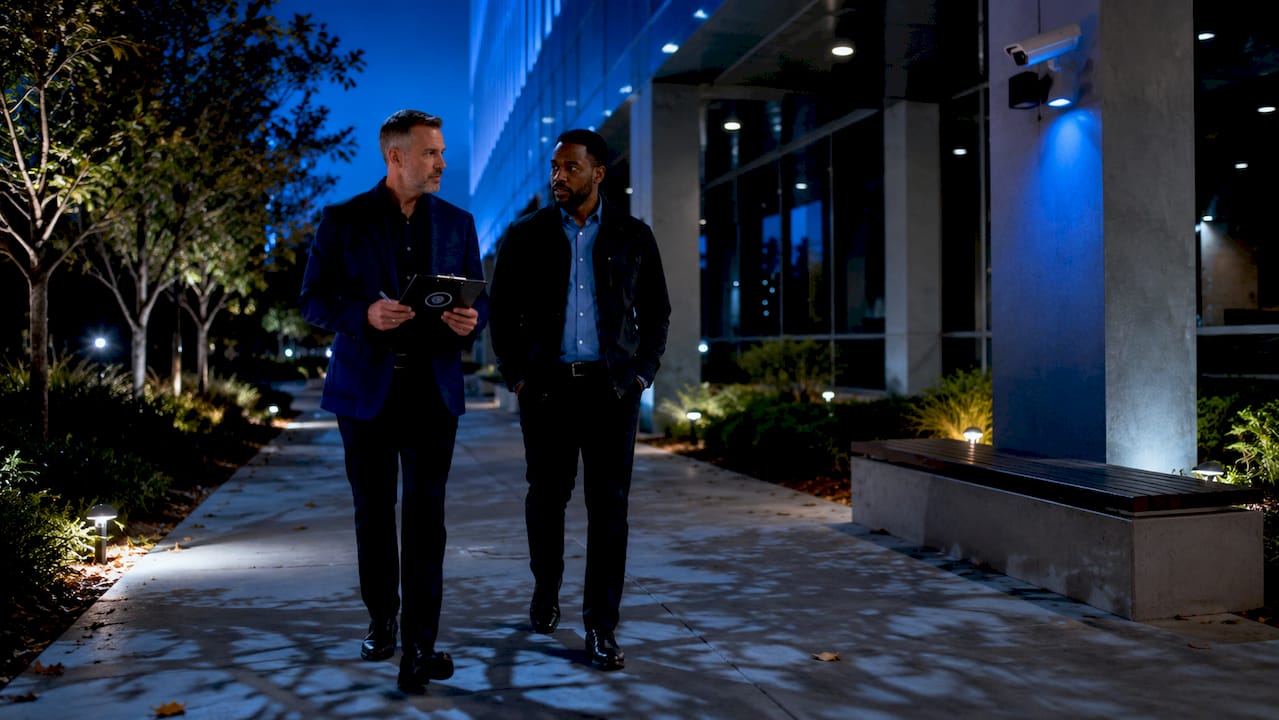
Pro Tip: Walk the property at night as well as during business hours. Lighting deficiencies and camera blind spots that are invisible during the day become obvious after dark.
How to prepare for a thorough commercial property security audit
Preparation determines the quality of your findings. Arriving on-site without documentation, staff access, or a scoring framework produces observations rather than a defensible risk profile.
Gather the following before starting any on-site work:
| Preparation Item | Purpose |
|---|---|
| Property layout and floor plans | Identify all access points, camera positions, and sensitive areas before the walkthrough |
| Existing security documentation | Review current system specs, maintenance logs, and past assessment reports |
| Incident and maintenance records | Reveal recurring vulnerabilities and system failures that may not be visible during inspection |
| Tenant and staff feedback | Surface security concerns that formal records do not capture |
| Risk scoring worksheet | Enables consistent, comparable ratings across all findings |
Reviewing industry standards such as ASIS POL.GUIDE-2008 and ANSI/API 780-2013 before the assessment enhances reliability and ensures your findings meet the expectations of corporate security directors and insurance underwriters. These standards are not bureaucratic formalities. They provide a shared vocabulary that makes your risk ratings defensible to stakeholders.
Schedule walkthroughs with both security personnel and facilities management present. Security staff know where incidents have occurred. Facilities staff know where maintenance has been deferred. Neither group alone gives you the full picture.
What step-by-step process should you follow to execute the assessment?
A comprehensive security assessment combines physical walkthroughs, staff interviews, records review, and functional system testing. Skipping any of these steps leaves gaps in your risk profile.
Step 1: Define scope and assessment criteria. Establish which buildings, floors, and systems are included. Agree on the scoring scale and risk tolerance thresholds with property ownership before starting.
Step 2: Conduct a physical walkthrough of all six domains. Move systematically through the property, documenting conditions in each domain. Photograph deficiencies. Note the location, condition, and estimated severity of each finding.
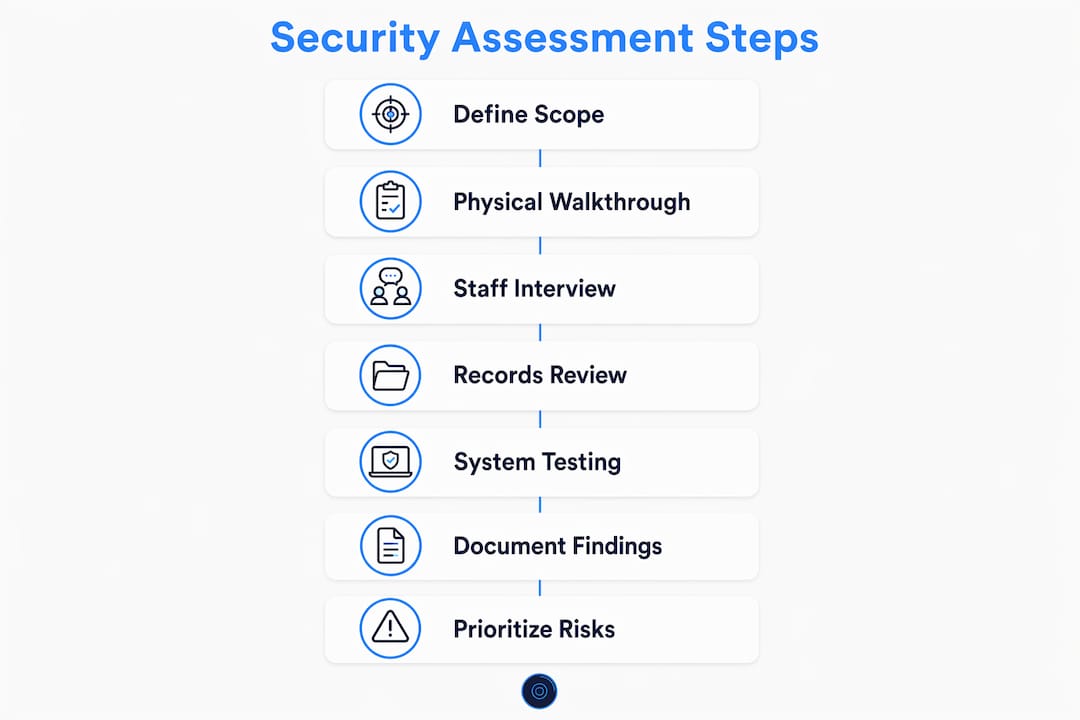
Step 3: Interview security and facilities staff. Ask staff where they feel the property is most exposed. Their answers frequently identify vulnerabilities that physical inspection alone does not reveal.
Step 4: Review historical incident and maintenance records. Past incidents are the most reliable predictor of future risk. A door that has been forced open twice in 18 months is a higher priority than a camera with a minor coverage gap.
Step 5: Test security system functions. Testing security system functionality means verifying alarm response times, confirming camera coverage and recording retention, and testing locking controls under realistic conditions. Systems that appear functional during casual inspection frequently fail under testing.
Step 6: Document vulnerabilities with likelihood and impact ratings. Rate each finding on two dimensions: how likely is exploitation, and what is the business impact if it occurs. This two-axis rating is the foundation of the TVRA methodology.
Step 7: Prioritize risks using a 5×5 risk matrix. The TVRA methodology uses a 5×5 risk matrix that visualizes 25 possible risk combinations, producing a prioritized remediation roadmap. This structure separates immediate critical fixes from long-term improvements.
Pro Tip: Use a standardized scoring worksheet for every finding. Consistent scoring across assessors and assessment cycles makes year-over-year comparisons meaningful and supports budget justification.
The table below shows how a 5×5 matrix translates ratings into remediation priority:
| Likelihood Score | Impact Score | Risk Level | Remediation Timeline |
|---|---|---|---|
| 5 (Very High) | 5 (Critical) | Extreme | Immediate action required |
| 4 (High) | 4 (Major) | High | Within 30 days |
| 3 (Medium) | 3 (Moderate) | Medium | Within 90 days |
| 2 (Low) | 2 (Minor) | Low | Scheduled improvement |
| 1 (Very Low) | 1 (Negligible) | Minimal | Monitor only |
How to interpret findings and prioritize security improvements
A methodical security assessment rates findings by likelihood of exploitation and potential business impact, producing a prioritized risk profile that guides where to invest remediation resources first. The TVRA framework evaluates each vulnerability across three dimensions: threat likelihood, exploitability, and asset consequence. That three-part evaluation prevents the common mistake of spending heavily on low-probability risks while ignoring high-probability, high-impact ones.
Common high-priority vulnerabilities found in commercial buildings include:
-
Weak perimeter fencing with gaps or unlocked gates at secondary access points
-
Inadequate lighting at parking structures, loading docks, and rear entrances
-
Camera blind spots created by building layout, vegetation, or equipment placement
-
Poor locking controls at loading docks and service entrances
-
Uncontrolled access points where credential management has lapsed or tailgating is common
Security assessments are most effective when integrated into routine property management workflows rather than conducted sporadically after incidents. Most commercial properties conduct assessments reactively, which leads to higher remediation costs and unmanaged risks between cycles. Scheduling assessments annually, or after any significant change to the building or tenant mix, keeps your risk profile current and your remediation budget predictable.
Distinguishing between immediate fixes and long-term improvements is a practical necessity. A broken lock on a server room door is an immediate fix. Upgrading an entire camera system to IP technology is a planned capital project. Treating both with the same urgency produces neither result efficiently.
Key Takeaways
A structured commercial property security assessment using the TVRA methodology and a 5×5 risk matrix produces the most defensible, prioritized remediation plan available to property owners and managers.
| Point | Details |
|---|---|
| Use the TVRA framework | Rate every vulnerability by threat likelihood, exploitability, and asset consequence for consistent prioritization. |
| Evaluate all six domains | Perimeter, access points, lighting, cameras, locking systems, and environmental areas must all be reviewed together. |
| Prepare before the walkthrough | Collect floor plans, incident records, and staff input before arriving on-site to avoid missing critical findings. |
| Test systems, not just inspect | Verify alarm response times, camera recording retention, and locking controls under realistic conditions. |
| Schedule assessments proactively | Reactive assessments cost more and leave risks unmanaged. Annual reviews keep remediation budgets predictable. |
YDA Security Systems NYC: professional security assessment and remediation
After completing a commercial property security systems assessment, the next step is to address the vulnerabilities you have documented. YDA Security Systems NYC serves property owners and managers across Manhattan, Brooklyn, Queens, and Staten Island with licensed, insured installation of access control systems, CCTV, door hardware, magnetic locks, and alarm systems. Our technicians work directly from your assessment findings to remediate identified risks, whether that means upgrading camera coverage, replacing weak door hardware, or installing a credential-based access control system at high-risk entry points. With over 5,000 satisfied clients and a 1-year warranty on all installations, we provide the technical depth and local expertise your property requires. Contact YDA Security Systems NYC for a no-obligation consultation.
FAQ
What is a security vulnerability assessment for commercial property?
A security vulnerability assessment is a structured review of a commercial property’s physical and electronic defenses to identify conditions that increase the risk of unauthorized access, theft, or safety incidents. It covers perimeter barriers, access controls, lighting, cameras, locking systems, and environmental protections.
How often should a commercial property security audit be conducted?
Annual assessments are the standard recommendation, with additional reviews after significant building changes, tenant turnover, or security incidents. Proactive scheduled assessments allow for controlled budgeting and more effective security improvements than reactive reviews.
What is the TVRA methodology and why does it matter?
TVRA (Threat, Vulnerability, and Risk Assessment) is the recognized framework for evaluating security risks by scoring threat likelihood, exploitability, and asset consequence. It uses a 5×5 risk matrix to visualize 25 risk combinations and produce a prioritized remediation roadmap.
What are the most common vulnerabilities found in commercial buildings?
The most frequent findings include weak perimeter fencing, inadequate lighting at loading docks and rear entrances, camera blind spots, and poor locking controls at secondary access points. These conditions directly contribute to unauthorized access and property losses.
Which industry standards apply to commercial property security assessments?
ASIS POL.GUIDE-2008 and ANSI/API 780-2013 are the primary standards that corporate security directors and insurance underwriters expect assessments to align with. Alignment with these standards improves the credibility and defensibility of your findings.