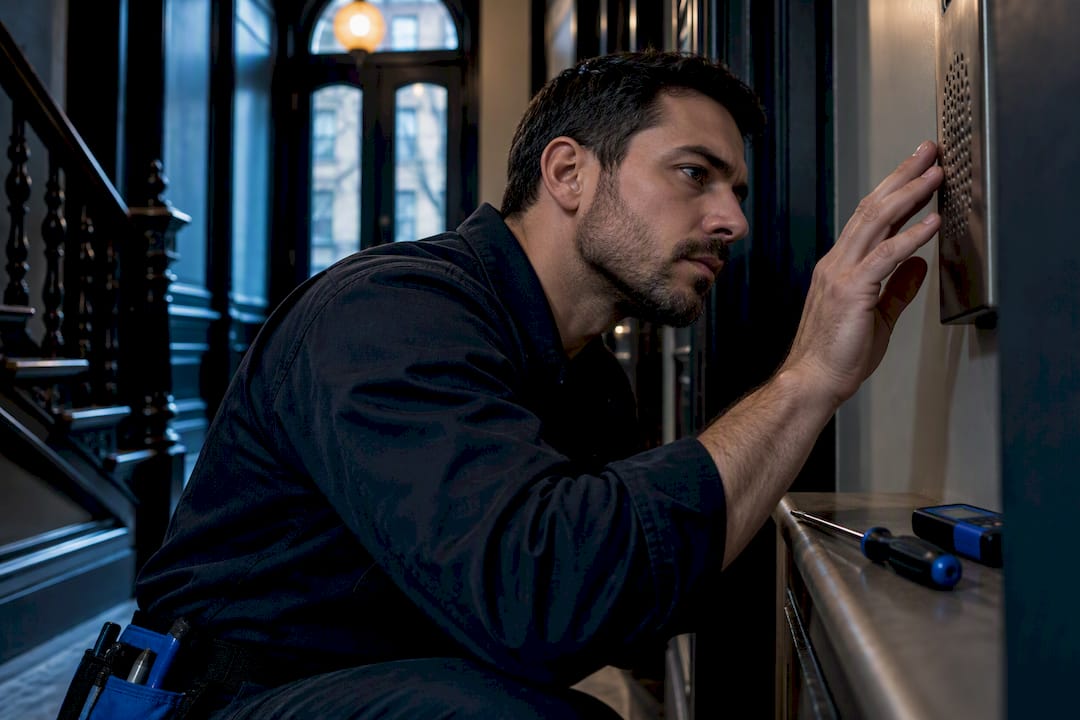
An access control system checklist is a structured list of hardware, software, and operational criteria used to verify that a property’s entry points are secure, compliant, and functioning correctly. Property managers, business owners, and homeowners who skip this process face real consequences: over 40% of organizations reported at least one physical security breach in 2024 due to preventable access control failures. That figure reflects a gap between installation and ongoing management. A thorough checklist closes that gap by covering every layer of your system, from door hardware to credential databases, against current standards including NFPA 72 and NFPA 101.
1. What an access control system checklist must cover
A complete access control system checklist addresses three distinct layers: physical hardware, electronic components, and access management procedures. Missing any one layer creates a vulnerability the others cannot compensate for. Think of it as a three-legged structure. Remove one leg and the whole thing becomes unstable.
Physical door hardware is the foundation. Check that locks, closers, and hinges are properly aligned and show no signs of wear or forced entry. Verify that door frames are square and that strike plates seat correctly under load.

Reader and credential testing confirms that the electronic layer works as intended. Test both valid and invalid credentials at every reader. Confirm that LED indicators respond correctly, that rejection alerts trigger as expected, and that anti-passback rules are enforced.
Controller and network status rounds out the electronic layer. Confirm that each controller maintains a live connection to the central management platform, that battery backups hold charge, and that firmware is current.
Access rights management is where most organizations accumulate what security professionals call “security debt.” Audit active user lists, verify that access level assignments match current job roles, and confirm that terminated employees have been removed from the credential database.
Documentation and compliance ties everything together. Review system event logs, confirm that backups completed successfully, and record any corrective actions taken. Per current building codes, inspection reports must be retained for at least three years.
Pro Tip: Schedule quarterly hardware inspections on a fixed calendar date rather than reacting to failures. Reactive maintenance costs significantly more than preventive checks and leaves security gaps open for weeks.
2. Why a licensed installer matters for access control
Installer quality determines how well your system performs for years after the initial setup. Choosing an installer based only on price increases the risk of re-installation and long-term operational failures. A low bid often means missing documentation, improper cable runs, and no commissioning report. Those gaps cost far more to correct than the original savings.
A qualified installer brings four capabilities that an unqualified one cannot replicate.
First, regulatory knowledge. Most U.S. jurisdictions require permits for electronic security installation, enforced under NFPA 72 and NFPA 101. A licensed installer knows which permits apply to your building type and pulls them before work begins.
Second, integration expertise. Access control must work alongside fire alarms, video surveillance, and visitor management systems. Interoperability with fire safety systems is a code requirement, not an optional upgrade. An installer who cannot configure these integrations leaves your property non-compliant.
Third, complete documentation. A professional installation produces as-built drawings, a commissioning report, and a programming record. These documents are the foundation of every future audit and service call.
Fourth, a service relationship. Your installer should function as a long-term operations partner. Confirm that they offer a defined service level agreement covering response times and parts availability before signing any contract.
Qualified installers design entry zones, configure permissions, and deliver as-built documents that reduce future risk. Skipping this step turns a one-time cost savings into a recurring liability.
YDA Security Systems NYC employs licensed and insured technicians who meet all New York City code requirements and provide full documentation on every installation. Reviewing smart door security contractor criteria before hiring any installer helps you ask the right questions upfront.
3. Installation quality and operational verification checklist
A proper installation follows a defined sequence. Skipping steps in this sequence produces problems that surface months later, often during an emergency.
-
Site audit and system design. Map all traffic zones, identify security level requirements for each entry point, and confirm ADA compliance needs. This step determines hardware specifications before any equipment is ordered.
-
Physical installation precision. Mount readers at the correct height and angle. Verify door-frame alignment before installing any lock or strike. Misaligned doors frequently cause magnetic locks or electric strikes to malfunction, undermining physical security effectiveness even when the electronics are perfect.
-
Signal integrity verification. Metal door frames and structural steel interfere with RFID and wireless signals. Metal frame interference affecting RFID signals causes authentication failures that look like credential errors but are actually physical installation problems. Test signal strength at every reader location before finalizing mounting positions.
-
Network infrastructure. Run cables through conduit, label every run, and document cable paths in the as-built drawings. Confirm that network switches dedicated to access control are on an isolated VLAN with redundant power.
-
Software configuration. Synchronize credentials across all controllers. Set access schedules that reflect actual business hours and security zones. Run integration tests with fire alarm and surveillance systems before declaring the installation complete.
-
Emergency protocol testing. Verify that all doors fail to the correct state during a fire alarm signal, as required under NFPA 101. Test manual override procedures and confirm that emergency responders can enter without credential access.
-
Final inspection and documentation. Walk every door with the building manager. Sign off on the commissioning report and hand over all programming records, warranty documents, and service contact information.
Pro Tip: Request a copy of the as-built drawings in both PDF and editable format. Editable files make future modifications far faster and reduce the risk of a new technician misreading a static diagram.
4. What maintenance and audit practices belong in your ongoing checklist
Installation is a single event. Security is an ongoing practice. A well-designed maintenance and audit schedule prevents the gradual erosion of system integrity that occurs when access control is treated as a set-and-forget technology.
Quarterly physical inspections cover door hardware condition, reader functionality, lock and strike alignment, and power supply status. These checks catch mechanical wear before it becomes a failure. Quarterly inspections are the standard for enterprise access control systems and apply equally to commercial and residential properties.
Credential audits address the human side of access control. Credential audits must be performed at least annually to prevent security debt from unrevoked permissions and outdated user lists. In practice, high-turnover environments benefit from quarterly credential reviews. Each audit should reconcile the active user database against current HR records and remove any account that no longer has a business justification.
Event log and alarm review should occur monthly at minimum. Logs reveal patterns that individual incidents do not. A door held open repeatedly at the same time each week points to a process problem, not a hardware failure.
Battery and power supply monitoring prevents the most embarrassing failure mode in access control: a door that locks out authorized users because a backup battery died unnoticed. Check battery health at every quarterly inspection and replace on a scheduled cycle rather than waiting for a low-voltage alert.
The table below summarizes the recommended audit schedule.
| Task | Frequency | Retention |
|---|---|---|
| Physical hardware inspection | Quarterly | 3 years |
| Credential database audit | Annually (minimum) | 3 years |
| Event log review | Monthly | 3 years |
| Battery and power check | Quarterly | 3 years |
| Integration test (fire, CCTV) | Annually | 3 years |
Treating access control as a unified ecosystem with real-time communication between entry points and a central management platform makes these audits faster and more reliable. Systems where entry points operate in isolation produce fragmented logs that are difficult to reconcile during a security review.
Key takeaways
A complete access control security checklist combines hardware verification, credential management, licensed installation, and scheduled audits to maintain property security over time.
| Point | Details |
|---|---|
| Hardware inspection is quarterly | Check locks, readers, and door alignment every quarter to catch failures before they become breaches. |
| Credential audits prevent security debt | Review and remove outdated user permissions at least annually, more often in high-turnover environments. |
| Licensed installers reduce long-term risk | Qualified installers provide permits, as-built drawings, and integration testing that unqualified ones skip. |
| Documentation must be retained 3 years | Inspection reports and audit records must be kept for at least three years to meet building code requirements. |
| RFID signal testing is mandatory | Verify reader signal strength at every door before finalizing installation to prevent authentication failures. |
YDA Security Systems NYC: professional access control for your property
Property managers and business owners who want a system that holds up under audit and daily use need more than hardware. They need a qualified installation team that understands New York City codes, documents every step, and stays available after the job is done. YDA Security Systems NYC has served over 5,000 clients across residential and commercial properties, with licensed technicians and a one-year warranty on every installation. Whether you need a new system or a full audit of an existing one, our commercial access control installation services cover design, installation, integration, and ongoing maintenance. You can also review signs your building needs a new system to assess where your property stands today.
FAQ
What is a commercial access control installation?
Commercial access control installation is the process of designing, mounting, wiring, and configuring electronic entry systems across a commercial property. It includes hardware setup, software programming, integration with fire and surveillance systems, and compliance verification under NFPA 72 and NFPA 101.
How often should an access control audit be performed?
Physical hardware inspections should occur quarterly, while credential database audits should be performed at least once per year. High-turnover environments benefit from quarterly credential reviews to prevent unrevoked permissions from accumulating.
Why does a licensed installer matter for access control?
A licensed installer pulls required permits, meets NFPA code requirements, and delivers as-built documentation that unlicensed installers typically skip. Choosing an installer based only on price increases the risk of re-installation and long-term security failures.
How long must access control inspection records be kept?
Inspection and audit reports must be retained for at least three years to comply with building and regulatory codes. This retention period supports traceability during security reviews and legal inquiries.
What causes access control readers to fail after installation?
Metal door frames and structural steel interfere with RFID and wireless signals, causing authentication failures that appear to be credential errors. Signal strength testing at every reader location before finalizing installation prevents this problem.
Recommended
- Security Checklist for Property Managers: A Complete Guide – YDA Security Systems NYC
- Access Control System Benefits for Homes and Businesses – YDA Security Systems NYC
- 5 Signs Your NYC Building Needs a New Access Control System—Before It’s Too Late – YDA Security Systems NYC
- Commercial Access Control Installation & Repair in NYC – YDA Security Systems NYC