Unauthorized entry is defined as any access to a commercial property by a person who lacks permission, whether through forced intrusion, tailgating, or exploiting unmonitored entry points. Commercial properties account for 35%–40% of all burglaries in the U.S., with average losses per incident ranging from $3,000 to $8,000. Those figures add up to roughly $4.1 billion in annual commercial inventory losses nationwide. For property owners and managers in Manhattan, Brooklyn, Queens, and Staten Island, the stakes are especially high given the density of foot traffic and the complexity of multi-tenant buildings. The most effective way to reduce unauthorized entry at a commercial property is to layer physical deterrents, electronic access control, and live monitoring into a single coordinated system. YDA Security Systems NYC installs and maintains exactly these kinds of integrated solutions for commercial clients across all NYC boroughs.
What are the critical vulnerabilities in commercial properties that allow unauthorized entry?
Unauthorized access rarely happens through brute force alone. Most incidents exploit predictable weaknesses that property managers overlook during normal business hours.
The most common physical vulnerabilities include unsecured service gates, propped fire doors, poor perimeter lighting, and aging door hardware with worn locks. Tailgating and propped doors in multi-tenant buildings are among the most frequently exploited weaknesses, especially in lobbies and loading docks where staff turnover is high. A single propped door can expose an entire floor to unauthorized access within seconds.
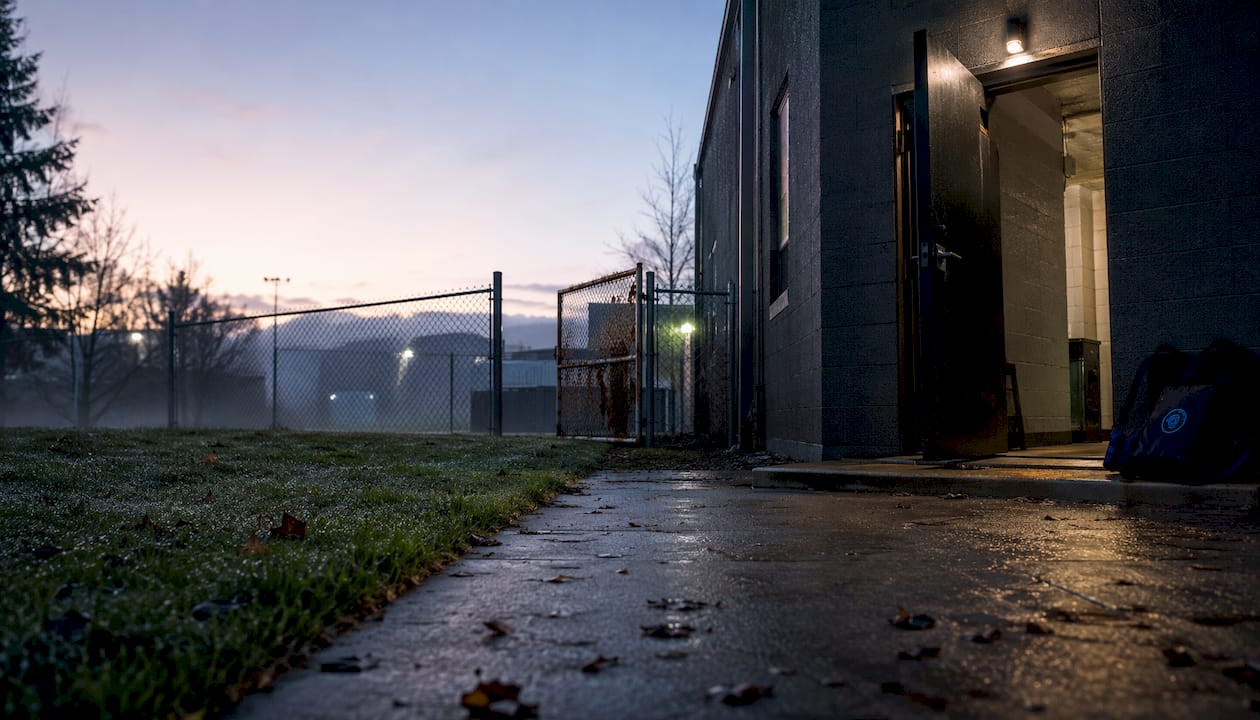
Intruders also use predictable timing. Most break-ins occur between 10 PM and 6 AM or on weekends when staffing is minimal. That pattern means a property that looks secure during business hours may be completely exposed after closing.
The “broken windows” theory applies directly to commercial security. Visible neglect signals a lack of active monitoring, and properties with faded signage, broken fencing, or burned-out lights attract more intrusion attempts than well-maintained ones. Upkeep is not just cosmetic. It communicates that the property is actively managed and monitored.
- Unsecured service entrances and loading docks: These are often left unlocked during shift changes and rarely covered by cameras.
- Inadequate lighting: Dark corners near dumpsters, stairwells, and parking areas create natural cover for intruders.
- Weak door hardware: Standard residential-grade locks on commercial doors fail quickly under forced entry.
- Insider access abuse: Employees or contractors with broad key card access can enter restricted zones without triggering alerts.
- No perimeter definition: Properties without clear fencing or boundary markers invite casual trespass that escalates over time.
Pro Tip: Walk your property after dark at least once per quarter. You will find lighting gaps and unmonitored entry points that are invisible during a daytime inspection.
How can physical security measures reduce unauthorized entry?
Physical deterrents are the first line of defense against unauthorized access. They do not require power or connectivity to work, and they buy critical time when an intrusion attempt begins.
Security shutters increase forced entry delay to 4–6 minutes, which is significant because most smash-and-grab attacks are completed in 60–90 seconds. When an intruder cannot breach a barrier quickly, they abandon the attempt. Police response times in NYC average far longer than the window a determined criminal is willing to wait, so physical delay is a genuine deterrent, not just a symbolic one.
Reinforced door frames, multi-point locking systems, and commercial-grade deadbolts address the most common forced entry method: kicking in a door at the frame. Standard hollow-core doors with single-point locks fail in one or two kicks. Solid-core doors with reinforced steel frames and multi-point locks require sustained effort that most intruders will not risk in a visible location.
Lighting upgrades are among the highest-return investments in commercial building protection. Proper lighting can reduce theft attempts by up to 67%. Motion-activated floodlights at entry points and parking areas are especially effective because they startle intruders and draw attention to their presence.
Integrating Crime Prevention Through Environmental Design (CPTED) principles into your property layout creates natural deterrents. CPTED optimizes lighting, sightlines, and boundary markers to reduce opportunities for concealed access. A commercial security background built on CPTED principles can reduce risk before a single camera is installed.
| Physical deterrent | Primary benefit | Typical effectiveness |
|---|---|---|
| Security shutters | Delays forced entry | Deters smash-and-grab in under 90 seconds |
| Multi-point door locks | Resists kick-in attacks | Significantly reduces frame failure |
| Motion-activated lighting | Eliminates concealment | Reduces theft attempts substantially |
| Perimeter fencing | Defines boundary, slows access | Deters casual trespass and opportunistic entry |
| Reinforced door frames | Prevents frame separation | Stops single-kick forced entry |
Pro Tip: Pair motion-activated lighting with a visible camera housing at the same location. The combination of sudden light and a visible camera is more effective than either alone.
What role do access control systems and modern technology play in securing commercial properties?
Access control is the industry term for any system that restricts entry to authorized individuals and logs who enters, when, and where. It replaces physical keys with credentials that can be issued, modified, or revoked instantly.
Biometric access control systems prevented 99.7% of unauthorized entries in tested Fortune 500 locations. Fingerprint and facial recognition systems eliminate the risk of lost or copied key cards. For high-security zones like server rooms, cash storage, or executive floors, biometric control is the most reliable option available.
Card-based and keypad systems are more practical for general commercial use. They allow property managers to assign zone-specific access by role, so a warehouse employee cannot enter the accounting office. Intrusion detection systems reduced unauthorized entry attempts by 78% in monitored deployments, and door contact sensors detect 98% of forced openings on commercial doors. These numbers reflect what a well-configured system actually delivers, not theoretical performance.
Live monitoring transforms a passive recording system into an active deterrent. Burglars abandon 60% of targets when they see security cameras with live monitoring versus passive recording. A live operator can issue a verbal warning through an on-site speaker the moment an intruder enters a restricted area, often stopping the intrusion before any damage occurs.
The technology stack that delivers the strongest commercial building protection includes:
- Card or biometric access control: Restricts entry by role and logs every access event with a timestamp.
- IP security cameras with remote viewing: Allows property managers to monitor entry points from any device in real time.
- Perimeter intrusion detection: Sensors on fences, gates, and windows trigger alerts before an intruder reaches the building.
- Integrated alarm systems: Connect door contacts, motion sensors, and glass-break detectors to a central monitoring station.
- Live monitoring with verbal intervention: Operators watch camera feeds and communicate directly with intruders to stop incidents before police arrive.
You can review an access control system checklist to confirm your current setup covers every critical entry point before adding new technology.
How to develop and maintain an effective security plan to prevent unauthorized entry
A security plan is only as good as the process used to build and update it. A document created once and filed away does not reflect how your property actually operates today.
-
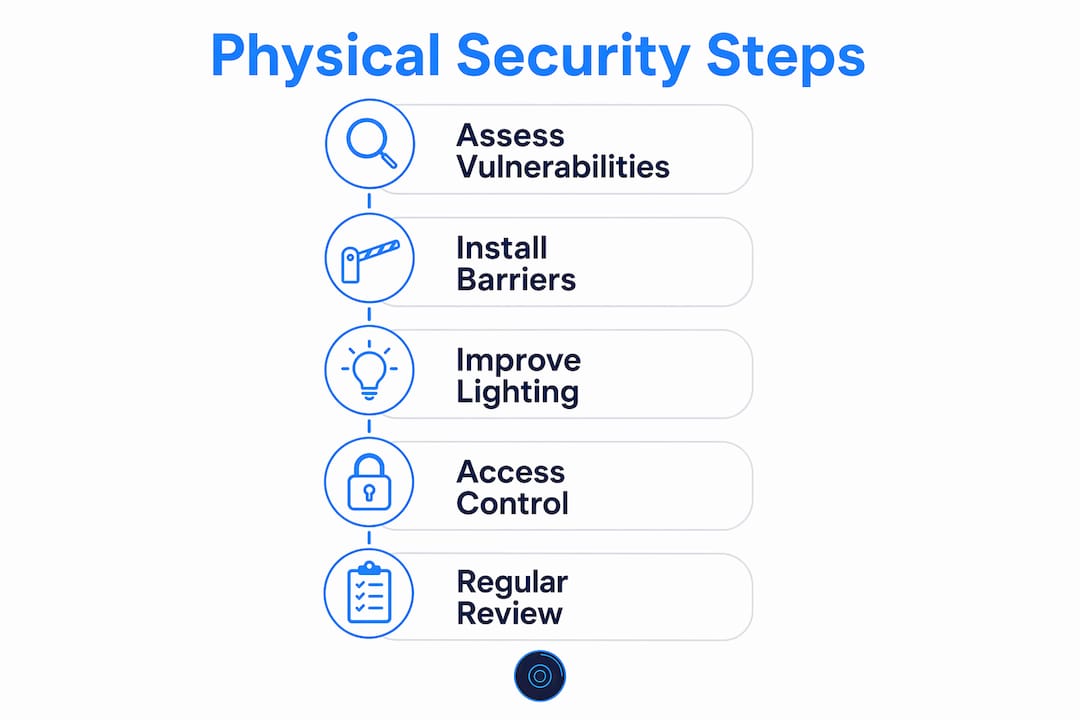
Conduct a vulnerability assessment from an intruder’s perspective. Walk the perimeter after hours and identify every point where you could enter without being challenged. Regular assessments reveal vulnerabilities not obvious during business hours, including unmonitored side gates and lighting gaps near service areas. Use the findings from your security vulnerability assessment to prioritize repairs.
-
Establish daily close-out procedures. Assign a staff member to confirm that all gates are locked, all lights are functioning, and all access points are secured before the last person leaves. This takes less than 15 minutes and eliminates the most common cause of after-hours intrusion: a door left propped or a gate left unlatched.
-
Manage after-hours access logs actively. 29% of alarm events result from authorized after-hours staff, which creates alarm fatigue and causes real threats to be overlooked. Review access logs weekly and revoke credentials for anyone who no longer requires after-hours entry.
-
Focus security resources on high-risk zones. Effective security plans prioritize high-risk zones rather than attempting full coverage with limited budget. Identify your three most vulnerable entry points and concentrate camera coverage, lighting, and access control there first.
-
Build a verified alarm response protocol. Define exactly who gets called, in what order, and what action they take when an alarm triggers. A plan that relies on a single contact who may be unavailable creates dangerous gaps. Include a backup contact and a direct line to your monitoring station.
-
Schedule annual system reviews. Access control credentials, camera angles, and alarm zones all drift out of alignment as your property changes. A formal annual review with your security installer catches these gaps before an intruder does. If your current system is aging, a repair or replace evaluation will clarify whether an upgrade is more cost-effective than continued maintenance.
What are common mistakes when securing commercial properties?
The most expensive security mistake is treating an alarm system as a complete solution. An alarm that triggers after entry has already occurred is a reactive tool. Combining physical hardening with live monitoring shifts security from reactive to proactive, stopping incidents before losses occur rather than documenting them afterward.
Broad access permissions are a close second. When every employee has access to every area, there is no audit trail for internal theft and no way to contain an incident to a single zone. Role-based access control solves this by limiting each credential to the specific areas a person needs to do their job.
Property managers also underestimate the cost of deferred maintenance. Broken fencing, faded “No Trespassing” signs, and burned-out lights all signal that no one is watching. That signal attracts opportunistic trespassers who would otherwise move on. A property manager’s security checklist provides a structured way to track maintenance tasks before they become security liabilities.
- Relying on passive cameras without live monitoring: Footage is useful after an incident but does not stop one in progress.
- Ignoring insider access risks: Broad credentials without audit logs create undetected theft opportunities.
- Skipping perimeter maintenance: Broken fencing and faded signage invite trespass as reliably as an unlocked door.
- Underinvesting in lighting: Lighting is the lowest-cost deterrent with the highest measurable impact on intrusion rates.
Key Takeaways
The most effective way to secure a commercial property is to layer physical barriers, role-based access control, and live monitoring into a single system that deters, detects, and responds to unauthorized entry.
| Point | Details |
|---|---|
| Physical barriers buy time | Security shutters and reinforced doors delay forced entry long enough to deter most intruders. |
| Access control limits exposure | Role-based credentials prevent unauthorized movement between zones and create a clear audit trail. |
| Live monitoring stops incidents | Monitored cameras with verbal intervention deter 60% more break-in attempts than passive recording. |
| Maintenance signals active management | Upkeep of fencing, lighting, and signage reduces opportunistic trespass by communicating active oversight. |
| Regular assessments close gaps | Annual vulnerability reviews and access log audits prevent credential drift and unmonitored entry points. |
How YDA Security Systems NYC protects your commercial property
YDA Security Systems NYC installs and services access control systems, IP security cameras, commercial door hardware, and live monitoring solutions for property owners and managers across Manhattan, Brooklyn, Queens, and Staten Island. Every installation is completed by licensed and insured technicians, and all work carries a one-year warranty. With over 5,000 satisfied clients, YDA brings verified expertise to properties of every size and complexity.
If your building has aging locks, unmonitored entry points, or no role-based access control in place, the right starting point is a professional assessment of your door hardware and entry systems. YDA’s commercial door hardware and locksmith services cover everything from multi-point lock installation to full access control integration. For properties that need camera coverage alongside hardware upgrades, YDA also provides security camera installation tailored to commercial layouts. Contact YDA Security Systems NYC to schedule a site assessment and get a solution built for your specific property.
FAQ
What is the most effective way to prevent unauthorized access to a commercial property?
The most effective approach combines physical barriers, electronic access control, and live camera monitoring into a layered system. Each layer compensates for the weaknesses of the others, creating a defense that deters, detects, and responds to intrusion attempts.
How does access control reduce unauthorized entry in commercial buildings?
Access control systems restrict entry to credentialed individuals and log every access event with a timestamp. Role-based permissions prevent unauthorized movement between zones, and credentials can be revoked instantly when an employee leaves or a security risk is identified.
Why do commercial properties get targeted more often after hours?
Most commercial break-ins occur between 10 PM and 6 AM or on weekends when staffing is minimal. Reduced foot traffic and fewer active observers make after-hours properties significantly easier targets for opportunistic intruders.
How often should a commercial property security plan be reviewed?
A security plan should be reviewed at least once per year and after any significant change to the property, such as a new tenant, a renovation, or a staff change that affects access permissions. Annual reviews catch credential drift and unmonitored entry points before they become liabilities.
Does property maintenance actually affect unauthorized entry rates?
Visible neglect signals a lack of active monitoring and attracts opportunistic trespassers. Maintaining fencing, lighting, and signage is one of the most cost-effective ways to reduce unauthorized entry because it communicates that the property is actively managed.