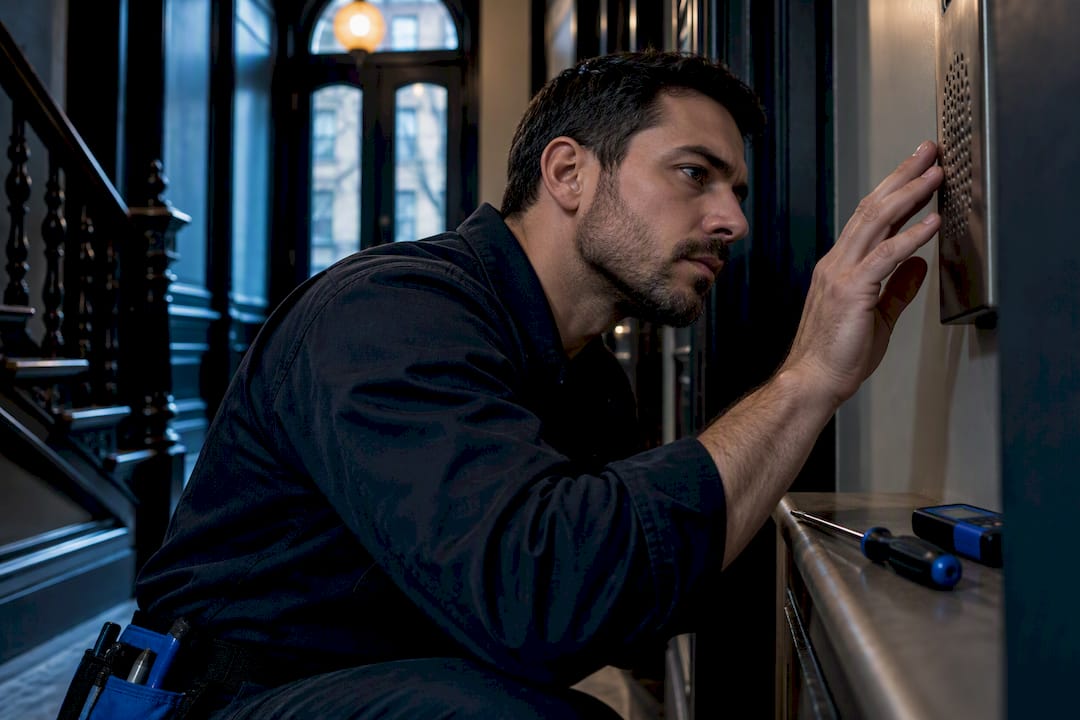
An integrated security system business is defined as a provider that delivers unified safety solutions by combining access control, video surveillance, intrusion detection, and communications under a single management platform. Property managers, business owners, and educational administrators increasingly rely on this model because fragmented, siloed systems leave critical gaps in coverage and create costly operational burdens. The industry has moved decisively away from isolated gadgets toward comprehensive management platforms that improve both safety and operational visibility. YDA Security Systems NYC serves Manhattan, Brooklyn, Queens, and Staten Island as a licensed low-voltage contractor specializing in exactly this type of unified security integration.
What is an integrated security system business?
An integrated security system business provides a coordinated set of technologies that share data and trigger automated responses across all connected subsystems. This is the industry’s recognized definition of “physical security integration,” and it differs fundamentally from simply installing multiple independent devices at the same property. True integration requires subsystems to share logic and trigger automated responses without manual intervention. A denied access attempt, for example, automatically triggers video recording and sends an alert, all without a staff member lifting a finger.
The practical value for property managers is centralized control. Instead of logging into separate platforms for cameras, door locks, and alarms, a facility manager monitors and manages everything from one dashboard. For educational administrators, this means a single operator can lock down all entry points, activate cameras, and notify security personnel simultaneously during an emergency. The operational difference between a unified platform and a collection of standalone devices is substantial.

YDA Security Systems NYC positions itself within this model as a full-service low-voltage contractor. The company installs and integrates intercom systems, access control, CCTV, door hardware, and magnetic locks across commercial and residential properties throughout NYC. With over 5,000 satisfied clients and a one-year warranty on installations, YDA delivers the kind of lifecycle accountability that property managers require.
What components make up an integrated security system?
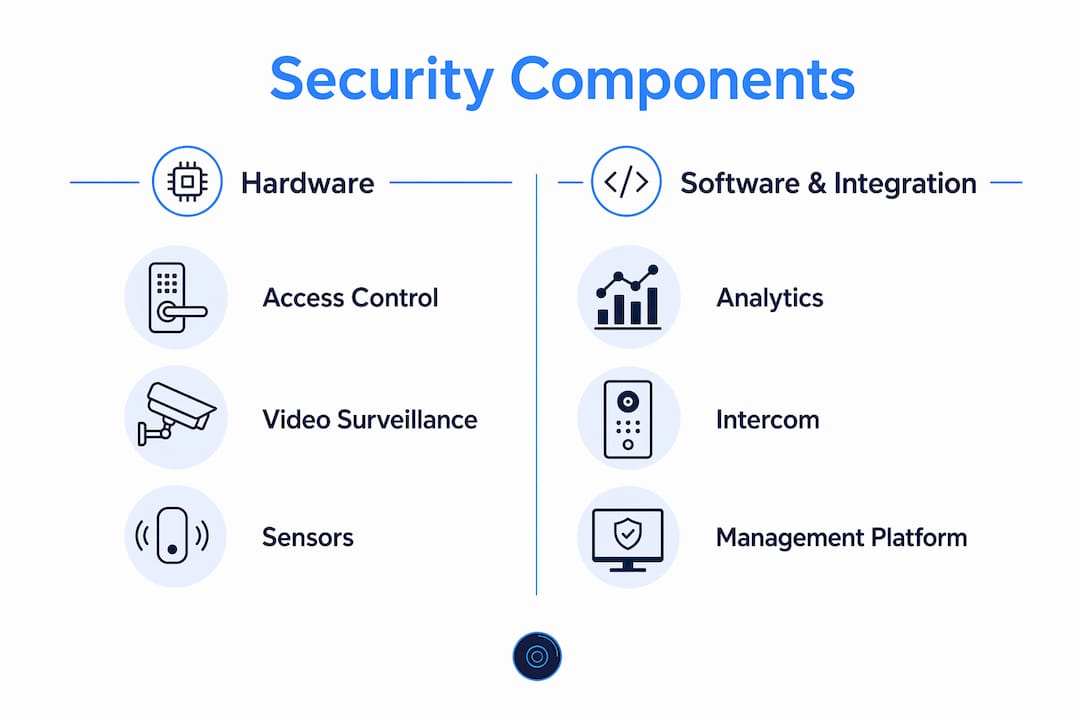
The core subsystems of a unified security platform include access control, video surveillance, intrusion detection, intercoms, and in more advanced deployments, biometric scanners. Each component serves a distinct function, but their real value comes from how they communicate with one another. A Video Management System, or VMS, acts as the centralized command layer that aggregates feeds and event data from every connected device.
Access control hardware manages who enters which areas and when. Modern systems use key fobs, PIN pads, mobile credentials, or biometric readers at entry points. Video surveillance provides visual verification of every access event, while intrusion detection sensors monitor perimeter breaches, motion, and glass breaks. Video intercom systems add a communication layer, allowing staff to visually verify visitors before granting entry remotely.
AI-enabled cameras represent a meaningful advancement in this architecture. They perform on-device analytics such as license plate recognition, loitering detection, and crowd density monitoring, feeding structured data directly into the VMS. Dual-path signaling, which uses both IP and LTE connections, ensures that alarm signals reach monitoring centers even when the primary network fails. This redundancy is a standard requirement for commercial deployments, not an optional upgrade.
Pro Tip: When evaluating integrated security solutions, confirm that every device on the proposed system supports open API or standard protocols such as ONVIF. Proprietary-only ecosystems lock you into a single vendor and limit future expansion.
Coordinating perimeter sensors, intercoms, and video analytics together addresses vulnerabilities that fragmented systems consistently miss. A camera covering a door with no access control data attached to it cannot tell you whether the person who opened that door was authorized. Integration closes that gap.
How does an integrated security system improve efficiency and reduce costs?
Unified security platforms deliver measurable financial returns, not just safety improvements. Integrated platforms reduce incident escalation times by up to 70% compared to siloed systems. Faster escalation means faster response, which directly reduces property damage, liability exposure, and insurance claims.
The cost savings on the operational side are equally significant. Consolidating security systems into a single management platform cuts operational and maintenance costs by 30–50%. That reduction comes from eliminating redundant software licenses, reducing the number of vendors you manage, and automating tasks that previously required manual reconciliation. For a property manager overseeing multiple buildings, that consolidation alone justifies the investment.
| Efficiency Metric | Siloed Systems | Integrated Platform |
|---|---|---|
| Incident escalation time | Baseline | Up to 70% faster |
| Operational and maintenance costs | Baseline | 30–50% lower |
| Vendor site visits | Frequent | Reduced by up to 50% |
| Staff monitoring workload | High (multiple dashboards) | Low (single dashboard) |
Vendor consolidation also reduces the frequency of on-site service calls. Integrated systems allow remote resets and software updates, which cut site visits by up to 50%. For a school district or multi-tenant commercial property, fewer service visits translate directly into lower labor costs and less operational disruption.
Pro Tip: The initial investment in an integrated platform is higher than purchasing standalone devices. However, the total cost of ownership is lower because you eliminate redundant hardware, duplicate licenses, and multiple service contracts over the system’s lifecycle.
Scalability is another practical advantage. A well-designed integrated platform allows you to add new buildings, floors, or device types without replacing the core infrastructure. Growing businesses and expanding campuses benefit from this architecture because security capacity grows alongside the facility rather than requiring a full system replacement.
What are the steps for deploying an integrated security system?
Effective deployment follows a structured sequence that prevents costly retrofits and compatibility failures. A strategic approach aligns physical infrastructure, digital monitoring, and automated response from the start.
-
Assess your existing infrastructure. Audit current cabling, network capacity, and device inventory. Identify which existing components are compatible with an integrated platform and which require replacement.
-
Map your security zones and access levels. Define which areas require restricted access, which require video coverage, and which require both. Educational campuses, for example, typically require layered zones with different access permissions for students, staff, and visitors.
-
Select compatible devices. Choose AI cameras, biometric scanners, and access control readers that support open standards. Confirm that every device communicates with your chosen VMS.
-
Plan the network backbone. Property managers should treat the security network backbone as a critical component of the overall security plan. Poor network planning causes duplicated infrastructure, points of failure, and expensive retrofits. A well-planned IT backbone reduces these risks across security, Wi-Fi, and building systems simultaneously.
-
Implement dual-path signaling. Configure both IP and LTE communication paths for alarm transmission. This ensures signal delivery even during internet outages or network attacks.
-
Configure the centralized command platform. Set up the VMS and access control software with event correlation rules, automated triggers, and alert routing. Define which events generate which responses automatically.
-
Train your team. Operators, security staff, and facility managers all need role-specific training on the platform. A system that staff cannot use confidently delivers far less value than its technical specifications suggest.
For commercial properties in Brooklyn, Manhattan, Queens, and Staten Island, YDA Security Systems NYC handles each of these steps as a licensed low-voltage contractor, from initial site assessment through final commissioning and staff training.
How do integrated systems improve security and incident response?
Integrated systems outperform siloed setups in incident response because they eliminate the manual steps between detection and action. Independent subsystems share logic and trigger automated responses, meaning a single event can simultaneously lock doors, start recording, and notify security personnel without any human input required.
The security advantages of this architecture are concrete and well-documented:
- Automated cross-system triggers activate multiple responses from a single event. A forced door alarm can lock adjacent access points, start recording on nearby cameras, and send a push notification to the facility manager in seconds.
- Event correlation links data from multiple subsystems to build a complete picture of an incident. Access logs, video timestamps, and alarm records all align automatically, which is critical for post-incident investigation.
- Coordinated access control and video verification reduce false alarm responses. Security staff can visually confirm an event before dispatching, which saves time and reduces unnecessary escalation.
- Compliance and liability documentation improve significantly with integrated systems. Investing in integrated systems improves threat detection, reduces liability risk, and enhances compliance through better data collection and analysis. Auditors and insurers increasingly require this level of documentation.
- Perimeter-to-interior coverage closes the gaps that fragmented systems miss. A school that monitors its front entrance camera separately from its access control system cannot automatically verify whether an unauthorized entry attempt was successful. Integration provides that confirmation instantly.
For educational administrators, this architecture is particularly valuable during lockdown scenarios. A single command can simultaneously secure all entry points, activate interior cameras, and alert local law enforcement through integrated communication channels. The importance of security systems that respond automatically rather than requiring manual coordination cannot be overstated in high-stakes situations.
Property managers overseeing multi-tenant commercial buildings in NYC benefit from the audit trail that integrated platforms generate. Every access event, camera trigger, and alarm response is logged with a timestamp and linked to a specific credential or device. That documentation protects building owners in liability disputes and satisfies insurance requirements for commercial properties. For a deeper look at how these principles apply to NYC commercial properties specifically, the commercial security guide for Brooklyn, Manhattan, and Queens covers local installation considerations in detail.
Business owners evaluating security for small businesses will find that the operational and cost benefits of integration apply at every scale, not just enterprise properties. Even a single-location retail business gains measurable advantages from connecting its camera system to its access control and alarm platform.
YDA Security Systems NYC: integrated security for NYC properties
YDA Security Systems NYC designs and installs integrated security solutions for commercial and residential properties across Manhattan, Brooklyn, Queens, and Staten Island. The company’s licensed and insured technicians handle the full scope of low-voltage security work, including CCTV installation, access control, intercom systems, door hardware, and magnetic locks. Every installation comes with a one-year warranty and is backed by a team with a track record of over 5,000 completed projects across NYC.
For property managers and business owners ready to move from fragmented devices to a unified security platform, YDA Security Systems NYC provides site assessments, system design, and end-to-end installation. Hotels, schools, office buildings, and retail properties throughout NYC rely on YDA for commercial security camera installation and full system integration. Contact YDA Security Systems NYC to schedule a consultation and receive a system design tailored to your facility’s specific access control and monitoring requirements.
Key Takeaways
An integrated security system business delivers measurable safety and financial advantages by unifying access control, video, intrusion detection, and communications under a single managed platform.
| Point | Details |
|---|---|
| Core definition | An integrated security business unifies access control, video, alarms, and intercoms under one management platform. |
| Incident response speed | Integrated platforms reduce incident escalation times by up to 70% compared to siloed systems. |
| Cost savings | Consolidating to one platform cuts operational and maintenance costs by 30–50% over time. |
| Deployment priority | Network backbone planning is the most critical and most overlooked step in any integration project. |
| Compliance value | Integrated systems generate linked audit trails that reduce liability and satisfy insurance documentation requirements. |
FAQ
What is an integrated security system business?
An integrated security system business is a provider that combines access control, video surveillance, intrusion detection, and communications into a single managed platform. The defining feature is that all subsystems share data and trigger automated responses without manual intervention.
What are the best integrated security systems for small businesses?
The best integrated security systems for small businesses combine IP cameras, cloud-based access control, and a centralized VMS that supports remote monitoring. Choosing devices that support open standards such as ONVIF prevents vendor lock-in and allows the system to grow with the business.
How much can a business save by switching to an integrated security platform?
Consolidating to a single security management platform cuts operational and maintenance costs by 30–50% and reduces vendor site visits by up to 50% through remote device management.
What is the most important step when deploying an integrated security system?
Network backbone planning is the most critical deployment step. Poor network infrastructure causes duplicated cabling, system failures, and expensive retrofits that could have been avoided with proper upfront planning.
How do integrated security systems help educational administrators?
Integrated systems allow a single operator to lock all entry points, activate cameras, and alert law enforcement simultaneously during an emergency. This coordinated automated response is not possible with standalone, siloed security devices.