The most effective way to upgrade outdated business security systems is through a phased, strategic modernization plan that integrates existing infrastructure with advanced components rather than replacing everything at once. Start with a professional security audit to identify vulnerabilities across your video surveillance, access control, alarm panels, and communication methods. Then prioritize upgrades by risk level, retain usable wiring and sensor housings where feasible, and unify all components under centralized management. Key priorities include:
- Replacing low-resolution cameras with IP-based units capable of clear identification footage
- Modernizing access control from legacy 125kHz proximity cards to encrypted, audit-trail systems
- Migrating alarm communication from landline reporting to cellular or cloud-based monitoring
- Integrating cameras, alarms, and access control into a single management platform
- Ensuring all work is performed by licensed, insured technicians who understand local compliance requirements
- Training staff on new protocols before and after each upgrade phase
Security systems older than 10 years are markedly less effective according to the Electronic Security Association. That gap between what a system was designed to handle and what a modern commercial property actually faces is where most security incidents occur.
Table of Contents
- 1. How phased upgrades save money and reduce disruption
- 2. Why siloed security systems slow your incident response
- 3. Replacing landline alarm reporting with cellular or cloud monitoring
- 4. How YDA Security Systems NYC approaches business security upgrades
- YDA Security Systems NYC: licensed experts for your security upgrade
- Key Takeaways
- FAQ
1. How phased upgrades save money and reduce disruption
The financial case for incremental modernization is straightforward. Phased upgrades can save between $8,000 and $25,000 compared to full system replacements over a five-year horizon, with significantly less operational interruption. Rather than shutting down your facility for a complete overhaul, you address the highest-risk components first and sequence the rest.
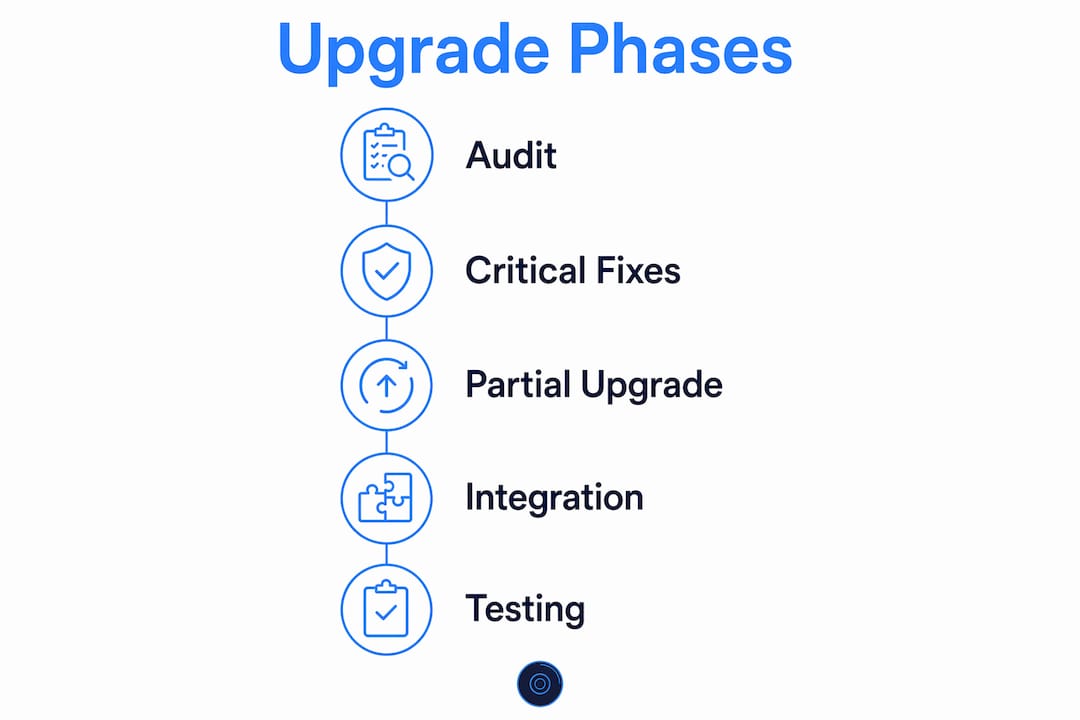
A practical phased approach typically runs in three stages. Phase one covers the security audit and immediate critical fixes: replacing cameras with insufficient resolution, patching access control gaps at primary entry points, and identifying wiring that can be reused. Phase two addresses integration, connecting previously siloed systems into a unified platform. Phase three handles communication upgrades and staff training.
Modern security architecture allows partial upgrades that retain existing low-voltage wiring and sensor housings while replacing core processing components. This hybrid model is particularly valuable for occupied commercial buildings in Manhattan, Brooklyn, and Queens, where downtime directly affects tenants and operations.
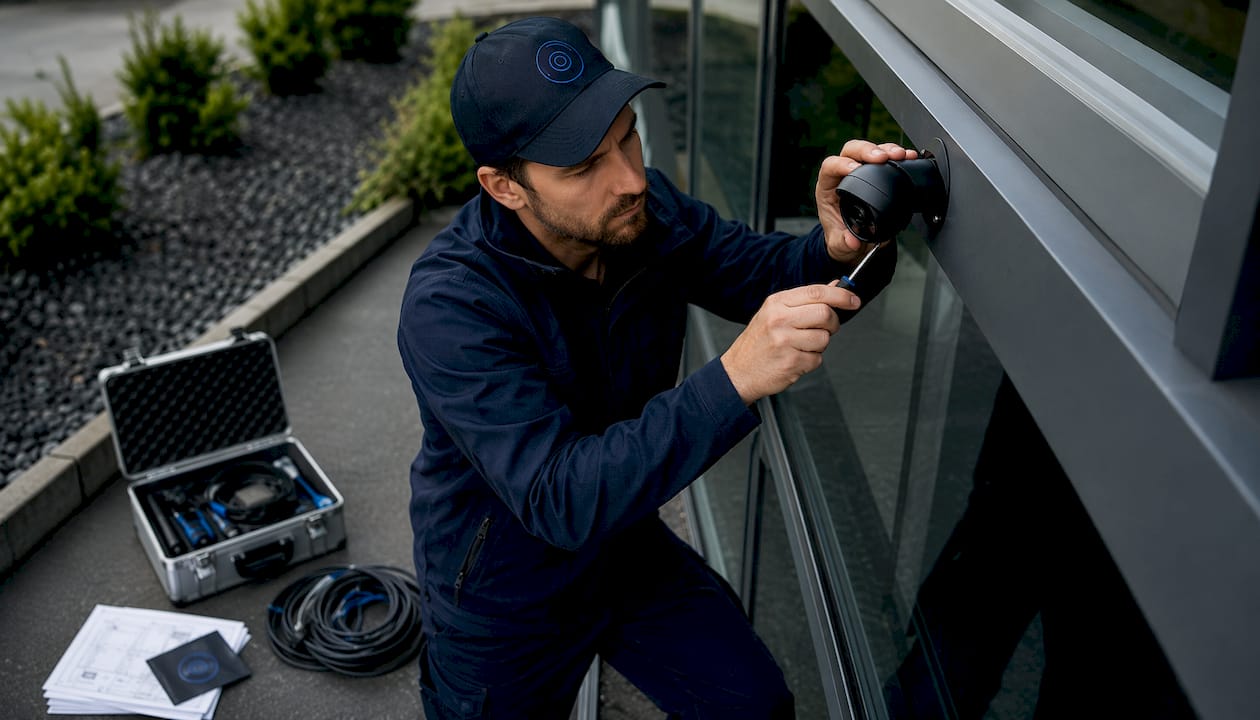
Budgeting accurately requires an on-site physical survey before any proposal is finalized. Structural interference, conduit conditions, and blind spots are impossible to assess remotely, and skipping this step is the most common cause of cost overruns.
2. Why siloed security systems slow your incident response
When cameras, alarms, and access control operate on separate platforms with no shared data layer, your security team loses critical time correlating events manually. Unified dashboards correlate intrusion alerts, video, and access logs automatically for faster action, reducing the window between an incident occurring and a response being initiated.
The technical path to integration typically involves a middleware or API layer that connects legacy hardware to a modern video management system (VMS) or security information platform. Many legacy analog cameras, for example, can feed into an IP-based VMS through encoders, preserving the camera investment while gaining centralized control. Integrating access control with fire alarms and documentation also simplifies compliance reporting, since audit trails are generated automatically rather than assembled manually after an incident.
Before full deployment, test every integration point in a controlled environment. Confirm that an access event at a door reader triggers the correct camera to display on the operator console, and that alarm events generate the expected notifications.
Pro Tip: Run your old and new systems in parallel for one to two weeks before decommissioning the legacy setup. This parallel operation phase confirms full event coverage and protects data integrity during the transition, particularly important for properties with 24/7 occupancy.
3. Replacing landline alarm reporting with cellular or cloud monitoring
Landline-based alarm communication is the single most exploitable vulnerability in most legacy commercial security setups. Cutting external phone lines disables the entire reporting path, leaving a property unmonitored during the exact window an intrusion is occurring. This is not a theoretical risk; it is a documented method used in commercial burglaries.
Cellular alarm communicators replace the phone line with a dedicated wireless path that cannot be severed by cutting a cable outside the building. Cloud-based monitoring adds a second layer: real-time alerting to mobile devices, remote system status visibility, and encrypted data transmission. Cellular alarm systems also support compliance requirements that many insurers now mandate for commercial properties.
Migrating alarm communication does not always require replacing the entire panel. Many modern cellular communicators connect directly to existing alarm panels via a plug-in module, preserving the sensor network while upgrading the reporting path. After installation, test the full signal path from sensor trigger to monitoring center acknowledgment, and document the results for your insurance carrier.
Ongoing maintenance for cellular and cloud systems includes quarterly signal tests, firmware updates for the communicator module, and annual review of monitoring center response protocols.
4. How YDA Security Systems NYC approaches business security upgrades
YDA Security Systems NYC brings licensed and insured technicians to every upgrade project across Manhattan, Brooklyn, Queens, and Staten Island, with a process built around accurate assessment before any hardware is specified. The approach begins with a thorough on-site evaluation of existing cameras, access control infrastructure, alarm panels, intercom systems, and low-voltage wiring, identifying what can be retained, what must be replaced, and what integration opportunities exist.
With over 5,000 satisfied clients and a one-year warranty on all installations, YDA Security Systems NYC delivers upgrade projects that are both technically sound and operationally practical. Services cover the full scope of commercial security modernization:
- IP camera installation and CCTV system upgrades with high-definition coverage mapped to eliminate blind spots
- Access control modernization including magnetic locks, encrypted card readers, and remote management capability
- Intercom and door buzzer system replacement with IP-based video intercom technology
- Alarm panel upgrades and cellular communicator installation for reliable, tamper-resistant monitoring
- Commercial door hardware and locksmith services integrated with access control upgrades
- Low-voltage wiring assessment and remediation to support new system architecture
Staff training is included as a standard component of every project. New hardware delivers no operational benefit if the team managing it does not understand the system’s capabilities, alert protocols, or remote access procedures.
Pro Tip: Ask your security contractor for a written compliance checklist specific to your property type and NYC jurisdiction before the upgrade begins. Compliance gaps discovered after installation are significantly more expensive to correct than those addressed during the design phase.
YDA Security Systems NYC: licensed experts for your security upgrade
Property managers and business owners across NYC who need to upgrade outdated business security systems without the disruption of a full replacement have a direct path forward with YDA Security Systems NYC. Unlike national vendors who send unfamiliar technicians and move on, YDA provides licensed, insured professionals who know the specific compliance requirements, building types, and access control configurations common to Manhattan, Brooklyn, Queens, and Staten Island properties.
The process is concrete: a site assessment, a written upgrade plan with phased options, installation by certified technicians, and a one-year warranty covering all work. For hotels, multi-tenant commercial buildings, and retail properties, YDA also offers security systems for hotels and commercial facilities with the same level of technical rigor. Contact YDA Security Systems NYC to schedule your on-site security assessment and receive a phased upgrade plan built around your property’s actual needs.
Key Takeaways
Upgrading outdated business security systems through a phased, integrated approach consistently delivers better protection, lower total cost, and less operational disruption than full system replacement.
| Point | Details |
|---|---|
| Phased upgrades save money | Incremental modernization can save $8,000–$25,000 versus full replacement over five years. |
| Hybrid models preserve infrastructure | Existing wiring and sensor housings can often be retained while core components are replaced. |
| Integration speeds response | Unified dashboards correlate camera, alarm, and access data automatically, reducing incident response time. |
| Cellular monitoring closes the landline gap | Cellular communicators eliminate the sabotage risk of phone-line-dependent alarm reporting. |
| YDA Security Systems NYC | Provides licensed, on-site assessments and phased upgrade plans with a one-year installation warranty across NYC boroughs. |
FAQ
How do I know if my business security system needs an upgrade?
Systems older than 10 years, cameras producing footage insufficient for identification, or alarm panels without integration capability are clear indicators. A professional on-site assessment will confirm specific gaps and prioritize fixes by risk level.
Can I upgrade my security system without replacing everything?
Yes. Modern hybrid architectures allow you to retain existing wiring and sensor housings while replacing core processing components, cameras, and communication modules, significantly reducing cost and disruption.
What is the biggest risk of keeping an outdated alarm system?
Landline-based alarm reporting can be disabled by cutting the external phone line, leaving your property unmonitored. Upgrading to cellular or cloud-based communication eliminates this vulnerability and typically satisfies current insurance requirements.
How long does a phased security upgrade typically take?
Timeline varies by property size and scope, but most commercial phased upgrades run across several weeks to a few months, with each phase designed to maintain continuous security coverage throughout the process.
Does YDA Security Systems NYC offer warranties on security upgrades?
YDA Security Systems NYC provides a one-year warranty on all installations, covering both hardware and workmanship across every upgrade project completed in Manhattan, Brooklyn, Queens, and Staten Island.