
Security cameras are defined as video surveillance systems that monitor, record, and deter criminal activity on business premises. Understanding why businesses need security cameras goes well beyond protecting a cash register. A well-designed surveillance system deters theft, reduces liability exposure, and generates operational data that improves how a business runs day to day. Research confirms that visible, well-positioned cameras provide consistent crime reduction of 15–50%, with monitored zones seeing up to 20% less criminal activity. For business owners and managers in Manhattan, Brooklyn, Queens, and Staten Island, that kind of measurable impact makes video surveillance one of the highest-return investments in a security budget.
Why businesses need security cameras to reduce theft and crime
The most direct reason to install surveillance cameras is crime deterrence. 60% of convicted burglars actively avoid properties with visible security cameras. That statistic reflects a simple reality: criminals weigh risk before acting, and a camera changes that calculation immediately.
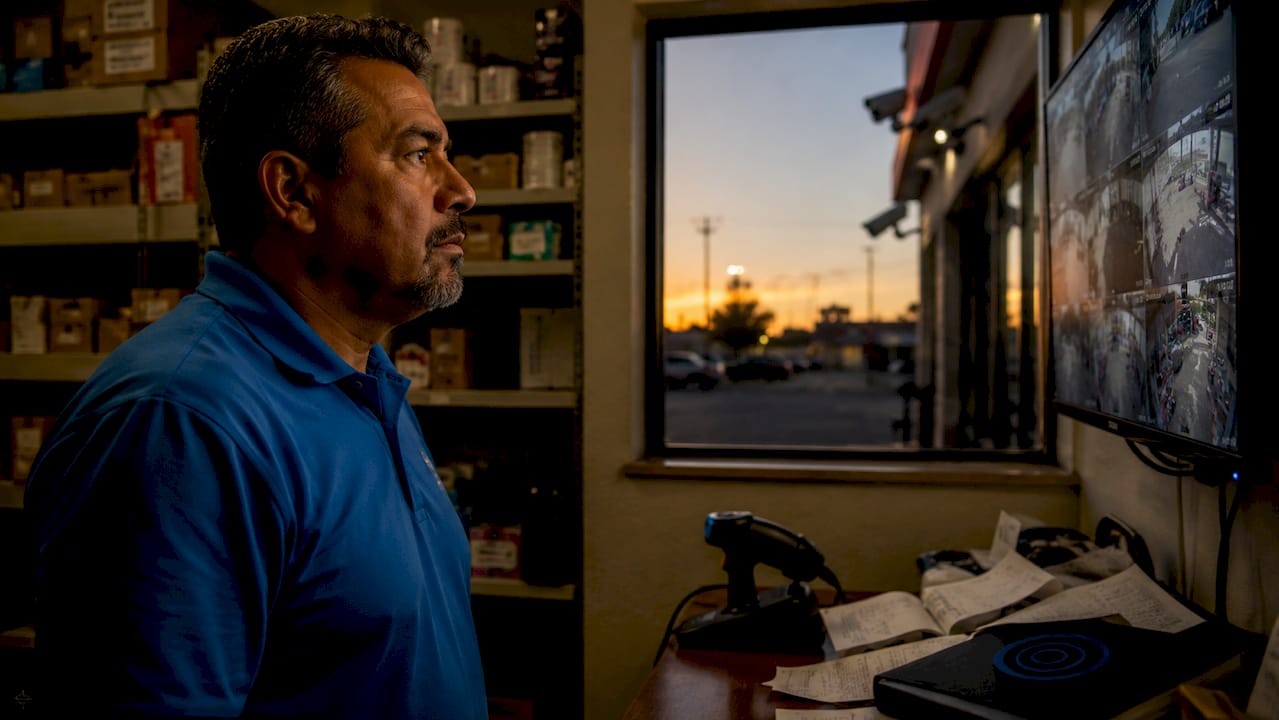
External theft is only part of the problem. Internal theft accounts for over 30% of business losses annually, with research indicating that 25–40% of employees engage in some form of workplace theft. That figure surprises most business owners, who tend to focus their security concerns on outside threats. A camera system covering stockrooms, point-of-sale areas, and loading docks addresses both problems at once.
Camera placement and image quality determine whether a system actually deters crime or just creates a false sense of security. High-resolution cameras with night vision and instant alert capabilities multiply security effectiveness compared to low-quality installations. A blurry image captured at low resolution rarely holds up as useful evidence, and experienced criminals recognize the difference between a functional system and a decorative one.
- Position cameras at all entry and exit points, including loading docks and emergency exits.
- Cover cash-handling areas, server rooms, and inventory storage with dedicated camera angles.
- Use cameras with overlapping fields of view to eliminate blind spots.
- Select models with at least 1080p resolution and infrared night vision for 24-hour coverage.
Pro Tip: Place at least one camera where it is clearly visible to anyone entering the premises. Visible deterrence reduces crime before an incident occurs, which is always preferable to reviewing footage after the fact.
What role do security cameras play in workplace safety and liability protection?
Security cameras protect businesses from two distinct threats: physical harm to employees and financial harm from fraudulent claims. Both threats are real, and both are expensive to manage without documented video evidence.
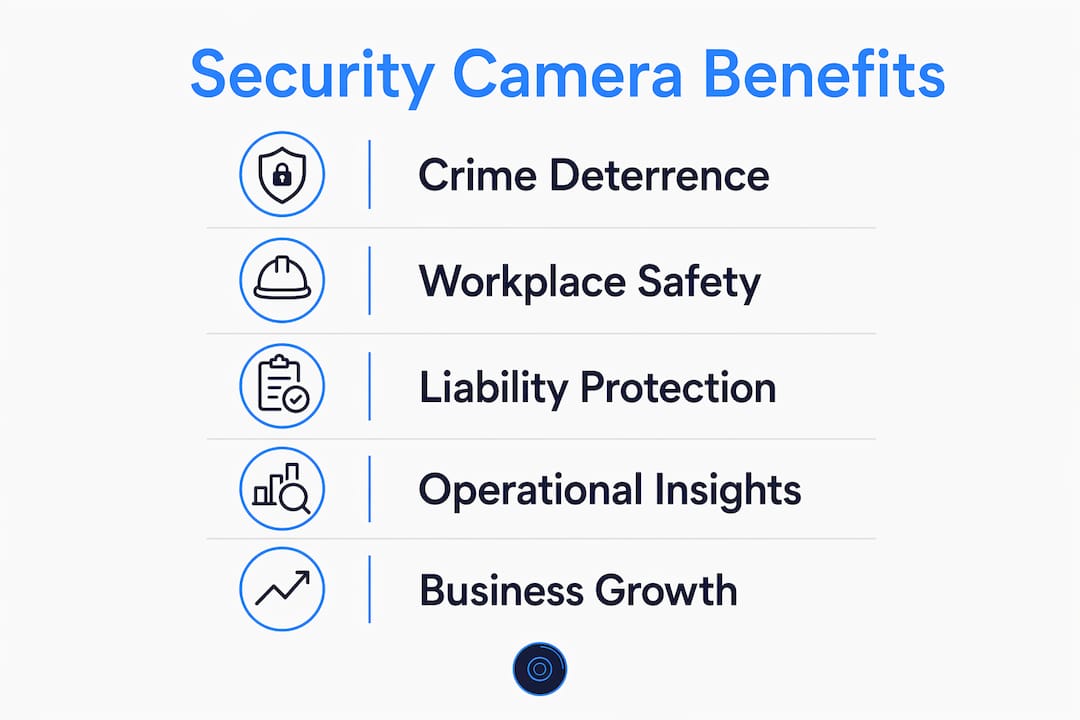
Cameras provide unbiased, timestamped records of every incident that occurs on your property. Video footage is persuasive evidence in civil liability and insurance cases, and juries and insurers now expect businesses to produce it. A slip-and-fall claim that might cost tens of thousands of dollars to settle can be resolved quickly when footage shows exactly what happened. Without that footage, the default assumption often favors the claimant.
Insurance carriers recognize this value directly. Businesses with documented camera systems often qualify for premium discounts between 5% and 20%. That reduction compounds over time, meaning the system pays for part of its own cost through lower annual premiums.
“Surveillance has evolved from passive observation to providing a layer of legal protection that businesses cannot afford to ignore. Timestamped footage resolves disputes faster, reduces litigation costs, and gives insurers the documentation they need to process claims accurately.”
Cameras also support real-time safety monitoring. A manager reviewing live feeds can spot a spill before it causes an injury, identify a blocked fire exit before an inspection, or notice a confrontation between employees before it escalates. That kind of proactive oversight is only possible when cameras are actively monitored, not simply recording to a hard drive that no one checks.
The importance of security cameras extends to compliance as well. Many industries, including food service, healthcare, and financial services, operate under safety regulations that require documented incident response. Camera footage creates an automatic compliance record that supports audits and regulatory reviews.
How can businesses use security cameras for operational insights and business growth?
Modern video surveillance has moved well beyond simple recording. AI-enabled surveillance systems now analyze footage in real time to provide operational insights, improving workflow and efficiency in ways that have nothing to do with crime prevention.
The practical applications for business owners are concrete and measurable:
- Customer traffic analysis. Cameras positioned at store entrances and key floor areas track foot traffic patterns, peak hours, and dwell time near product displays. Retailers use this data to adjust staffing schedules and reposition merchandise.
- Vendor and delivery monitoring. Cameras at loading docks create a verified record of every delivery, reducing disputes over missing shipments and confirming that vendors meet contracted service windows.
- Workflow and productivity review. Managers in warehouses and manufacturing facilities use overhead camera feeds to identify bottlenecks in production lines and measure how long specific tasks take.
- Access control integration. Cameras integrated with access control and alarm systems create a layered security architecture where every door event is matched to a video timestamp, making it easy to verify who entered a restricted area and when.
The business security benefits of this kind of integrated system extend to remote management as well. Cloud-connected cameras allow owners and managers to monitor multiple locations from a single mobile device, which is particularly valuable for businesses operating across several NYC boroughs.
Pro Tip: Review camera footage from your busiest hours at least once a week, even when no incident has occurred. Patterns in customer behavior and employee workflow become visible over time and often reveal opportunities to reduce waste or improve service.
What are common mistakes and legal considerations in security camera deployment?
The most common mistake businesses make with surveillance is treating installation as a one-time task. Simply installing cameras is insufficient without comprehensive security planning, human oversight, and regular system reviews. A camera that has been recording to a full hard drive for three weeks without anyone noticing has provided zero protection during that time.
Network security is a related and frequently overlooked risk. IP cameras connected to a business network create potential entry points for cyberattacks if they are not properly configured and updated. Isolating camera systems on a dedicated network segment and applying firmware updates regularly reduces this exposure significantly.
Legal compliance is non-negotiable. Privacy laws require signage and documented data storage policies to make footage admissible in court. In New York, businesses must post visible notice that recording is in progress. Footage stored beyond its retention period or accessed without authorization can expose a business to its own legal liability.
Common deployment mistakes to avoid:
- Installing cameras without considering lighting conditions, which renders footage unusable at night.
- Placing cameras too high or at the wrong angle, producing footage that captures ceilings rather than faces.
- Failing to test camera coverage after installation, leaving blind spots at critical locations.
- Neglecting to establish a written footage retention and access policy before the system goes live.
The security camera mistakes businesses make most often are avoidable with proper planning and a licensed installer who conducts a site assessment before recommending equipment. Strategic placement, verified by a professional walkthrough, produces a system that holds up legally and operationally.
| Deployment factor | What to get right |
|---|---|
| Camera placement | Cover all entry points, cash areas, and blind spots with overlapping fields of view |
| Image quality | Use 1080p or higher resolution with night vision for 24-hour usable footage |
| Legal compliance | Post required signage and document your data retention and access policy |
| System monitoring | Assign responsibility for regular footage review and alert response |
| Network security | Place cameras on a dedicated network segment with regular firmware updates |
Key Takeaways
Security cameras reduce theft, protect businesses from fraudulent liability claims, and deliver operational data that improves efficiency, making them one of the highest-return investments in any business security budget.
| Point | Details |
|---|---|
| Crime deterrence is measurable | Visible cameras reduce crime in monitored zones by 15–50%, with 60% of burglars avoiding surveilled properties. |
| Internal theft is a major risk | Over 30% of business losses come from employee theft, which cameras in key areas directly address. |
| Liability protection saves money | Timestamped footage resolves fraudulent claims quickly and supports insurance premium discounts of 5–20%. |
| Operational value extends beyond security | AI-enabled cameras provide traffic analysis, workflow data, and vendor verification that improve business performance. |
| Deployment quality determines results | Strategic placement, human oversight, and legal compliance separate effective systems from ineffective ones. |
How YDA Security Systems NYC helps businesses protect what matters
Businesses across Manhattan, Brooklyn, Queens, and Staten Island rely on YDA Security Systems NYC for commercial security camera installation that goes beyond placing hardware on a wall. Every installation begins with a site assessment to identify coverage gaps, confirm legal signage requirements, and recommend camera models matched to the specific environment. YDA Security Systems NYC integrates cameras with access control, intercom systems, and alarm hardware to create a layered security architecture that addresses every vulnerability in a single coordinated system. With over 5,000 satisfied clients, licensed and insured technicians, and a 1-year warranty on all installations, YDA delivers the reliability that business owners need. Review the full range of business security solutions to find the right configuration for your property.
FAQ
Why do businesses need security cameras?
Security cameras deter crime, protect against fraudulent liability claims, and provide operational data that improves business efficiency. Research shows visible cameras reduce crime in monitored zones by 15–50%.
How much can security cameras reduce insurance costs?
Businesses with documented surveillance systems often qualify for insurance premium discounts between 5% and 20%, depending on the carrier and the scope of the installation.
Are security cameras legally required for businesses in New York?
New York law does not universally mandate cameras, but it does require posted signage when recording is in progress and documented data storage policies to make footage legally admissible.
What is the biggest mistake businesses make with security cameras?
The most common mistake is treating installation as a one-time task. Cameras require active monitoring, regular maintenance, and a written footage retention policy to provide real protection.
How do security cameras integrate with other business security systems?
Modern surveillance systems connect directly with access control and alarm systems, creating a layered architecture where every door event and alert is matched to a verified video timestamp.
Recommended
- Store Security Footage for Small Business: 2026 Guide
- Security Camera Mistakes Businesses Make and How to Avoid Them – YDA Security Systems NYC
- Why Security Cameras Are Important for Safety – YDA Security Systems NYC
- Security Camera with Installation: Complete Guide for 2025 – YDA Security Systems NYC