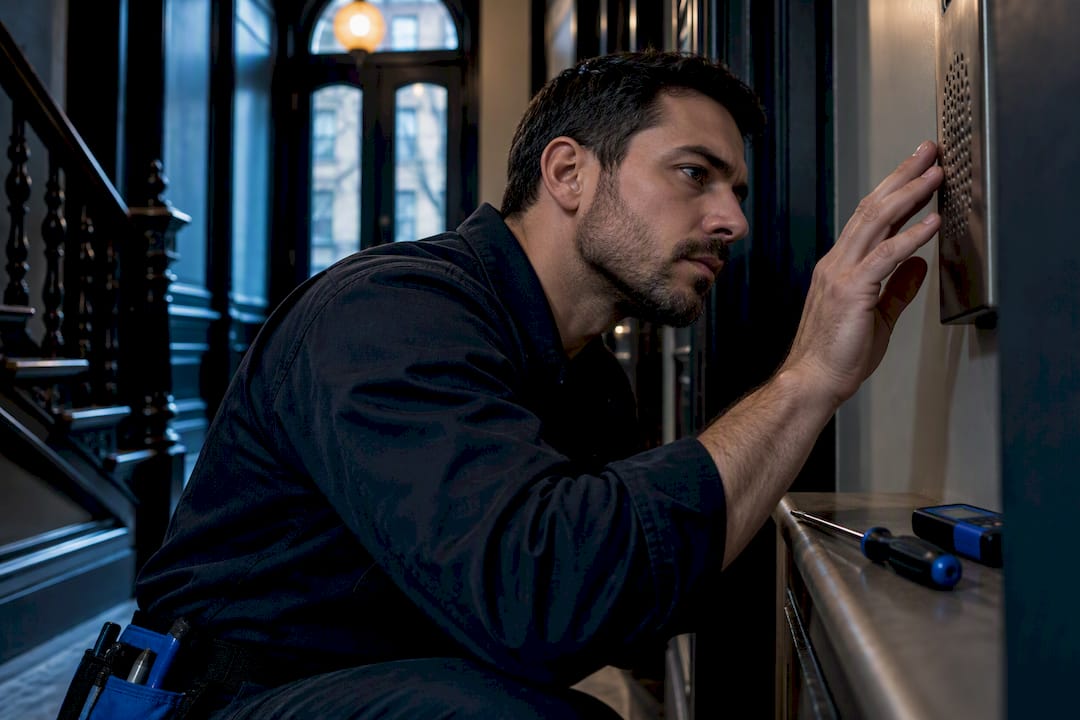
Integrated commercial security is defined as the coordinated operation of multiple subsystems, including access control, video surveillance, intrusion detection, intercoms, and alarms, sharing a unified data environment to produce automatic, rule-based responses. Understanding how commercial security systems work together is the foundation of any serious property protection strategy for business owners, property managers, and safety officers. Industry standards like ONVIF and the Security Industry Association’s Open Supervised Device Protocol (OSDP) make cross-vendor integration possible at scale. The ONVIF ecosystem supports over 35,000 conformant products from 500 global members as of 2026. That scale means your access control reader, IP camera, and alarm panel can communicate regardless of manufacturer, provided they meet the standard.
How commercial security systems work together: core components
Integrated commercial security systems typically include access control, video surveillance, intrusion detection, intercoms, and alarms sharing a unified data environment. Each subsystem handles a specific function, but the real value appears when they act in coordination.
Access control
Access control manages who enters a space and when. Modern systems use credential formats such as mobile credentials, smart cards, and biometrics. When a credential is presented, the system logs the event, timestamps it, and can trigger a camera to record the entry point simultaneously.

Video surveillance
IP cameras capture and analyze footage in real time. AI-powered video analytics can detect tailgating, loitering, or forced entry without human review. That analysis feeds directly into alarm and access control decisions, reducing the need for constant manual monitoring.
Intrusion detection and alarms
Motion sensors, door contacts, and glass break detectors form the intrusion layer. When triggered, these devices send alerts to the alarm panel, which then communicates with video and access systems to lock down zones or capture footage automatically.
Intercom and visitor management
Intercom systems handle visitor verification at entry points. When integrated with access control, a visitor’s identity confirmed through the intercom can automatically grant temporary credential access and log the interaction for audit purposes.
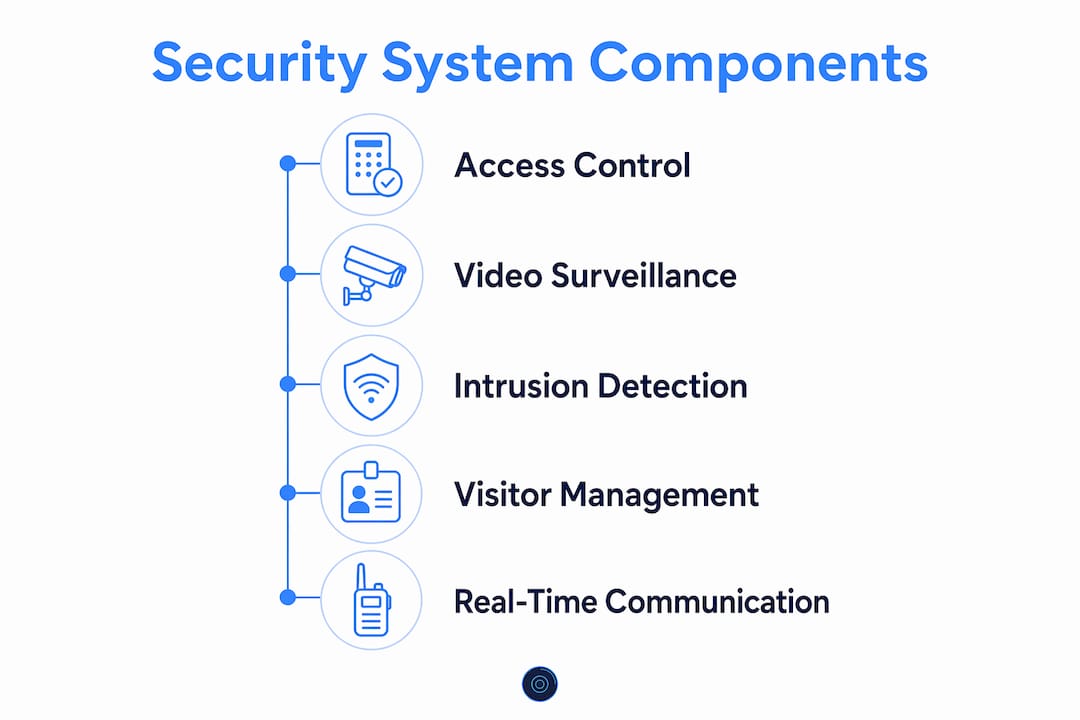
The table below summarizes each component and its primary integration function.
| Component | Primary integration function |
|---|---|
| Access control | Credential management, event logging, zone lockdown triggers |
| Video surveillance | Real-time recording, AI analytics, incident verification |
| Intrusion detection | Sensor alerts, zone activation, alarm escalation |
| Intercom systems | Visitor verification, temporary access grants, audit logging |
| Alarm panels | Alert routing, multi-system coordination, law enforcement notification |
How do security systems communicate in real time?
Security systems communicate through application programming interfaces (APIs), shared databases, and standardized protocols. An API allows two devices from different manufacturers to exchange data in a common language. When an access control reader denies a credential three times, an API call can instruct a nearby camera to begin recording and send an alert to a security dashboard simultaneously.
The Security Industry Association’s OSDP Secure Channel 2 standard provides AES-256GCM encryption for communication between security hardware components. That level of encryption means data traveling between a card reader and an access controller cannot be intercepted or spoofed. Consistent use of OSDP reduces device communication unpredictability and raises overall system reliability.
Event triggers are the practical mechanism behind real-time coordination. A trigger is a rule: “If event A occurs in system X, execute action B in system Y.” For example, when an alarm activates after hours, the trigger can lock all electronic doors, switch cameras to high-resolution recording, and send a push notification to the property manager within seconds. No human intervention is required.
Cloud-based management platforms allow property managers to monitor multiple sites through a single interface. That capability is particularly valuable for businesses operating across Manhattan, Brooklyn, and Queens, where a manager may oversee several buildings from one location. Cloud platforms also reduce the risk of losing footage when on-site recording hardware fails.
Pro Tip: Choose hardware that supports open APIs and cloud-native architecture from the start. Proprietary systems lock you into a single vendor and make future upgrades expensive. Open standards like ONVIF and OSDP give you flexibility to add or replace components without rebuilding the entire system.
What are the operational benefits of integrated security?
Integrated security systems deliver measurable business value beyond physical protection. Integrating access control with video surveillance significantly reduces security administration time by automating manual incident correlation. That means your security team spends less time cross-referencing camera footage with access logs and more time on active oversight.
Real-time video verification integrated with alarms can greatly reduce false alarm dispatches. A verified alarm, confirmed by live video before a call is placed, avoids unnecessary law enforcement responses and the associated costs and liability. That verification capability alone justifies integration for many commercial properties.
Integrated electronic security can also control non-security functions such as lighting and HVAC based on occupancy data from access control. When the last employee badges out at night, the system can automatically cut HVAC to unoccupied zones and dim lighting. That automation produces direct utility savings on top of security improvements.
The business benefits of a fully integrated system include:
- Centralized monitoring across all entry points and zones from a single dashboard
- Automated incident documentation that supports insurance claims and compliance audits
- Faster incident response through pre-programmed lockdown and notification workflows
- Reduced labor costs from eliminating manual log correlation and report generation
- Facility management data, such as occupancy patterns, that informs capital planning decisions
Integrated security infrastructure functions as a strategic business asset that generates intelligence beyond protecting assets. Property managers who treat their security data as operational data gain a measurable advantage in facility planning and cost control.
What does installation and maintenance require?
Successful integration starts before any device is installed. A thorough site assessment must evaluate structured cabling, power redundancy, and the condition of existing physical door hardware. Mechanical door issues must be resolved before electronic integration to avoid failures. Installing an electronic access control reader on a door with a misaligned frame or a worn latch will produce constant errors and undermine the entire system’s reliability.
The installation planning process follows a defined sequence:
- Conduct a full site assessment covering door hardware condition, cable pathways, and power supply capacity.
- Select hardware that conforms to ONVIF and OSDP standards to guarantee interoperability.
- Install and certify structured cabling, including power over Ethernet (PoE) runs for IP cameras and readers.
- Configure event triggers and integration rules within the unified management platform before going live.
- Define operational governance protocols, including alarm response workflows and personnel notification procedures, prior to system activation.
- Test every trigger scenario end-to-end, from credential denial through camera activation to alert delivery.
- Schedule recurring maintenance reviews and software update cycles.
Remote Monitoring Management (RMM) tools proactively monitor security hardware health and software updates to prevent unnoticed failures. RMM catches a camera going offline or a firmware vulnerability before it becomes a security gap. For commercial properties in NYC, where building codes and insurance requirements demand documented system uptime, RMM is a practical necessity rather than an optional add-on.
Pro Tip: Define your alarm response workflow before the system goes live, not after the first incident. Lack of clear notification procedures leads to alert fatigue, where staff begin ignoring alarms because the process for handling them is unclear. A written response protocol assigned to named personnel eliminates that problem from day one.
You can find detailed guidance on access control integration for commercial properties, covering compatibility checks, wiring standards, and reader placement for NYC buildings.
YDA Security Systems NYC: integrated security for NYC properties
YDA Security Systems NYC designs and installs integrated security solutions across Manhattan, Brooklyn, Queens, and Staten Island, with over 5,000 satisfied clients and a 1-year warranty on every installation. Our licensed technicians handle the full scope of commercial integration, from commercial access control and CCTV to door hardware and low-voltage wiring. We assess physical door conditions before any electronic component is installed, resolving mechanical issues that would otherwise cause system failures. For properties that need camera infrastructure as part of a coordinated system, our commercial camera installation service covers IP camera placement, PoE cabling, and cloud platform configuration. We also provide commercial door hardware services to prepare entry points for reliable electronic access control. Contact YDA Security Systems NYC to schedule a site assessment for your property.
Key Takeaways
Integrated commercial security systems deliver their full value only when components share data, communicate through open standards, and operate under defined response protocols.
| Point | Details |
|---|---|
| Integration requires open standards | ONVIF and OSDP ensure cross-vendor device communication without proprietary lock-in. |
| Physical hardware must be sound first | Mechanical door issues must be corrected before electronic access control is installed. |
| Event triggers automate response | Pre-programmed rules link access, video, and alarm systems for automatic incident handling. |
| Governance prevents alert fatigue | Written response workflows assigned to named personnel keep alarm handling reliable. |
| Integration extends beyond security | Occupancy data from access control can automate HVAC and lighting to reduce utility costs. |
FAQ
What does an integrated commercial security system include?
An integrated commercial security system includes access control, video surveillance, intrusion detection, intercoms, and alarm panels that share a unified data environment. These subsystems exchange data through APIs and standardized protocols to produce coordinated, automatic responses.
How do commercial security systems communicate with each other?
Commercial security systems communicate through APIs, shared databases, and industry standards like ONVIF and OSDP. OSDP Secure Channel 2 uses AES-256GCM encryption to protect data traveling between hardware components.
What is the biggest installation mistake in commercial security integration?
Installing electronic access control on doors with mechanical defects is the most common and costly installation mistake. Misaligned frames, worn latches, or damaged closers cause constant system errors that undermine the entire integrated setup.
Can integrated security systems reduce operating costs?
Integrated systems can control HVAC and lighting based on access control occupancy data, producing direct utility savings. They also reduce labor costs by automating incident documentation and eliminating manual log correlation.
How many products support ONVIF interoperability?
The ONVIF ecosystem supports over 35,000 conformant products from 500 global members as of 2026. That breadth means most commercial-grade cameras, readers, and panels from major manufacturers can integrate without custom development.
Recommended
- Commercial Security Systems for Businesses in Brooklyn, Manhattan and Queens – YDA Security Systems NYC
- Commercial Security Camera Installation in NYC – YDA Security Systems
- Security System Installation Process Explained – YDA Security Systems NYC
- Security Systems for Hotels – YDA Security Systems NYC