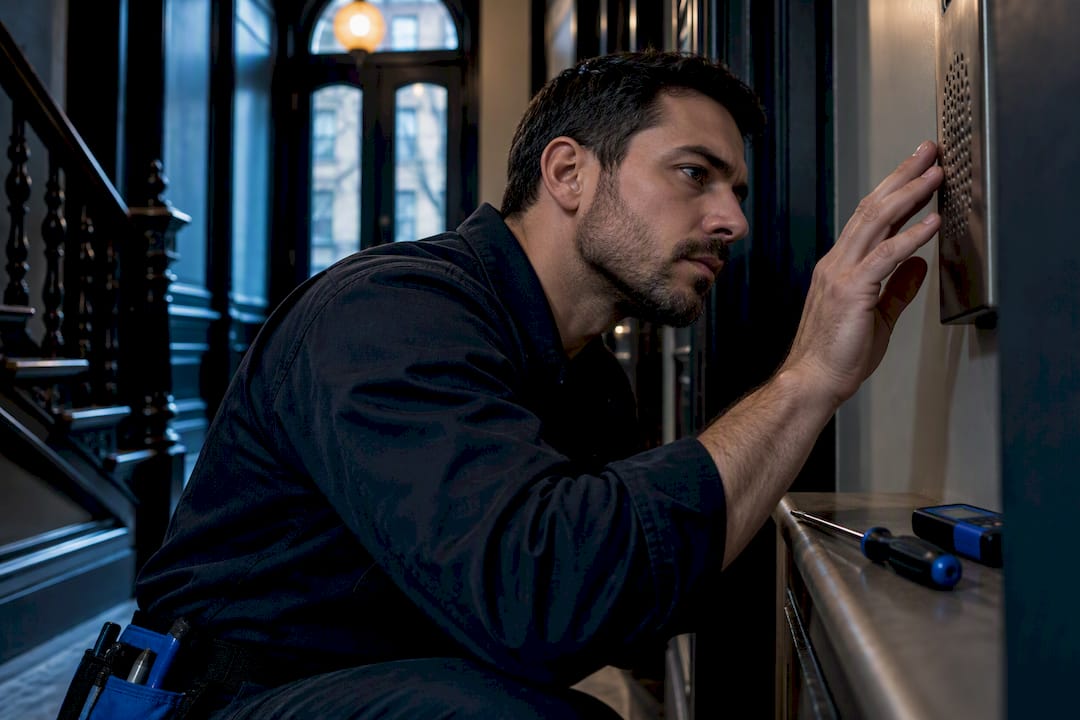
For most mid-to-large multi-tenant buildings, an IP-based video intercom with a mobile app and PoE power is the right default, especially when Ethernet already runs through the risers. It scales across buildings without rewiring, lets tenants screen visitors and release doors from their phones, and integrates directly with access control and CCTV instead of running as an isolated box on the wall. RFID credentials layered into that system deserve a careful look at the DHS technical guidance on RFID before you commit to a card format. Properties that pair this hardware with structured maintenance, root-cause analysis that cuts repeat failures by 71%, see far fewer emergency service calls. The next move: schedule a site survey with a licensed low-voltage integrator like YDA Security Systems NYC before you request quotes.
- IP/video intercom with mobile app for most retrofits and new construction with existing network wiring
- Two-wire or hybrid architecture when rewiring the building is impractical or cost-prohibitive
- Site survey first, hardware selection second
Key Takeaways
The most reliable multi-tenant intercom strategy pairs IP/PoE architecture with a documented quarterly maintenance schedule and a licensed local installer who plans for multi-building scalability from the start.
| Point | Details |
|---|---|
| Default to IP/PoE | Choose IP video intercom with mobile app when riser wiring supports it, for scalability and remote management. |
| Retrofit smart | Two-wire or hybrid architectures avoid costly rewiring in older buildings where new cabling isn’t practical. |
| Maintain on a schedule | Monthly panel checks and quarterly full-system audits catch failures before they become emergency calls. |
| Use RCA for repeat failures | Root-cause analysis cuts repeat failures by 71% and maintenance costs by 38% in tracked cases. |
| Plan compliance early | Fire-release interlocks and ADA reach heights need verification during design, not after installation. |
| Work with a local integrator | YDA Security Systems NYC provides licensed installation, low-voltage wiring, and maintenance contracts across Manhattan, Brooklyn, Queens, and Staten Island. |
Table of Contents
- What Type of Multi Tenant Intercom System Fits Your Building?
- Which Features Actually Matter on a Spec Sheet?
- What Should You Plan Before Installation Day?
- How Does a Multi Tenant Intercom Connect to Other Building Systems?
- Designing a Multi Tenant Intercom System That Scales
- How Often Should You Inspect and Maintain an Intercom System?
- What Does a Multi Tenant Intercom Cost to Install?
- How Do You Choose the Right Installer?
- What Codes and Regulations Apply to Intercom Installations?
- How Should You Train Residents and Staff on the New System?
- How Do You Keep an Intercom System Secure?
- Ready to Upgrade Your Building’s Intercom System?
- Sources
- FAQ
What Type of Multi Tenant Intercom System Fits Your Building?
The right multi unit intercom system depends on what’s already in your walls, not what’s newest on the market. Four architectures cover almost every scenario a property manager will face.
- IP (network/PoE) intercom: Runs over Ethernet, supports mobile apps, video, and centralized directory management. Best for new construction or buildings with existing Cat5e/Cat6 riser cabling. IP systems are the standard recommendation for new builds where scalability and integrations matter.
- 4-wire video intercom: Dedicated cabling for audio and video, no dependency on network infrastructure. Reliable, but limited scalability without new cable runs.
- Two-wire/retrofit systems: Reuses existing analog wiring, ideal for older buildings where opening walls isn’t realistic. Retrofit-friendly but caps out on advanced features.
- Hybrid staged upgrades: Mixes IP panels at main entrances with two-wire legacy stations elsewhere, letting you modernize incrementally.
If your risers already carry Ethernet, IP is the obvious call. If rewiring means jackhammering through landmarked lobbies, hybrid or two-wire retrofit saves both budget and headaches.
Which Features Actually Matter on a Spec Sheet?
Feature lists on manufacturer brochures blur together fast. What separates a functional apartment intercom system from a liability comes down to a shorter list than most vendors admit.
- Video plus two-way audio: Visual confirmation of visitors reduces false entries and creates a record for disputes. Video intercoms let tenants verify who’s at the door before buzzing anyone in, which matters most for ground-floor units and package theft complaints.
- Mobile app / remote answer: Tenants working late or traveling still need to grant access without a physical handset.
- Directory size and search: A 40-unit building needs a directory that scales cleanly, not a workaround for entries past unit 30.
- Door release relays: Confirm how many relays are supported per panel; multi-door buildings often need more than the base unit ships with.
- PoE support: Simplifies power runs and centralizes backup power at the switch level instead of at every panel.
- Weatherproofing (IP/IK ratings): Exterior panels need an IP rating for moisture and an IK rating for impact resistance, especially on street-facing entries.
- Encryption and secure firmware updates: Panels facing the public street are exposed hardware; unpatched firmware is an open door.
- ADA-compliant controls: Reach height and operable force requirements aren’t optional on any building serving the public.
- Event logs and audit trails: Essential for investigating disputed access claims or insurance incidents.
Integration must-haves include support for OSDP, SIP, or REST APIs so the intercom talks to your access-control panel and property-management software instead of sitting isolated.
Pro Tip: Spend your marginal dollar on wide-angle camera field of view and infrared night performance before upgrading directory size. A panel that can’t identify a visitor’s face at 10 PM is a bigger operational liability than a directory that runs a few names short.
What Should You Plan Before Installation Day?
A rushed installation creates the failures you’ll be troubleshooting for years. Run through this checklist with your installer before signing a contract.
- Site survey items: Panel mounting locations, existing riser wiring type, PoE switch capacity, UPS and battery backup runtime, door strike or maglock type, gate controller compatibility, elevator integration points, and fire-egress interlocks.
- Wiring decisions: Reusing two-wire cable is cheaper upfront; running new Ethernet costs more but future-proofs mobile and video features. Trenching or conduit work for gate entries adds meaningfully to project cost.
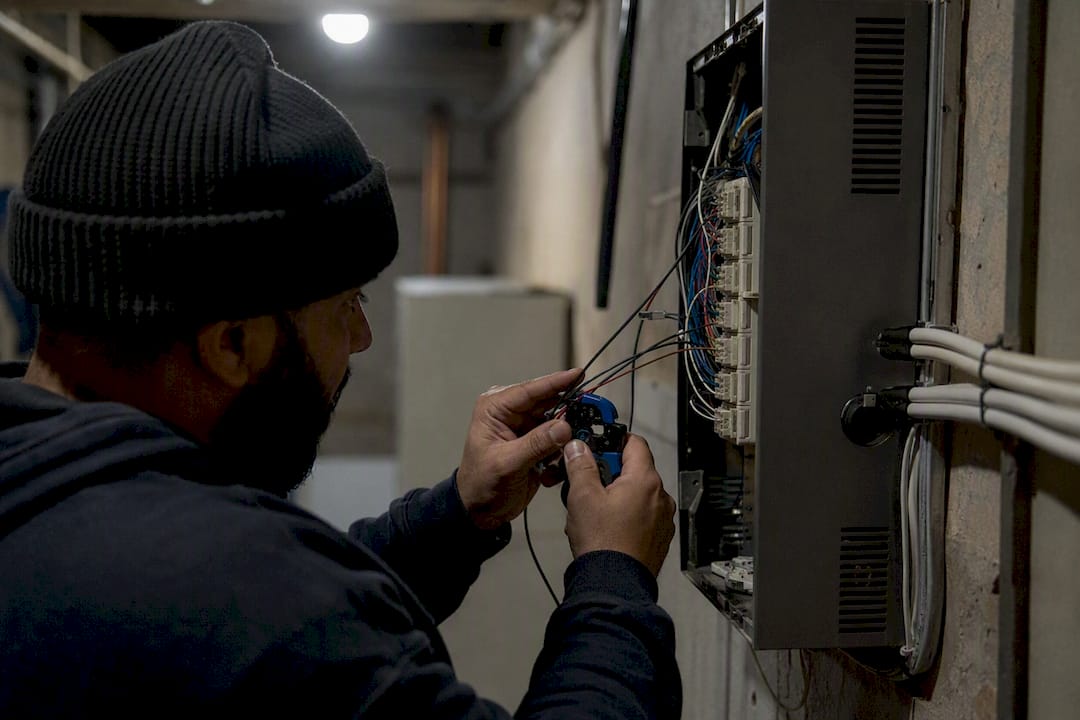
- Grounding and surge protection: Retrofit projects in older buildings commonly hit grounding and electromagnetic interference issues that cause audio distortion or intermittent dropouts. Isolating low-voltage cabling from high-voltage conduit runs during installation prevents most of this.
- Power planning: Calculate PoE budget per switch, size dedicated 24V or 12V supplies for non-PoE devices, and set a testing cadence for battery backups rather than waiting for a failure to discover a dead battery.
- Code and safety checks: Fire-release interlocks, egress path clearance, and ADA reach heights need verification during design, not after the panel is mounted.
Our apartment intercom system with door release for buildings guide walks through door-release wiring specifics in more depth if you’re coordinating with an electrician on strike power.
How Does a Multi Tenant Intercom Connect to Other Building Systems?
Modern buyers ask how does multi tenant intercom work with the rest of their security stack, and the honest answer is: only as well as the protocols support it. Common integration points include access control through relay contacts, OSDP, or Wiegand; CCTV recording through RTSP or ONVIF streams; and property-management software for temporary access codes and audit logs.
A typical workflow looks like this: a visitor calls a unit, the tenant answers on a mobile app, and a remote release opens the door while the event logs to the access-control system. Delivery services get temporary PINs or QR codes instead of a permanent credential. If the network drops, the system should fail over to local-release-only mode so residents aren’t locked out during a fire-safety event.
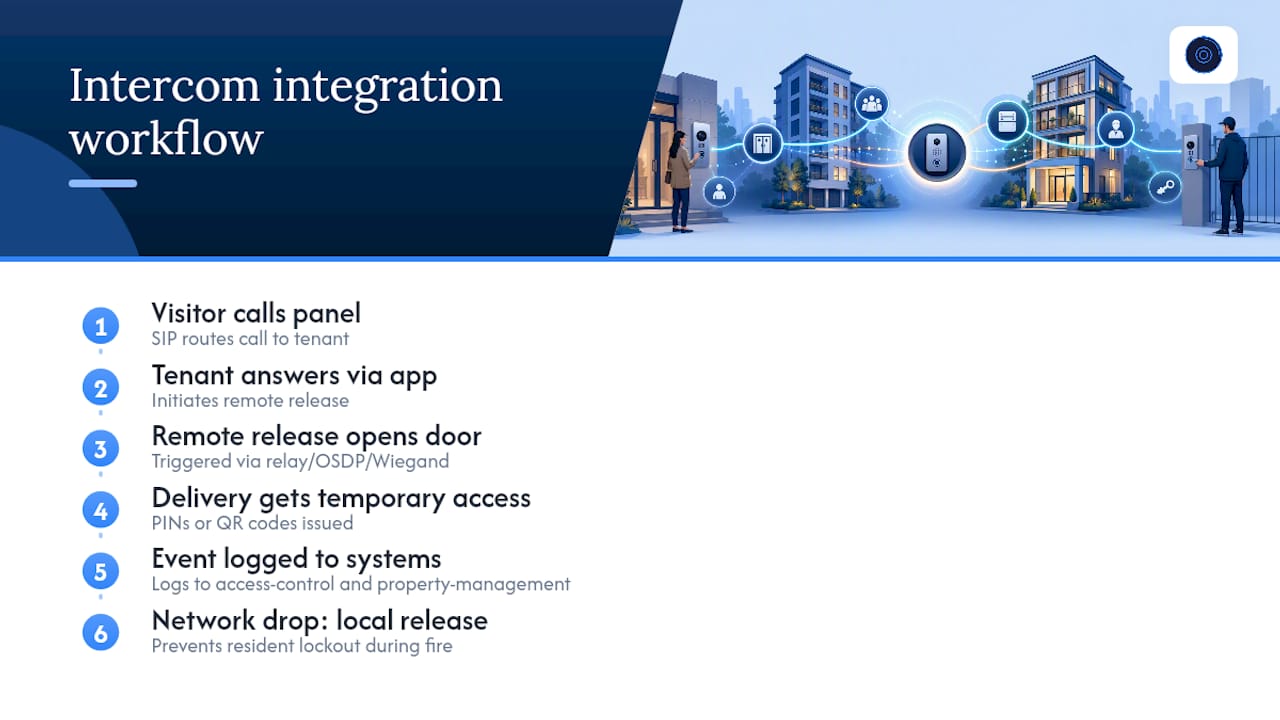
SIP handles call routing between panel and handset or app. REST APIs handle tenant provisioning so onboarding doesn’t require a truck roll every time a lease turns over. If you’re evaluating RFID fobs for access credentials, the DHS technical background on RFID covers the security tradeoffs worth weighing before standardizing on a card format.
Designing a Multi Tenant Intercom System That Scales
Buildings that grow, or portfolios that add properties, need architecture that doesn’t force a rip-and-replace two years in. Plan for expansion from the first design meeting rather than retrofitting scalability later.
- Use centralized controllers where the site supports it, with modular entrance panels that add without redesigning the head end.
- Layer PoE switches and consider a fiber backbone for campus-style properties with multiple buildings sharing infrastructure.
- Decide early whether you want a single tenant directory across buildings or per-building directories with cross-site credentialing.
- Size PoE capacity and video storage with headroom, not just for today’s camera count.
IP systems centralize management and remote provisioning, which pays off directly for managers running several buildings from one office.
Pro Tip: Order your PoE switch and NVR storage one tier above current need. Adding five cameras next year shouldn’t mean replacing the switch you installed six months ago.
How Often Should You Inspect and Maintain an Intercom System?
Preventive maintenance is what separates a system that lasts 15 years from one that generates emergency calls every winter. A complete inspection checklist covers entry panels, unit stations, wiring, power supplies, integration points, and documentation with photos and deficiency notes.
- Monthly: Visual check of entry panels, button function, camera lens condition, and weather seal integrity.
- Quarterly: Full-system audit including wiring terminations, power supply voltage, unit station audio and door-release tests.
- Quarterly: Battery backup load testing rather than a visual check alone.
- Annually: Comprehensive audit covering firmware versions, integration handshakes, and log review.
Corroded terminal wiring, failed gasket seals, and aging backup batteries account for most of the emergency calls property managers place. When failures repeat, structured root-cause analysis matters: RCA-driven changes cut repeat failures by 71% and maintenance costs by 38% in tracked case studies, with most analyses completing in 5 to 10 business days.
Pro Tip: A mobile CMMS checklist that logs photos and timestamps at each inspection turns a maintenance visit into evidence you can hand an insurer, and it triggers work orders automatically instead of relying on someone’s memory. For recurring problems, our intercom troubleshooting and repair guide covers the failure points technicians see most often in the field.
What Does a Multi Tenant Intercom Cost to Install?
Budgeting starts with understanding what drives the number on your quote, not the sticker price of a single panel. Main cost drivers include per-panel hardware, whether you’re running indoor stations or going mobile-only, cabling and conduit work, integration services, PoE switching and UPS capacity, and the ongoing maintenance contract.
Small single-entrance buildings with 10 to 20 units typically land at the lower end of the price range. Mid-size multi-tenant buildings running video panels, mobile app access, and access-control integration sit in the middle. Large directory systems spanning multiple entrances or campus-style properties cost the most, driven mostly by cabling scope and controller count rather than the panels themselves. Buying guides for multi-tenant systems show video-enabled IP systems commanding a premium over audio-only setups, a cost that’s usually justified by reduced tenant complaints and better incident evidence.
Procurement paths include OEM bundles, authorized resellers, and local integrators like YDA Security Systems NYC. A licensed local integrator brings warranty handling, NYC code knowledge, and installer expertise that a boxed OEM bundle can’t replicate. Staged deployment and clear specifications, decided before you request quotes, control cost better than negotiating after the fact.
How Do You Choose the Right Installer?
The installer matters as much as the hardware. Verify they’re licensed and insured, coordinate properly with electricians on power runs, and can show references from buildings your size. Coverage across Manhattan, Brooklyn, Queens, and Staten Island signals an installer who understands the borough-specific permitting quirks that trip up out-of-town contractors.
On a site visit, ask direct questions: Can they show staged design options rather than a one-size quote? How do they handle firmware updates and incident root-cause analysis? What warranty and service-level terms come with the install, and who administers tenant onboarding after handoff?
Red flags are easy to spot once you know what to look for: a quote issued without a site survey, vague answers on power and wiring plans, no mention of fire or egress considerations, or no post-install maintenance agreement offered.
- Technical plan: Does the proposal address wiring, power, and integration specifics or just list hardware?
- Warranty and support: What’s covered, for how long, and who answers emergency calls?
- Local code knowledge: Can they speak to your borough’s permitting and fire-egress requirements?
- Price transparency: Are cost drivers itemized or bundled into a vague lump sum?
Our guide on choosing the right commercial intercom system for your NYC property breaks this evaluation down further for owners comparing multiple bids.
What Codes and Regulations Apply to Intercom Installations?
Intercom installation for condos and rental buildings intersects with several code requirements that get overlooked until an inspector flags them. Fire safety codes typically require that intercom-controlled doors default to unlocked, or interlock with the fire alarm panel, so tenants aren’t trapped behind a powered-down maglock during an emergency. Any door-release mechanism tied into an intercom needs a documented fail-safe or fail-secure designation matched to its location and egress function.
ADA requirements govern reach height for call buttons and required operable force for door hardware at accessible entrances. A panel mounted at a height convenient for the installer but out of ADA reach range creates a compliance gap that surfaces during a routine inspection or complaint. Tactile and visual indicators on call buttons matter for residents with vision or hearing impairments, and many jurisdictions require this at any building offering public-facing access control.
Local building codes also govern low-voltage wiring practices, conduit requirements in fire-rated walls, and permit requirements for exterior panel mounting on landmarked or historic facades, which is common in older buildings across Manhattan and Brooklyn. Coordinating fire-release interlocks with your fire alarm contractor during design, not after installation, avoids a failed inspection and a second service call to fix wiring that should have been isolated the first time. A licensed low-voltage contractor familiar with NYC Department of Buildings requirements can flag these issues before they become change orders.
How Should You Train Residents and Staff on the New System?
A perfectly specified intercom fails operationally if nobody knows how to use it. Rollout planning deserves the same attention as hardware selection.
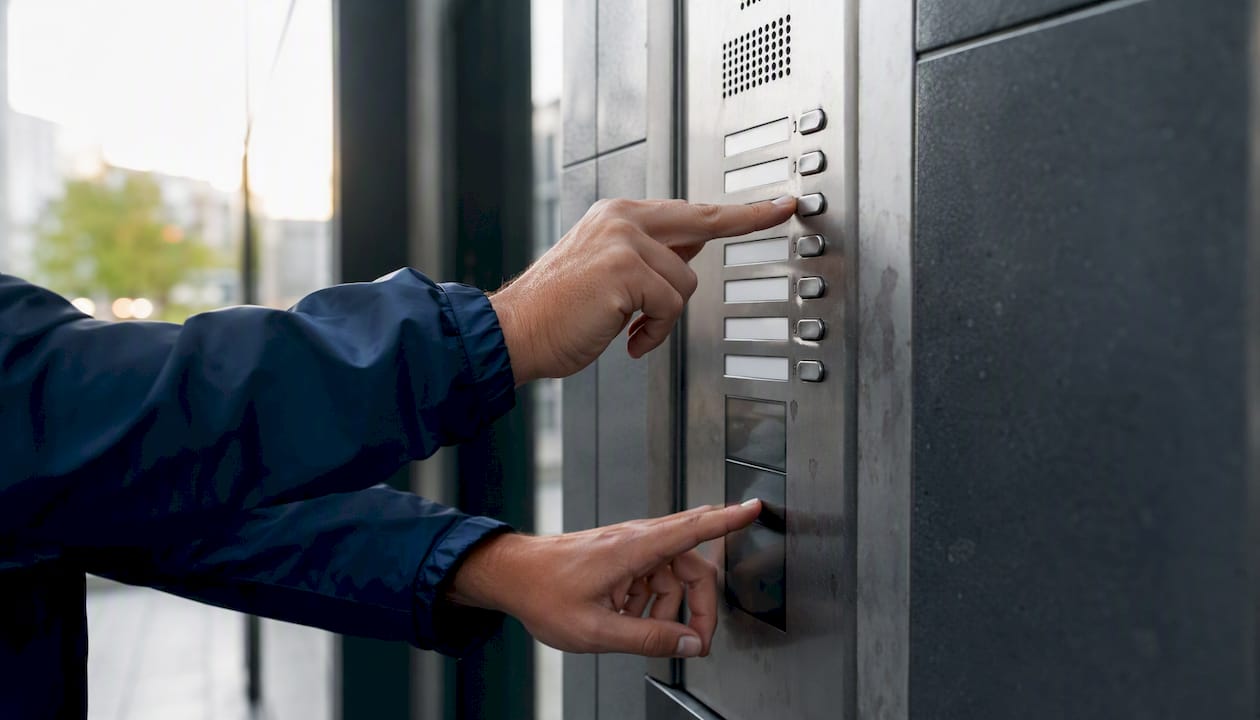
Building staff need hands-on training on directory management, temporary code generation for deliveries and guests, and the escalation path when a panel malfunctions after hours. Front desk or superintendent staff should know how to pull event logs for an investigation without waiting for a vendor callback.
Resident onboarding works best as a short, written one-pager distributed at move-in, paired with a QR code linking to a video walkthrough of the mobile app. Cover the basics: how to answer a call remotely, how to grant a delivery a temporary code, and who to contact if the app stops receiving notifications. Buildings that skip this step see a spike in front-desk calls asking questions the app already answers.
Set a 30-day check-in after go-live to catch adoption gaps. If half your building still isn’t using the mobile app a month in, that’s usually a training gap, not a hardware problem. Property managers running multiple buildings should standardize this onboarding packet across properties so staff transferring between sites don’t relearn the workflow each time.
How Do You Keep an Intercom System Secure?
Any device facing the public street is an exposed endpoint, and intercom panels are no exception. Unpatched firmware is the most common vulnerability, since panels that never get updated accumulate known exploits over years of service. Confirm your installer sets up automatic or scheduled firmware updates rather than a one-time install-and-forget configuration.
Network segmentation matters as much as the panel itself. Intercom traffic should run on a segmented VLAN, isolated from tenant Wi-Fi and general building operations, so a compromised panel can’t become a pathway into property-management systems or resident data. Encrypted communication between panel, controller, and mobile app protects call and video data in transit, and any vendor unwilling to confirm encryption standards deserves a harder look before signing a contract.
Data privacy extends to video retention policy. Decide upfront how long footage is stored, who can access event logs, and how access requests from law enforcement or residents get handled. RFID credential systems carry their own considerations worth understanding before standardizing on a card format, covered in the DHS technical background on RFID. Buying decisions driven purely by unit cost, without accounting for visitor workflow and administration overhead, tend to create more operational risk than the small premium a properly integrated system commands.
Ready to Upgrade Your Building’s Intercom System?
Every consideration in this guide, from PoE budgeting to fire-release interlocks, comes down to the same question: does your installer actually understand multi-tenant buildings, or are they treating your property like a single-family retrofit? YDA Security Systems NYC designs, installs, and maintains multi tenant intercom systems across Manhattan, Brooklyn, Queens, and Staten Island, with licensed and insured technicians handling everything from low-voltage wiring to access-control integration.
Our services cover full system design, staged deployment planning for multi-building portfolios, PoE and power infrastructure, integration with existing CCTV and access-control platforms, and ongoing maintenance contracts built around the inspection intervals this guide outlines. We also handle the door hardware side of the project, pairing intercom door-release wiring with compatible locksmith and door hardware installation so strikes and maglocks are sized correctly from day one. If your building integrates with cameras at entry points, our security camera installation team coordinates directly with the intercom install to avoid duplicate cabling runs.
Schedule a site survey with YDA Security Systems NYC and get a staged-design quote before you commit to hardware.
Sources
- Intercom system failure analysis and RCA — OxMaint
- RFID: what it is — U.S. Department of Homeland Security (archive)
FAQ
What Is the Best Intercom System for a Multi-Tenant Building?
An IP-based video intercom with PoE and mobile app support fits most mid-to-large multi-tenant buildings, particularly where riser wiring already supports Ethernet.
How Does Multi Tenant Intercom Work With Access Control?
The intercom connects to your access-control panel through relay contacts, OSDP, or Wiegand, so a visitor’s remote-release request logs as an event alongside badge swipes and other access activity.
How Often Should an Intercom System Be Inspected?
Entry panels need monthly visual checks, while full-system audits, including power supplies and wiring terminations, should happen quarterly.
Is IP or Analog Better for a Retrofit Project?
Two-wire or hybrid architectures usually work better for retrofits since they reuse existing wiring, while IP suits new construction or buildings with existing network cabling.
Who Should Install a Multi Tenant Intercom System in NYC?
A licensed, insured low-voltage contractor with experience across NYC boroughs, such as YDA Security Systems NYC, handles the wiring, fire-code coordination, and integration work that a boxed retail system can’t cover.
Recommended
- Wireless Intercom Systems for Apartment Buildings Guide – YDA Security Systems NYC
- Choosing the Right Commercial Intercom System for Your NYC Property – YDA Security Systems NYC
- The Role of Intercom in Building Security: 2026 Guide
- Apartment Intercom System with Door Release for Buildings – YDA Security Systems NYC