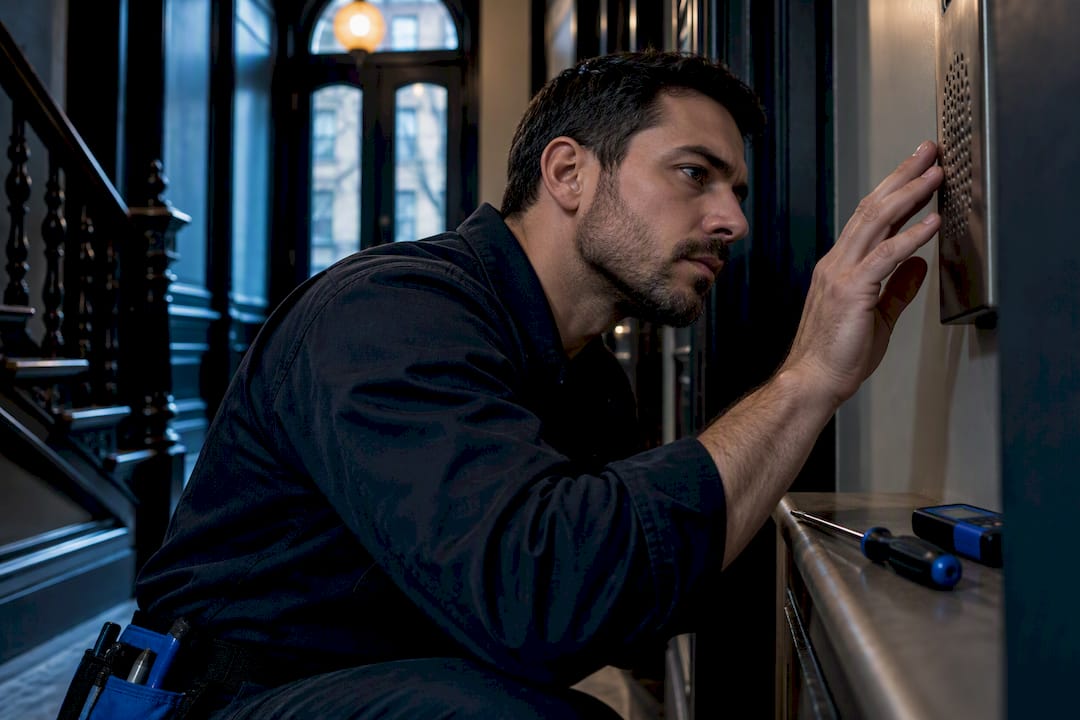
How intercom systems serve as your building’s first line of defense
Intercom systems are the frontline security tool that separates controlled access from an open door. Before any credential is checked or any lock is released, an intercom gives authorized personnel the ability to verify who is standing at the entrance in real time. That human verification layer is what automated access control alone cannot provide, particularly for visitors, vendors, and delivery personnel who carry no permanent credentials.
The role of intercom in building security goes well beyond simple communication. A properly integrated system connects visitor identification, door release, audit logging, and emergency response into a single, managed workflow. Buildings that treat intercoms as an afterthought consistently face gaps that more expensive security layers cannot close.
Core security functions intercoms perform:
- Real-time identity verification before any door is released
- Two-way audio and video communication between visitors and authorized staff
- Remote door release integrated with electronic locks and access control software
- Psychological deterrence by signaling active monitoring to anyone approaching an entry point
- Audit trail creation logging every access event for compliance and incident review
- Emergency communication providing a direct line to security or first responders when other channels fail
- Visitor management for non-credentialed individuals such as contractors and delivery drivers
Key features of modern intercom systems that enhance security
Modern intercom systems have evolved well past a simple call button and speaker. Today’s IP-based units combine the monitoring capabilities of a security camera, the logic of an access controller, and the communication tools of a phone system into one compact door station.
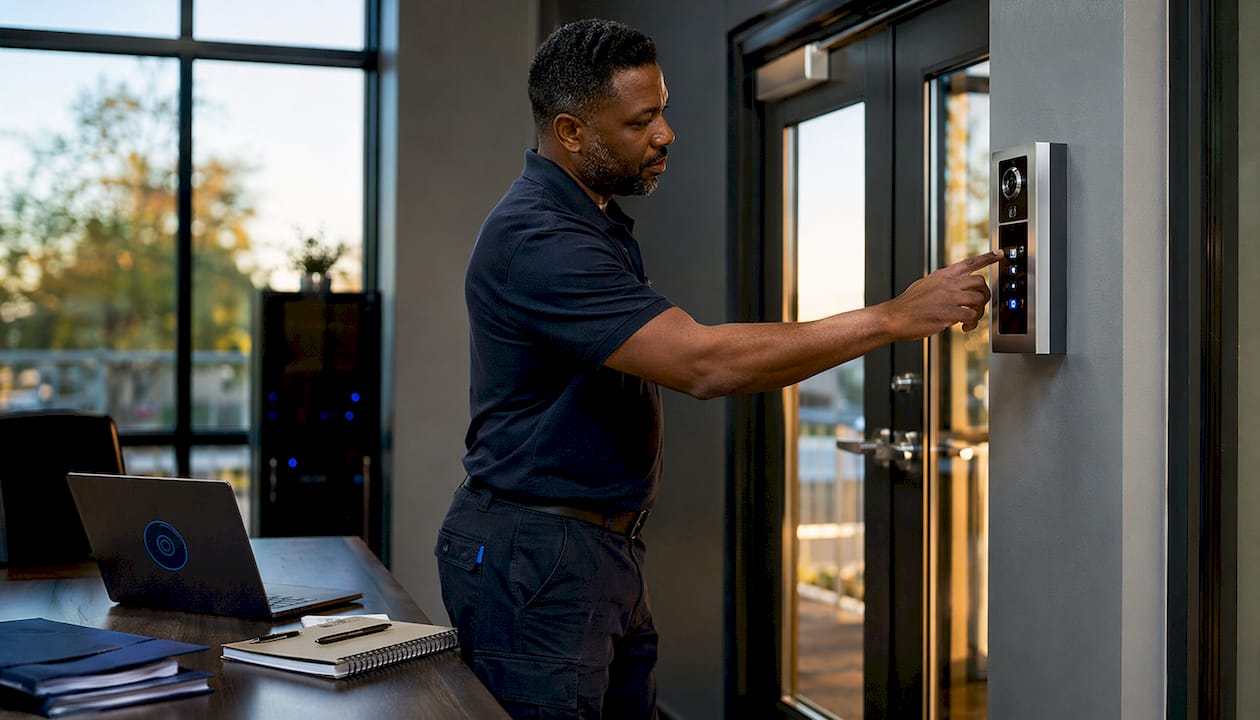
Two-way audio and video remain the foundation. Video intercoms allow staff to visually confirm a visitor’s identity before releasing a door, reducing the risk of impersonation that audio-only units cannot address. Noise cancellation and wide-angle lenses improve reliability in busy lobbies or outdoor entry points exposed to street noise.
Mobile app integration extends access management beyond the front desk. Staff or residents can receive visitor calls on a smartphone, view live video, and release the door remotely, whether they are on another floor or off-site entirely. VoIP and wireless technologies make this flexibility practical without requiring complex wiring infrastructure.
Additional features that directly improve security performance:
- Access event logging with timestamps for every entry attempt, successful or failed
- Integration with access control software to manage permissions and trigger alerts
- ADA-compliant interfaces with tactile controls and audio feedback for accessibility compliance
- Tamper detection that alerts staff if a door station is physically interfered with
- Fail-safe and fail-secure door hardware compatibility for fire egress compliance
Pro Tip: When evaluating intercom units, confirm that the door station supports Power over Ethernet (PoE). PoE eliminates a separate power supply at each entry point, simplifies installation, and keeps the unit online during a power event if the network switch is on a UPS.
Types of intercom systems used in residential and commercial buildings
Selecting the right system type starts with understanding what each category actually delivers and where it fits.
- Audio-only intercoms are the most basic option, providing voice communication between a visitor and an interior station. They suit low-traffic residential buildings or secondary entry points where visual verification is not a priority, and they carry the lowest installation cost.
- Video intercom systems add a camera at the door station, giving staff or residents a live image of the visitor before releasing the door. Visual verification reduces impersonation risk and is the standard for most commercial lobbies, multifamily buildings, and school entrances.
- IP-based intercoms transmit audio and video over the building’s data network rather than dedicated wiring. This enables remote management, software integration, and scalability across multiple entry points from a single platform.
- Wireless intercoms use Wi-Fi or cellular connections, eliminating the need for low-voltage wiring runs. They are well suited to retrofit installations in older buildings where running new cable is cost-prohibitive. Wireless apartment intercom systems have become a practical choice for NYC multifamily properties undergoing modernization.
- Smart app-integrated platforms route visitor calls to smartphones and allow cloud-based management of access permissions, video history, and user directories. These systems are common in modern commercial offices and mixed-use developments.
- Telephone entry systems dial a resident’s or tenant’s phone number directly when a visitor presses their unit on the directory panel. The resident can speak with the visitor and release the door by pressing a key on their phone, requiring no dedicated interior hardware.
For a detailed comparison of audio and video options, choosing between audio and video depends on your building’s traffic volume, security risk level, and budget.
Benefits of installing an intercom system in building security
The practical security gains from a properly installed intercom system are concrete and measurable in daily operations.
Visitor verification is the most direct benefit. Intercoms require every non-credentialed visitor to identify themselves and state their purpose before entry is granted. That single requirement stops a large share of opportunistic unauthorized access attempts before they begin.
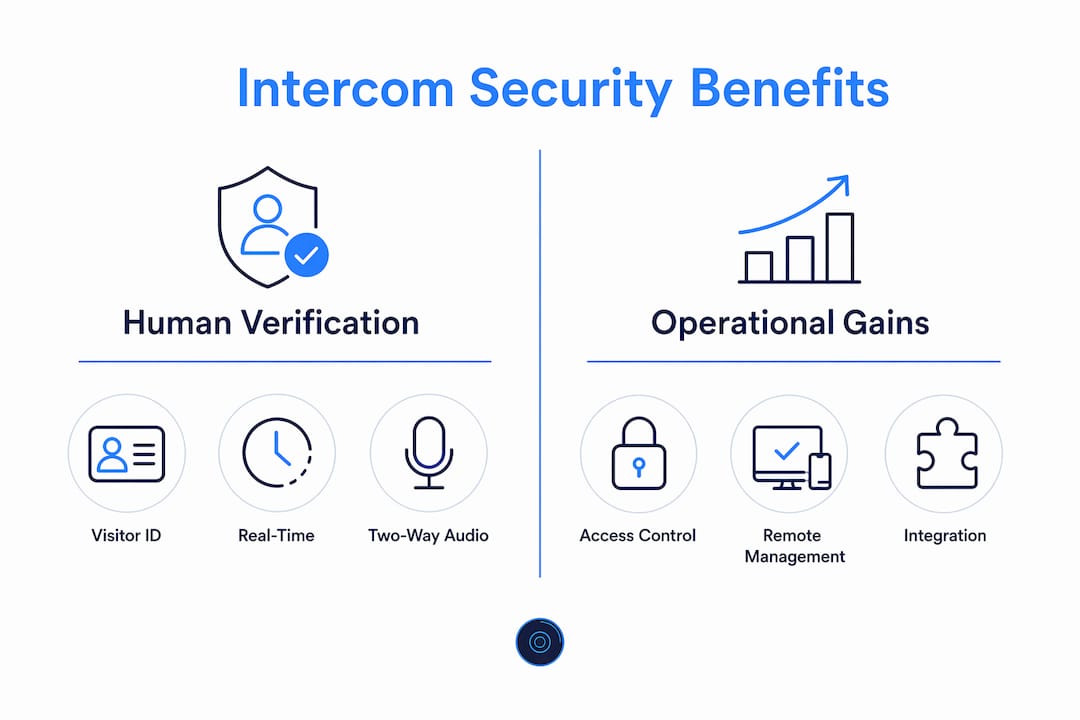
Psychological deterrence works even before a visitor presses the call button. Monitored intercom systems signal active security oversight to anyone approaching an entry point, raising the perceived risk of detection for anyone with unauthorized intent. Visible door stations, cameras, and indicator lights all contribute to this effect.
Additional operational benefits include:
- Reduced reliance on physical keys and shared credentials, which are common sources of security breaches in multitenant buildings
- Faster incident response, because staff can communicate directly with a person at the door rather than dispatching someone physically
- Improved emergency coordination, with intercoms providing a direct communication channel when fire, medical, or security events occur
- Streamlined visitor management for buildings with high foot traffic, such as office towers, healthcare campuses, and residential complexes in Manhattan or Brooklyn
How intercom systems operate as part of integrated building security
Intercoms function most effectively when treated as a component of a unified security infrastructure rather than a standalone device. Integrating intercoms with access control into a single managed system creates a multilayered approach where each technology reinforces the others.

The operational sequence works like this: a visitor arrives at an entry point and initiates a call through the door station. That call routes to authorized staff, who communicate with the visitor via audio or video, verify their identity, and then release the door through the connected access control system. Every step is logged automatically, creating a traceable record of the access decision.
Key integration points that strengthen overall security:
- CCTV systems provide visual verification alongside the intercom feed and record footage for post-incident review
- Alarm systems can be configured to trigger when an intercom detects suspicious activity or when a door is held open beyond a set threshold
- Access control software manages user permissions, logs entry events, and generates alerts for failed access attempts
- Mobile access platforms allow remote door release and real-time monitoring from smartphones, which is particularly useful for buildings with unmanned lobbies
Remote intercom management via IP networks allows a single operator to monitor and control multiple entry points across a large facility or campus. For sensitive areas such as server rooms, cash rooms, or pharmacy storage, combining intercom verification with badge-in requirements creates a two-factor authentication layer that credential systems alone cannot replicate.
Choosing the right intercom system for your building
The right system depends on four variables: building size, entry point count, user volume, and the security infrastructure already in place.
Building size and entry points determine whether a standalone unit or a networked system is appropriate. A single-door retail space in Queens may need nothing more than a video intercom with a mobile app. A 20-story office tower in Manhattan with multiple lobbies, parking access, and loading docks requires a networked IP platform with centralized management.
Feature requirements follow from your security risk profile. Buildings that regularly receive visitors without credentials, such as healthcare facilities, law offices, or multifamily residential properties, benefit most from video intercoms with event logging. Audio-only systems are adequate only where visual verification is genuinely unnecessary.
Compatibility with existing infrastructure is often the deciding factor in system selection. Treating the intercom as part of a complete door entry system rather than a separate device avoids operational gaps and ensures unified audit trails. Confirm that any new intercom integrates with your current access control software, door hardware, and network before purchasing.
Additional selection criteria:
- ADA compliance requirements for public-facing entry points
- Fail-safe vs. fail-secure door hardware compatibility for fire egress regulations
- Station capacity to accommodate future expansion without replacing core components
- Warranty and service support from the installing contractor
Pro Tip: Plan the intercom early in any security system design project. Intercoms planned late in the process frequently result in incompatibility issues, feature limitations, and costly retrofits. Selecting the door station location before camera placement can also eliminate redundant video feeds.
Common problems with intercom systems and how to prevent them
Intercom reliability directly affects tenant safety. A door station that fails silently, or a system that drops calls intermittently, creates exactly the access gap that a security system is designed to prevent. Understanding the most frequent failure points helps building managers address them before they become incidents.
Common intercom problems include wiring faults, compatibility issues between components, and audio or video degradation over time. Each has a predictable cause and a straightforward prevention strategy.
Frequent issues and their root causes:
- Wiring faults in older buildings where low-voltage cable has degraded, been improperly spliced, or was undersized for the current system load
- Compatibility failures when new door stations or access control software are added without verifying integration with existing hardware
- Audio distortion or video blur caused by aging components, moisture ingress at outdoor stations, or insufficient network bandwidth for IP video
- Power supply failures in wireless units with batteries that are not on a scheduled replacement cycle
- Software and firmware drift where units running outdated firmware lose features or develop security vulnerabilities
A structured maintenance program addresses all of these. Monthly visual inspections of door stations, quarterly functional tests of audio and video quality, annual firmware updates, and professional servicing every 12–18 months keep systems performing reliably. The role of intercom repair in tenant safety is often underestimated until a failure occurs during an actual security event.
Installation best practices and placement strategies
Correct placement determines whether an intercom system actually secures a building or simply occupies wall space. Door stations should be mounted at primary entry points where all visitors must pass, not at secondary or service entrances that are monitored less frequently.
Height and visibility matter for both usability and camera effectiveness. The Security Industry Association recommends mounting video door stations at a height that captures a clear facial image of an average-height adult, typically between 48 and 54 inches from the finished floor. ADA guidelines require that operable controls be reachable from a wheelchair, generally no higher than 48 inches, so ADA-compliant units with extended camera angles address both requirements simultaneously.
Wiring and power planning should be finalized before walls are closed. For IP intercoms, a dedicated network drop and PoE switch port at each door station location eliminates power supply clutter and simplifies future maintenance. Conduit runs should be sized to allow cable replacement without opening walls. For apartment buildings with door release systems, the wiring path between the door station, the controller, and the electric strike or magnetic lock must be planned as a single circuit, not three separate afterthoughts.
Camera field of view at each door station should be mapped before installation. Positioning the door station so that the camera captures the visitor’s face, not the back of their head or the top of a hat, requires attention to approach angle and lighting. Supplemental lighting at entry points improves video quality after dark without requiring higher-resolution cameras.
Privacy and data security concerns with intercom systems
Video intercoms record images and audio of every person who approaches a building entry point, including residents, employees, and members of the public. That data carries legal and ethical obligations that building managers must address proactively.
Data storage and retention policies should specify how long video recordings are kept, where they are stored, and who has access. Cloud-based intercom platforms that store footage on third-party servers require a clear data processing agreement that addresses breach notification, data deletion, and jurisdictional compliance. On-premise storage gives building managers direct control but requires physical security for the server and a defined backup process.
Facial recognition integration raises additional concerns. The FTC has flagged facial recognition as a technology that requires careful handling due to accuracy disparities and privacy risks. Buildings in New York City that deploy facial recognition at entry points must comply with applicable local regulations and post clear notice to visitors and residents.
Network security for IP intercoms is frequently overlooked. Door stations connected to the building network should be placed on a dedicated VLAN, separated from general office or residential traffic, to limit exposure if a device is compromised. Default passwords on intercom hardware must be changed during installation, and firmware should be updated on a regular schedule to close known vulnerabilities.
Legal and regulatory considerations for intercom use in buildings
Building managers in New York City operate under a specific set of legal requirements that affect intercom system design, installation, and operation.
New York City Local Law requirements for multifamily residential buildings include provisions for building-wide intercom or communication systems as part of minimum habitability standards. Buildings undergoing renovation or new construction must meet current code, which typically requires intercoms at all primary entry points accessible to the public.
ADA compliance under the Americans with Disabilities Act requires that intercom controls at publicly accessible entry points be operable by people with disabilities. This includes tactile controls, audio output, and mounting heights within reach range. Non-compliant installations expose building owners to civil liability and regulatory penalties.
Fire and life safety codes affect door hardware connected to intercom systems. Doors on fire egress routes must use fail-safe hardware that releases upon fire alarm activation, regardless of the access control or intercom state. Coordinating intercom installation with a licensed fire alarm contractor ensures that door release logic does not conflict with egress requirements. Gate automation and access integration at vehicle entry points carries similar code considerations for emergency vehicle access.
Tenant notification is required in most jurisdictions when audio or video recording equipment is installed in common areas. Posting clear signage at entry points stating that the area is monitored satisfies most state and local notice requirements and reduces liability exposure.
Cost considerations and budgeting for intercom system deployment
Intercom system costs vary widely based on system type, building size, and integration complexity. Audio-only systems for a single entry point represent the lowest investment, while networked IP video platforms covering multiple entry points across a large commercial building represent a substantially larger capital commitment.
Hardware costs include door stations, interior panels or app licenses, controllers, door hardware, and power supplies. IP video door stations from established manufacturers carry higher unit costs than analog audio units but offer longer service life, software integration, and remote management capabilities that reduce long-term operational costs.
Installation labor in New York City reflects the cost of licensed low-voltage contractors, conduit work, and coordination with other trades. Buildings that plan intercom installation early in a construction or renovation project reduce labor costs by avoiding retrofit wiring and wall patching. Professional intercom installation by licensed technicians also ensures code compliance and warranty validity.
Ongoing costs include software subscriptions for cloud-based platforms, annual maintenance contracts, and periodic hardware replacement. Budgeting for a maintenance cycle from the outset, rather than treating the system as a one-time capital expense, prevents the deferred maintenance failures that compromise tenant safety and building security.
For buildings that also need complementary door hardware and locksmith services, bundling intercom installation with door hardware upgrades often reduces total project cost and ensures that all components are specified to work together.
Emerging technologies and future trends in intercom security
The intercom category is evolving faster in 2026 than at any point in its history, driven by IP networking, mobile computing, and cloud software.
AI-powered video analytics at the door station level can flag unusual behavior, detect tailgating, or identify when a door has been held open beyond a normal threshold, sending automated alerts to security staff without requiring constant manual monitoring. These capabilities are moving from enterprise-only deployments into mid-market commercial buildings as hardware costs decline.
Mobile credential integration allows visitors to receive a temporary digital credential on their smartphone before arriving, which the intercom system verifies upon arrival without requiring staff intervention. This approach is gaining traction in office buildings and healthcare campuses where managing large volumes of scheduled visitors manually creates operational bottlenecks.
Cloud-based intercom management platforms allow building managers to update user directories, review access logs, and adjust permissions from any device with a browser. For property management companies overseeing multiple buildings across Staten Island, Brooklyn, or Manhattan, centralized cloud management eliminates the need for on-site administration at each location.
Touchless entry using QR codes, Bluetooth, or NFC at the door station reduces contact at high-traffic entry points and aligns with hygiene standards that became standard practice in commercial buildings. Paired with access control systems, touchless intercom workflows create a fully contactless entry process for credentialed users while maintaining human verification for visitors.
Work with YDA Security Systems NYC for expert intercom installation
YDA Security Systems NYC designs and installs intercom systems for residential and commercial properties across Manhattan, Brooklyn, Queens, and Staten Island. Our licensed technicians handle everything from single-door video intercom installations to networked IP platforms covering multiple entry points in large commercial facilities. Every installation carries a 1-year warranty, and our team has served over 5,000 clients across NYC.
Whether you manage a multifamily residential building, a commercial office, or a hotel security system, we configure intercom and access control solutions that match your building’s specific security requirements. Contact YDA Security Systems NYC for a consultation and site assessment.
Key Takeaways
Intercom systems provide the human verification layer that automated access control cannot replace, making them a foundational component of any building security strategy.
| Point | Details |
|---|---|
| Human verification layer | Intercoms verify visitors in real time before any door is released, closing the gap that credential-only systems leave open. |
| Integration multiplies security | Combining intercoms with access control, CCTV, and alarm systems creates a unified, auditable security infrastructure. |
| Plan intercoms early | Systems planned late in a project frequently result in incompatibility, feature loss, and costly retrofits. |
| Maintenance prevents failures | Regular testing, firmware updates, and professional servicing every 12–18 months prevent the reliability gaps that compromise tenant safety. |
| Legal compliance is mandatory | ADA requirements, NYC local law, and fire egress codes all affect intercom system design, placement, and door hardware selection. |
FAQ
What is the purpose of an intercom in a building?
An intercom enables real-time two-way communication between visitors and authorized personnel at a building entry point, allowing identity verification before a door is released. It serves as both a communication tool and a security control, particularly for visitors who carry no permanent access credentials.
How does a building intercom system work?
A visitor presses the call button on the door station, which routes audio or video to an interior panel, a front desk phone, or a mobile app. Authorized staff communicate with the visitor, verify their identity, and release the door remotely through the connected access control system.
What are the most common problems with intercom systems?
The most frequent issues are wiring faults in older buildings, audio or video quality degradation, compatibility failures when new components are added, and power supply failures in wireless units. A scheduled maintenance program covering inspections, firmware updates, and professional servicing prevents most of these failures.
What role does communication play in building security?
Direct, real-time communication between security personnel and anyone at an entry point allows staff to assess intent, resolve access issues, and coordinate emergency responses faster than any automated system can. Intercoms provide that communication channel at the exact moment it is most needed, when someone is requesting entry.
How do intercoms enhance security beyond basic communication?
Intercoms introduce a human decision-making step into every access event, which automated systems bypass entirely. When integrated with CCTV, alarm systems, and access control software, they create a multilayered security approach with full audit trails, psychological deterrence, and real-time incident response capability.