CCTV cameras do reduce crime, but the effect is modest on average and highly dependent on where cameras are placed and how the system is operated. A 40-year systematic review and meta-analysis by Piza, Welsh, and Farrington found an average crime reduction in areas with CCTV versus matched control areas. In parking facilities, that figure climbs notably higher for vehicle crime in parking facilities. The weakest results appear in open public spaces where cameras are passive and unmonitored.
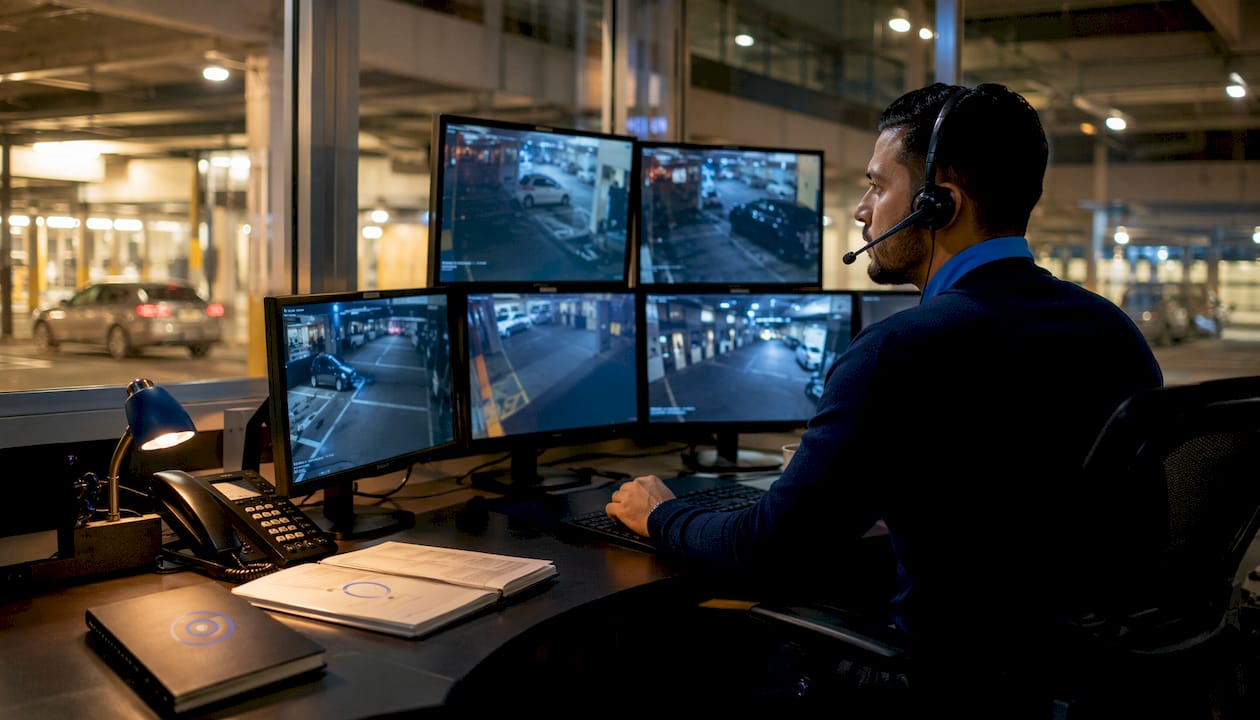
The single most important factor is active monitoring. A camera that records but triggers no response is significantly less effective than one connected to a real-time monitoring workflow.
Pro Tip: Place cameras visibly at every entry and exit point, post clear signage, and connect footage to a monitored response protocol. Visibility without response is only half the equation.
YDA Security Systems NYC installs and configures CCTV systems across Manhattan, Brooklyn, Queens, and Staten Island with exactly this layered approach in mind.
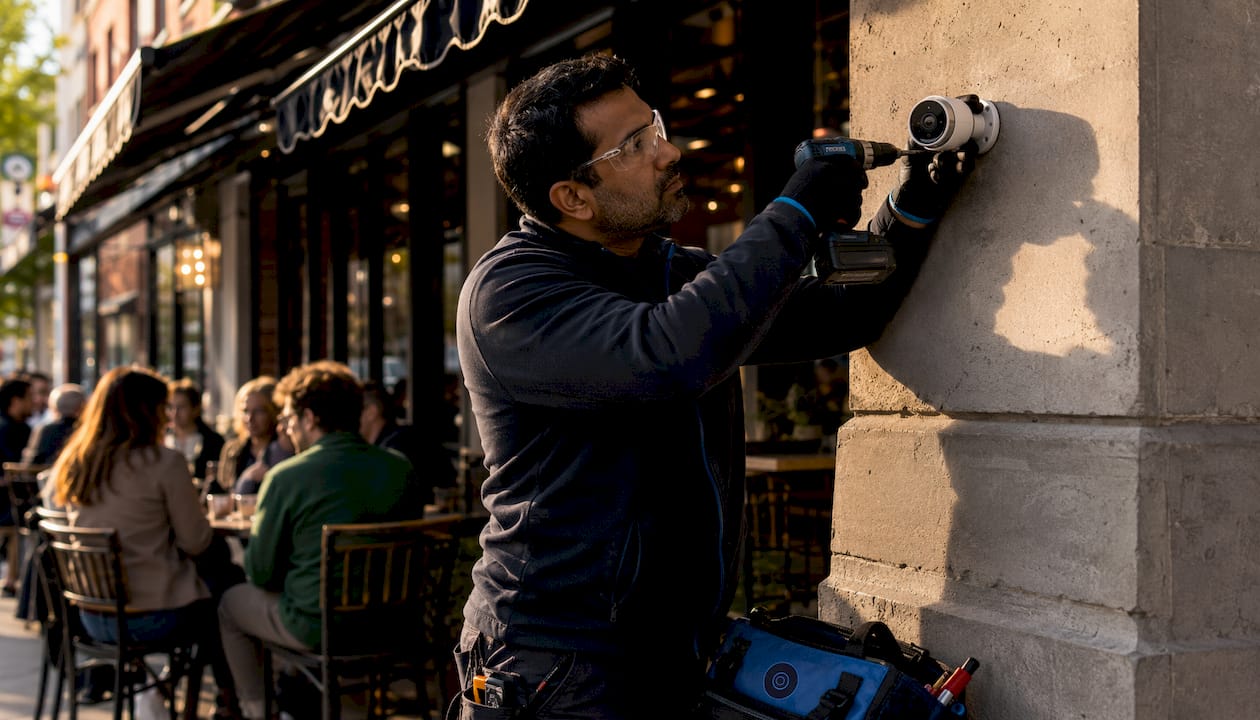
Table of Contents
- What does the research actually show about CCTV and crime reduction?
- How do CCTV cameras actually change offender behavior?
- Where does CCTV work best, and where does it fall short?
- When CCTV does not reduce crime, and what can go wrong
- How to maximize the effectiveness of your CCTV system
- How YDA Security Systems NYC integrates CCTV into a layered security program
- Key Takeaways
- YDA Security Systems NYC can put this research to work for your property
- FAQ
- Useful sources and further reading
What does the research actually show about CCTV and crime reduction?
The most authoritative source on this question is the Piza et al. (2019) systematic review, published through the Office of Justice Programs. Drawing on 40 years of evaluation research, it confirmed that CCTV is associated with a statistically significant, if modest, overall crime reduction of approximately 13%.
The review also found that actively monitored schemes produce larger effect sizes than passive systems where footage is only reviewed after an incident. Schemes that combined CCTV with complementary interventions, such as improved lighting or access control, consistently outperformed single-measure deployments.
The College of Policing’s Crime Reduction Toolkit adds useful crime-type specificity: drug-related crime fell by approximately 20% and vehicle or property crime by approximately 14% in evaluated schemes. Violent crime, by contrast, showed no consistent reduction across studies.

| Setting | Approximate Effect | Notes |
|---|---|---|
| Parking facilities | Up to ~51% reduction | Strongest, most consistent finding |
| Residential areas | Significant in several studies | Effect varies by scheme design |
| Drug-related crime | ~20% reduction | College of Policing summary |
| Vehicle/property crime | ~14% reduction | College of Policing summary |
| Violent crime | No consistent effect | Limited impact across most evaluations |
| Public open spaces | Mixed/weak | Passive schemes show little benefit |
The heterogeneity across studies is real. A scheme covering a single monitored parking garage in Brooklyn will likely outperform a broad, passive network of cameras mounted across a town center with no response protocol attached.
How do CCTV cameras actually change offender behavior?
Understanding the mechanisms helps property owners design systems that work rather than just look reassuring. Gill and Spriggs (2005) identified four primary pathways through which CCTV influences criminal behavior:
- Increased perceived risk of detection. Offenders who see cameras, or know cameras are present, recalculate the likelihood of being caught. This is the primary deterrence mechanism for planned crimes like vehicle theft.
- Actual detection and evidence capture. When monitoring staff observe suspicious behavior in real time, they can dispatch security or alert police before a crime completes. Post-incident, footage supports prosecution.
- Targeted police and security deployment. Monitored systems allow operators to direct resources to where activity is developing, improving response efficiency rather than relying on reactive patrol.
- Publicity and memory-jogging. Signage and public awareness campaigns remind potential offenders that cameras are present, extending deterrence beyond the camera’s physical field of view.
A practical example: a monitored camera at a parking garage entrance in Queens detects a person attempting to break into a vehicle. The operator contacts on-site security within seconds. The offender, aware of the camera, abandons the attempt. Without active monitoring, that same camera captures the incident but prevents nothing.
Placement strategy shapes how well these mechanisms operate. Cameras positioned at ingress and egress points force every person entering a space to pass within clear view, maximizing the perceived risk effect.
Pro Tip: Angle at least one camera to capture license plate-level detail at every vehicle entry point. That single field-of-view adjustment significantly increases both deterrence and evidence value for vehicle crime.
Where does CCTV work best, and where does it fall short?
Setting is the strongest predictor of whether a CCTV scheme will produce measurable crime reductions. The evidence is not uniform across environments.
Parking facilities
This is where the research is most consistent. Vehicle crime reductions of up to approximately 51% have been documented in parking facility studies. The combination of a controlled environment, limited entry and exit points, and a specific crime type (vehicle theft) that requires time and planning makes parking garages ideal for CCTV deterrence. For a Manhattan or Brooklyn property with an attached garage, this is the highest-return placement.
Residential buildings
Residential settings show significant reductions in several studies, particularly when cameras cover lobby entrances, mailroom areas, and stairwells. The effect is strongest when residents are aware of the system and when footage is actively reviewed. A property manager’s approach to common-area coverage that combines camera placement with access control and intercom systems consistently outperforms cameras installed in isolation.
Retail environments
Retail shows moderate effects for property crime and shoplifting, particularly when cameras are visible to customers and staff are trained to use footage in real time. The deterrence effect on opportunistic theft is well-documented; organized retail crime, which involves more planning and counter-surveillance awareness, is harder to address with cameras alone.
Public transport and city centers
Effects here are mixed. Open environments with multiple access points and high foot traffic dilute the perceived-risk mechanism. Passive systems in these settings often show little measurable impact. Active monitoring with rapid response, as used in some transit authority deployments, produces better outcomes.
| Setting | Effect Strength | Key Condition |
|---|---|---|
| Parking facilities | Strong (up to ~51%) | Controlled access, vehicle crime focus |
| Residential buildings | Moderate to significant | Active monitoring, access control integration |
| Retail | Moderate | Visible cameras, staff awareness |
| Public transport | Mixed | Requires active monitoring |
| Open city centers | Weak to mixed | Passive systems show limited benefit |
- NYC apartment lobbies benefit most from cameras covering the main entrance, elevator banks, and package areas.
- Parking garages in Queens and Staten Island show the strongest deterrence returns when cameras cover every vehicle entry point with plate-level resolution.
- Storefronts in Manhattan see the clearest results when cameras are positioned at eye level near the register and at the entrance, visible to anyone entering.
When CCTV does not reduce crime, and what can go wrong
The research is honest about limitations, and property owners should be too. Several documented effects complicate a straightforward “install cameras, reduce crime” narrative.
Recorded crime can rise after installation. This is not a failure of the system. Some evaluations report an initial increase in logged offenses after CCTV deployment because cameras detect incidents that would otherwise go unreported. A building that previously had no record of package theft may suddenly show five incidents per month, not because theft increased, but because it is now being captured and reported. Understanding how policing styles affect crime data helps interpret these before-and-after figures accurately.
Displacement is possible but not inevitable. The concern that cameras simply push crime to adjacent areas is frequently raised. High-quality evaluations, however, find limited evidence of displacement. Several studies actually report a diffusion of benefits, where crime reductions extend into neighboring areas not directly covered by cameras.
Violent crime is largely unaffected. The College of Policing’s toolkit is direct on this point: CCTV shows no consistent effect on violent crime. Impulsive, short-duration offenses do not allow the offender time to perceive and respond to camera presence the way a vehicle thief planning a break-in would.
A realistic scenario: a residential building in Staten Island installs cameras in the lobby but does not update the intercom system or add access control to the rear entrance. Vehicle crime in the front parking area drops noticeably. Unauthorized entry through the unsecured rear door continues unchanged. The cameras addressed one vulnerability while the broader security gap remained open.
How to maximize the effectiveness of your CCTV system
The gap between a camera system that deters crime and one that merely documents it comes down to design, monitoring, and integration. Here are the priority actions, in order of impact:
- Prioritize ingress and egress coverage over total camera count.
- One well-placed PTZ or fixed camera covering a vehicle entry with plate-level resolution outperforms several low-quality cameras mounted for broad, unfocused coverage.
- Invest in active monitoring or a rapid-response workflow. Passive recording alone produces significantly weaker deterrence. Connect footage to a monitoring station, a contracted security service, or an alert-based system that triggers a response.
- Post clear, visible signage at every camera location. Signage extends the deterrence effect beyond the camera’s field of view and is also a legal best practice in most U.S. jurisdictions.
- Integrate cameras with complementary systems. The College of Policing toolkit notes that multi-intervention schemes produce substantially greater effects, with some studies reporting up to approximately 34% greater crime reduction when CCTV is combined with improved lighting and access control.
- Maintain adequate lighting at all camera positions. Low-light footage reduces both deterrence value and evidence quality.
For installation planning, a typical residential building project in NYC runs from initial site survey through final configuration in one to three days for a standard multi-camera setup. Commercial installations with integrated access control and intercom systems generally require more time depending on building size and wiring conditions. Cost drivers include camera resolution and type (fixed vs. PTZ), cable runs, network video recorder capacity, and whether active monitoring is included.
On data retention: retain footage long enough to support investigations, but document your retention and deletion policy clearly. U.S. privacy law does not set a single federal retention standard, so retention windows vary by use case and local ordinance. Clearly posted signage and a written policy reduce legal exposure.
- Conduct a site survey to map all entry points, parking areas, and high-value zones before specifying camera positions.
- Select camera types based on field-of-view requirements, not just resolution specs.
- Configure recording quality at a level that supports facial and plate identification.
- Establish a written monitoring and response protocol before the system goes live.
- Schedule periodic live-check drills with monitoring staff to validate response times and refine dispatch procedures.
Pro Tip: Run a quarterly drill with your monitoring team and, where possible, coordinate with your local precinct. Testing the response chain before an incident occurs materially improves both deterrence and post-incident evidence value.
How YDA Security Systems NYC integrates CCTV into a layered security program
YDA Security Systems NYC approaches every installation as a security program, not a product sale. The process begins with a site survey that maps ingress and egress points, parking areas, lobby configurations, and any existing low-voltage infrastructure. Camera positions are specified to maximize field-of-view coverage of the highest-risk zones first, consistent with the placement principles the research supports.
A typical mid-size Manhattan residential building project follows this sequence: site survey and risk assessment, targeted camera placement at lobby entrances, elevator banks, and parking entry points, network video recorder configuration with appropriate retention settings, active monitoring options configured to the building’s staffing model, and staff orientation on how to use the system and escalate incidents. Every installation is completed by licensed and insured technicians and backed by a one-year warranty.
For commercial security camera installation in retail, office, or mixed-use buildings across Brooklyn, Queens, and Staten Island, YDA integrates CCTV with access control systems and intercom infrastructure to create the multi-component security programs that the research consistently identifies as most effective. A camera covering a door that can also be remotely locked and monitored through an intercom is a fundamentally more capable deterrent than a camera alone.
Readers managing properties in NYC can review YDA’s full approach to how CCTV cameras deter crime through the residential installation service page, which covers camera options, monitoring configurations, and the site survey process.
Key Takeaways
CCTV cameras produce a statistically significant average crime reduction of approximately 13%, with the strongest effects in parking facilities and the weakest in passive, open-space deployments.
| Point | Details |
|---|---|
| Average crime reduction | Meta-analysis evidence shows roughly 13% overall reduction in treatment areas versus controls. |
| Strongest setting | Parking facilities show up to approximately 51% reduction in vehicle crime. |
| Active monitoring matters | Actively monitored schemes produce larger, more consistent effects than passive recording systems. |
| Multi-layer approach | Combining CCTV with lighting, access control, and signage can substantially increase effectiveness. |
| YDA Security Systems NYC | Licensed installers serving Manhattan, Brooklyn, Queens, and Staten Island deploy CCTV as part of integrated, monitored security programs backed by a one-year warranty. |
YDA Security Systems NYC can put this research to work for your property
The evidence is clear: a well-designed, actively monitored CCTV system integrated with access control and proper signage is one of the most cost-effective crime prevention tools available to NYC property owners. The difference between a system that deters crime and one that only documents it is professional design and a real response protocol.
YDA Security Systems NYC brings licensed installation, advanced IP camera technology, and a one-year warranty to residential and commercial properties across Manhattan, Brooklyn, Queens, and Staten Island. With over 5,000 satisfied clients, we handle everything from the initial site survey through monitoring configuration and staff training. Request a site survey or get a quote for security cameras installation and let us design a system built around the settings and mechanisms the research shows actually work.
FAQ
Do CCTV cameras actually reduce crime?
Yes, with important caveats. A 40-year meta-analysis found an average reduction of approximately 13%, with the strongest effects in parking facilities and the weakest in passive open-space deployments.
Are visible cameras more effective than covert ones?
Visible cameras are more effective for deterrence because the perceived risk of detection is the primary mechanism. Covert cameras are better suited for evidence capture but do not deter crime before it occurs.
How long does it take to see results after CCTV installation?
Some studies report an initial rise in recorded crime immediately after installation due to improved detection and reporting. Measurable deterrence effects typically become apparent within the first few months as offenders adjust behavior.
What privacy and signage rules apply to CCTV in the United States?
There is no single federal standard, but U.S. law generally requires that surveillance in areas where people have a reasonable expectation of privacy be disclosed. Clear signage at camera locations is both a legal best practice and a deterrence tool. Consult a qualified legal professional for your specific jurisdiction and use case.
Does active monitoring really make a difference?
Yes. Research shows that actively monitored CCTV schemes produce statistically significant crime reductions, while passive systems often show no significant effect. YDA Security Systems NYC configures monitoring workflows as a standard part of commercial installations.
Useful sources and further reading
The primary sources referenced throughout this article are listed below for readers who want to consult the original research:
- Piza, Welsh & Farrington (2019) — OJP Systematic Review and Meta-Analysis: The most comprehensive evaluation of CCTV effectiveness to date, covering 40 years of research.
- Piza et al. — Full Academic Paper via CUNY Academic Works: Full text of the meta-analysis with detailed methodology and setting-specific findings.
- College of Policing Crime Reduction Toolkit — CCTV: Practitioner-focused summary of evidence by crime type, with implementation guidance.
- Gill & Spriggs (2005) — Home Office Research Study: Detailed evaluation of CCTV schemes in the UK, identifying key mechanisms and implementation factors.
- Armitage — CCTV Placement Guidance (PopCenter): Practitioner guidance on camera placement strategy and field-of-view prioritization.
- Consumer-facing guides from Security.org and ADT provide accessible overviews of camera types and consumer expectations, though they do not substitute for peer-reviewed evidence when evaluating effectiveness claims.
For installation guidance specific to NYC residential and commercial properties, the YDA Security Systems NYC service pages cover camera selection, monitoring options, and the site survey process in detail.
This article is general informational content, not legal or professional security advice. Confirm current local regulations and consult a qualified security professional for your specific property and jurisdiction.