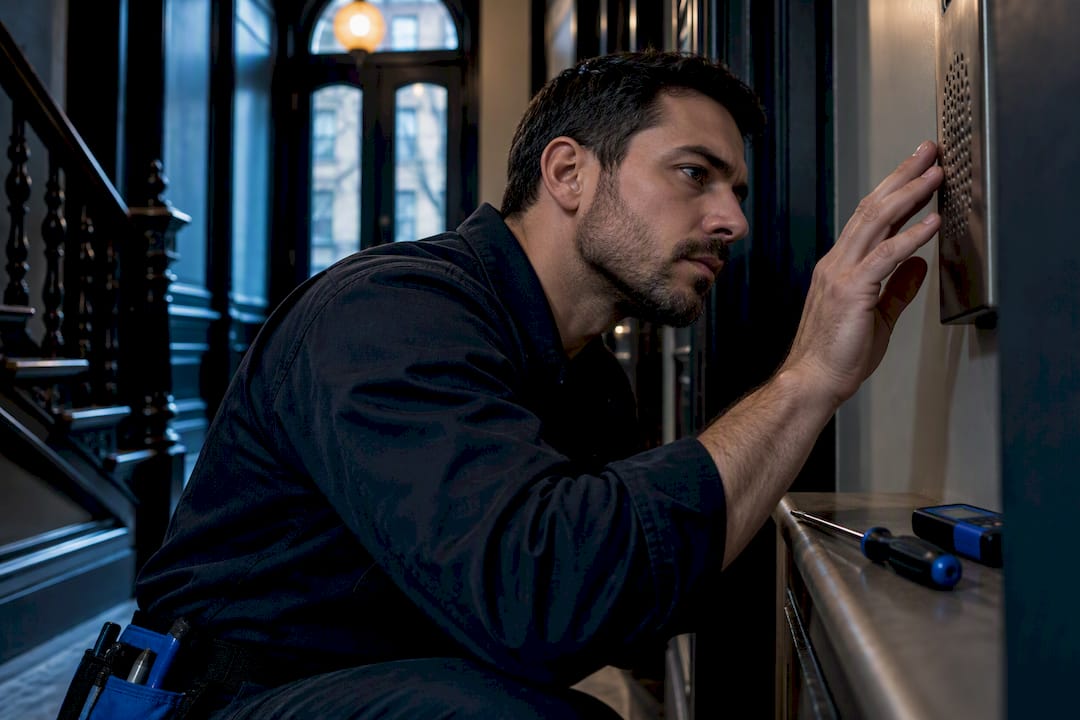
Video surveillance systems in schools are defined as networked camera and recording platforms designed to monitor campus activity, deter threats, and document incidents in real time. Understanding why schools use video surveillance systems matters because over 93% of public schools in the U.S. have already deployed them, reflecting a broad institutional consensus on their value. These systems operate under frameworks shaped by federal regulations like FERPA and safety standards such as the PASS Safety Guidelines. The core purpose is straightforward: protect students and staff by maintaining continuous visibility across every zone of a campus, from entry points to parking lots.
Why schools use video surveillance systems: core safety benefits
School video surveillance, also called closed-circuit television or CCTV in professional contexts, delivers three primary benefits: deterrence, real-time monitoring, and incident documentation. Each benefit addresses a distinct security gap that administrative policies alone cannot close.
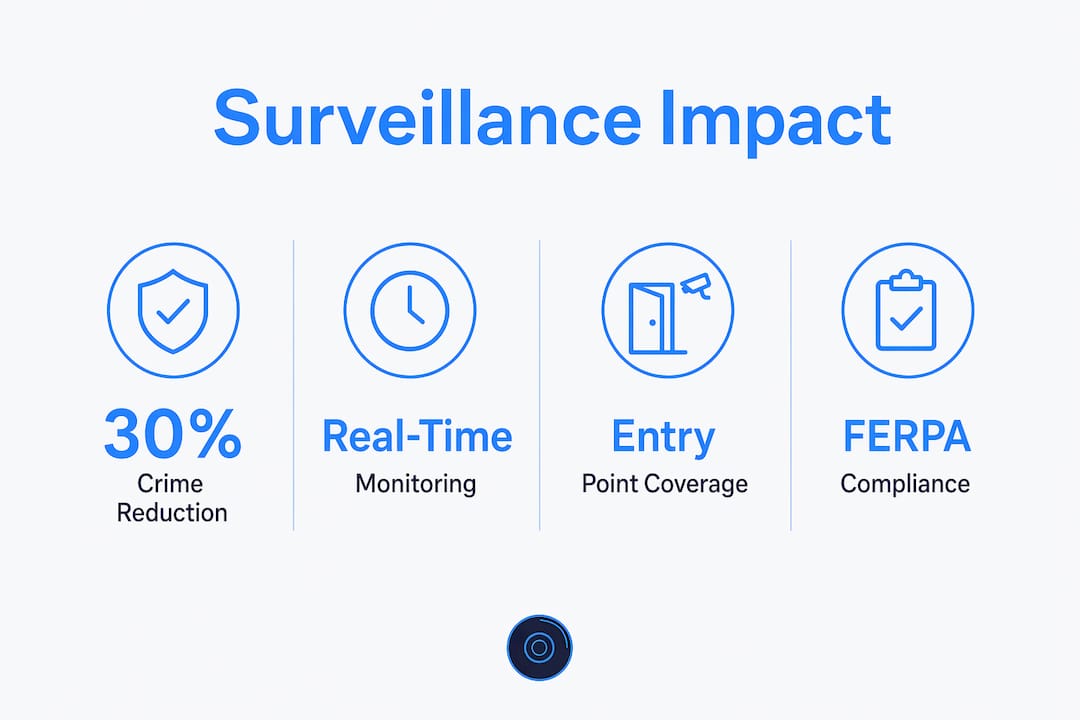
Deterrence through visible cameras is the most immediate effect. Schools with well-placed CCTV report 20 to 30 percent fewer incidents of property crime and antisocial behavior compared to schools without surveillance. That reduction reflects the psychological impact of visible cameras on potential offenders, whether students, staff, or outside intruders.
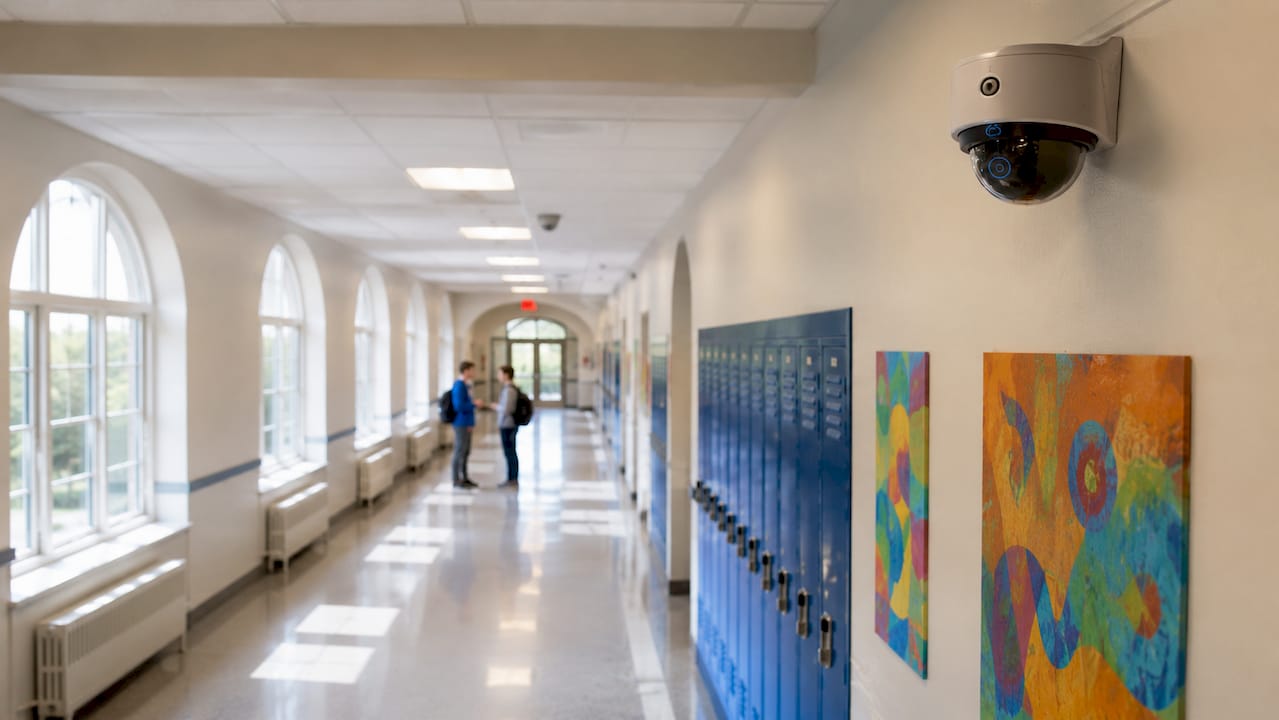
Real-time monitoring extends the reach of limited security staff. A single security officer cannot physically cover hallways, cafeterias, gymnasiums, and parking lots simultaneously. Camera networks fill that gap by providing continuous coverage. AI analytics paired with surveillance cameras enable real-time detection of threats like fights, weapons, and medical emergencies, flagging anomalous activity before staff would otherwise notice it.
Incident documentation creates an objective record that supports disciplinary decisions, law enforcement investigations, and insurance claims. Footage from a hallway altercation, for example, removes ambiguity from witness accounts and protects both students and administrators from false allegations.
The benefits of school surveillance also extend to visitor management. When cameras are integrated with access control systems, administrators can verify identities at entry points and track movement throughout the building. This integration is particularly relevant for schools in dense urban environments like Manhattan, Brooklyn, and Queens, where unauthorized access is a persistent concern.
- Hallways and common areas: cameras deter bullying and monitor crowd behavior during passing periods.
- Entry points and vestibules: cameras work alongside intercom and access control systems to screen visitors.
- Parking lots and perimeters: cameras detect unauthorized vehicles and monitor after-hours activity.
- Gymnasiums and cafeterias: cameras provide coverage in high-density spaces where incidents concentrate.
Pro Tip: Position cameras at entry vestibules to capture clear facial images of every person entering the building. This single placement decision supports both real-time screening and post-incident review.
How to plan and implement a school camera system
Effective implementation begins with a formal campus security assessment, not with purchasing cameras. Administrators should map every zone, identify existing vulnerabilities, and define clear security objectives before selecting equipment. This sequence prevents the most common and costly mistake in school surveillance: buying hardware that does not match the environment.
- Conduct a zone assessment. Identify high-risk areas, blind spots, and zones requiring privacy protection, such as counseling offices and restrooms.
- Select appropriate camera types. Fixed cameras suit entry points and corridors. Pan-tilt-zoom cameras work better in large open spaces like gymnasiums and parking lots.
- Plan camera positioning carefully. Camera installation requires precise positioning, avoiding direct backlighting and capturing clear facial features at critical access points.
- Design the network infrastructure. Camera count, resolution, and frame rate determine bandwidth requirements. A multi-building campus needs a network plan that accounts for each building’s load independently.
- Plan storage capacity before installation. System design must consider storage capacity, retention period, and future scalability to avoid costly early upgrades.
Storage planning deserves particular attention. The choice between on-premise network video recorders, cloud storage, and hybrid configurations affects both cost and data security. Frame rate, the number of cameras, and whether the system records continuously or only on triggered events all determine how quickly storage fills. A 30-camera system recording at 15 frames per second continuously will exhaust a poorly sized recorder within days.
Pro Tip: Configure event-triggered recording for low-traffic zones and continuous recording only for high-priority areas like entry points. This approach extends storage life without sacrificing coverage where it counts most.
Scalability is a planning requirement, not an afterthought. Schools that install systems without expansion capacity often face full replacements within five years as enrollment grows or new buildings are added. Selecting a network video recorder platform that supports additional camera licenses from the start protects the initial investment. You can review school surveillance best practices for a detailed operational framework covering governance and integration.
What are the ethical and privacy considerations for school cameras?
School surveillance raises legitimate ethical questions that administrators must address directly. A multidimensional ethical framework for school surveillance identifies five core principles: proportionality, transparency, justice, data minimization, and student autonomy. Each principle functions as a check against surveillance that exceeds its safety mandate.
“Surveillance must not undermine student trust or the core educational mission. Open communication and impact assessments are required to ensure monitoring serves students rather than controls them.”
Proportionality means cameras cover only the areas and functions necessary to meet defined security objectives. Placing cameras in counseling offices or locker rooms violates this principle regardless of intent. Proper camera positioning and privacy masking are required to comply with privacy laws, and masking zones must be audited annually.
FERPA compliance adds a legal dimension to footage management. FERPA regulates access to student-related surveillance footage, classifying it as an education record when it relates to a disciplinary event. This means footage cannot be freely shared with parents, law enforcement, or media without following the same disclosure rules that govern academic records.
Student perception of surveillance also affects the learning environment. 67% of students in one survey felt uncomfortable with facial recognition surveillance, fearing they were treated as suspects rather than supported. That discomfort can suppress open expression and participation in school activities, which researchers call the “chilling effect.” Administrators who communicate clearly about what cameras monitor, who accesses footage, and how long recordings are retained reduce this effect meaningfully.
Community engagement is not optional. Schools should evaluate surveillance policies with ongoing input from parents, students, and staff to maintain alignment with local educational values. A policy developed in isolation, even a technically sound one, loses legitimacy when the community it affects had no voice in shaping it.
What are the latest trends in school surveillance technology for 2026?
The most significant development in school video surveillance in 2026 is the integration of AI analytics directly into physical security operations centers, or PSOCs. Integration of AI analytics into school security operations centers allows security directors to manage more cameras with fewer staff while responding to incidents faster. This shift changes surveillance from a passive recording function into an active threat detection system.
Key trends shaping school camera systems in 2026 include:
- AI-powered behavioral detection: Systems now flag specific behaviors, such as running, falling, or crowd formation, rather than relying on staff to monitor feeds continuously.
- Camera-based weapon detection: Advanced analytics can identify the shape of a firearm in a camera frame and trigger an immediate alert to security staff and local law enforcement.
- Emergency alerting integration: Camera systems connect directly to public address systems, lockdown protocols, and first responder dispatch platforms, compressing response times significantly.
- Alert fatigue management: Modern platforms filter low-priority alerts automatically, presenting only high-confidence detections to staff. This prevents the desensitization that occurs when systems generate too many false positives.
- Future-proofing through open architecture: Systems built on open standards allow schools to add new camera models, analytics modules, or storage solutions without replacing the entire platform.
Administrators evaluating these technologies should weigh capability against staff capacity. A weapon detection system is only as effective as the response protocol behind it. Technology and training must advance together. You can explore types of school security systems to understand how camera platforms integrate with access control, intercoms, and other safety layers.
Key Takeaways
School video surveillance systems protect students and staff by combining deterrence, real-time monitoring, and incident documentation within a framework that balances security with ethical and legal obligations.
| Point | Details |
|---|---|
| Widespread adoption | Over 93% of U.S. public schools use video surveillance, reflecting proven safety value. |
| Measurable deterrence | Schools with CCTV report 20 to 30 percent fewer property crime and antisocial behavior incidents. |
| Storage and scalability planning | Design storage capacity and network infrastructure before purchasing cameras to avoid early replacements. |
| FERPA compliance | Footage tied to disciplinary events is classified as an education record and requires careful access controls. |
| Ethical implementation | Proportionality, transparency, and community engagement are required to maintain student trust and legal compliance. |
School security camera installation in NYC: YDA Security Systems NYC
Schools across Manhattan, Brooklyn, Queens, and Staten Island face security challenges that require more than off-the-shelf camera kits. YDA Security Systems NYC designs and installs school security camera systems tailored to the specific layout, enrollment size, and compliance requirements of each educational facility. Our licensed and insured technicians integrate cameras with access control, intercom systems, and visitor management platforms to create a unified security environment. With over 5,000 satisfied clients and a one-year warranty on all installations, YDA Security Systems NYC delivers reliable protection backed by professional support. Contact us to discuss a security assessment for your school.
FAQ
Why do schools use video surveillance systems?
Schools use video surveillance systems to deter crime, monitor campus activity in real time, and document incidents for disciplinary and legal purposes. Over 93% of U.S. public schools have deployed these systems, reflecting their proven effectiveness in improving campus safety.
Does school surveillance footage fall under FERPA?
Yes. When footage relates to a disciplinary event involving an identifiable student, FERPA classifies it as an education record. Schools must follow the same disclosure rules for that footage as they do for academic records.
How many cameras does a school need?
Camera count depends on campus size, building layout, and the number of entry points, parking areas, and high-traffic zones requiring coverage. A formal security assessment conducted before installation determines the correct number and placement for each facility.
What is the biggest risk of poor camera placement?
Poor placement creates blind spots at critical access points and may capture restricted areas like restrooms, which violates privacy laws. Annual audits of camera angles and privacy masking zones are required to maintain compliance and effectiveness.
How does AI improve school video surveillance?
AI analytics flag specific threats, such as weapons or crowd disturbances, in real time without requiring staff to monitor every feed continuously. This capability allows security teams to manage larger camera networks with the same number of personnel.