Vandal resistant cameras are surveillance units built with reinforced housings, IK-rated domes, and tamper-proof mounting hardware designed to survive strikes, prying, and deliberate disabling attempts. The label gets thrown around loosely in marketing copy, but a genuinely hardened camera has a documented IK impact rating and an IP ingress rating printed on its spec sheet, not just a “vandal-proof” sticker.
The quick spec rule: for any camera reachable from the ground in a public area, specify IP66 + IK10. For elevated exterior mounts out of arm’s reach, IP66 + IK08 is usually adequate. Housing ratings alone won’t save you, either. Cable routing, junction box placement, and licensed installation determine whether that rating means anything in practice.
Before you sign off on a quote, confirm the basics:
- IP66 minimum for any exposed exterior camera, IP67 near wash-down or flood-prone areas
- IK10 for cameras under roughly 10 feet in high-traffic zones, IK08 acceptable above that
- Cable entry is internal, conduit-protected, and terminates in a lockable junction box
Key Takeaways
Vandal-resistant surveillance depends on matching IK and IP ratings to mount height and access risk, then backing that hardware with proper cable and installation practices.
| Point | Details |
|---|---|
| Set the baseline spec | Require IP66 + IK10 for any camera reachable below 10 feet in public areas. |
| Use IK08 where access is limited | Elevated exterior mounts out of reach can run IK08 without sacrificing real protection. |
| Protect coastal or wash-down sites | Specify IP67 and NEMA 4X enclosures where corrosion or flooding is a factor. |
| Demand internal cable routing | Insist on conduit-protected wiring and lockable tamper-proof junction boxes, not just a rated dome. |
| Work with a licensed installer | YDA Security Systems NYC installs hardened camera systems with a 1-year warranty across Manhattan, Brooklyn, Queens, and Staten Island. |
Table of Contents
- What Vandal Resistant Cameras Actually Protect Against
- Reading IP, IK, and NEMA Ratings the Right Way
- Hardware Features That Separate Real Protection From Marketing
- Matching Camera Ratings to Mount Height and Location
- How YDA Security Systems NYC Installs for Real Vandal Resistance
- What Vandal-Resistant Upgrades Cost and Where They Pay Back
- Keeping Vandal-Resistant Cameras Working Over Time
- Standards and Resources Worth Checking
- Get Vandal-Resistant Cameras Installed Right the First Time
- Sources
- FAQ
What Vandal Resistant Cameras Actually Protect Against
Vandalism against surveillance equipment falls into two categories, and the distinction changes how you specify hardware. Opportunistic tampering, a bored teenager kicking a dome camera or someone spray-painting a lens, is deterred by a solid IK rating and a housing that doesn’t crack on the first hit. Determined attacks are different: someone casing a property before a break-in, cutting cables, unscrewing mounts, or physically redirecting a lens away from the point of entry.
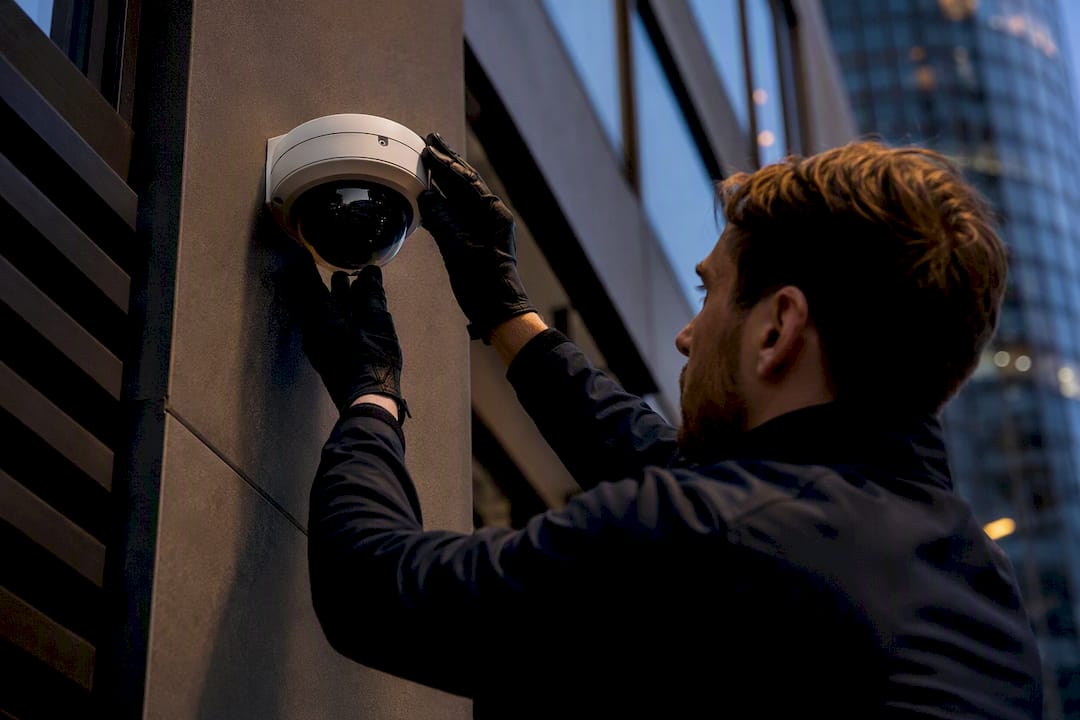
The financial exposure runs deeper than a broken camera. A disabled unit creates a coverage gap during the exact window an incident occurs, which means no forensic footage when you need it for an insurance claim or a police report. Replacement isn’t just hardware. It’s labor, scaffolding or lift rental for elevated units, and downtime on that zone of coverage.
There’s a documentable upside here too. Strategic hardening of camera systems, when properly recorded, can qualify a property for insurance premium reductions and help offset installation costs over time. Insurers increasingly want to see IK and IP ratings on file, not just a receipt.
Reading IP, IK, and NEMA Ratings the Right Way
Spec sheets throw three rating systems at buyers, and confusing them leads to expensive mistakes. Each measures a different threat.
IP ratings (IEC 60529) describe ingress protection against dust and water. The first digit covers solids, the second covers liquids. IP66 is the practical minimum for exposed commercial exterior cameras, and IP65 should only go on units under an awning or overhang. IP67 adds protection against temporary submersion, relevant for cameras near flooding or heavy wash-down cleaning. IP68 goes further still, meant for continuous submersion rather than typical building exteriors.
IK ratings (IEC 62262) measure mechanical impact resistance in joules, tested with a calibrated pendulum or spring-loaded hammer rather than a guess. The scale runs from IK00 (no protection) to IK10. A useful way to picture it:
- IK06 (1 joule): resists a dropped tool or accidental bump, not a deliberate strike
- IK08 (5 joules): withstands a solid kick or thrown object, reasonable for elevated mounts
- IK10 (roughly 20 joules, equivalent to a 5 kg mass dropped from 40 cm): the commercial benchmark for anything within reach in a public space
NEMA enclosure classes run parallel to IP ratings but originate from a North American standard rather than the international one. NEMA 4X is the right call for control boxes and enclosures in coastal or corrosive environments, since the “X” designation adds corrosion resistance on top of water and dust sealing. When you’re comparing quotes, ask which standards body backs each number. IEC 60529, IEC 62262, NEMA, and UL listings are the references worth checking against a manufacturer’s datasheet.
Hardware Features That Separate Real Protection From Marketing
An IK10 rating on a spec sheet means nothing if the installer skips the details that make it functional in the field. Look for these before approving a bid:
- Metal housings (aluminum or steel alloy) instead of reinforced plastic, especially for ground-level units
- Polycarbonate IK-rated domes with anti-scratch coating so repeated minor abuse doesn’t cloud the lens over time
- Tamper-proof fasteners (torx security screws, not standard Phillips heads anyone can back out with a pocket screwdriver)
- Recessed mounts or concealed brackets that don’t give an attacker a visible pry point
- Internal cable entry with sealed cable glands, so there’s no exposed wire loop to slice
For particularly exposed positions, a steel conduit run to the housing and, in extreme cases, a welded protective cage or shroud add another layer. Cages make sense at loading docks or ground-floor alley access, but they’re overkill for a rooftop unit no one can reach.
Pro Tip: Ask your installer to show you the fastener type before the ladder ever goes up. A camera advertised as “vandal resistant” mounted with four standard Phillips screws is a five-minute job for anyone with a screwdriver.
Matching Camera Ratings to Mount Height and Location
Not every camera on a property needs the top rating, and specifying IK10 everywhere wastes budget on positions no one can reach. Use mount height and foot traffic as your primary variables.
- Below 10 feet in public or high-traffic areas (entrances, sidewalks, retail floors, stairwells): specify IK10, IP66 minimum.
- Elevated exterior mounts (second story and above, rooflines, soffits): IK08 is generally sufficient since access requires equipment or effort.
- Parking lots and loading docks: IK10 near ground-level pedestrian paths, IK08 acceptable on light poles or elevated canopy mounts.
- Coastal, wash-down, or flood-prone sites: raise the IP rating to IP67 and require NEMA 4X enclosures for any exterior control box to prevent corrosion from degrading tamper resistance over time.
The smarter approach here is selective specification: put your budget into hardened units at reachable, critical chokepoints, and let elevated or interior cameras run lower ratings. Over-specifying every camera on a site is expensive and usually unnecessary when the actual risk is concentrated at ground level.
How YDA Security Systems NYC Installs for Real Vandal Resistance
A camera’s rating only holds up if the installation matches it. This is where a lot of vandal-resistant hardware gets undermined before it’s even switched on. Cable routing, tamper-proof junction boxes, and conduit are just as critical to vandal resistance as the housing itself, and it’s a detail generic installers routinely skip.
A camera rated IK10 with an exposed cable running down the wall behind it isn’t vandal resistant. It’s a camera with an expensive dome and an obvious point of failure sitting two feet below the lens.
Our technicians route cable internally through the mounting surface wherever the building allows it, and we run steel conduit to any exterior junction box rather than relying on surface-mounted PVC. Junction boxes themselves get lockable, tamper-rated covers, not standard weatherproof lids anyone can pop with a flathead. Where low mounting is unavoidable for coverage reasons, we favor recessed ceiling domes over surface units to cut down on visible tamper points.
Storage redundancy matters just as much as the physical hardware. Pairing hardened cameras with local and cloud backup means an attacker who smashes one unit doesn’t erase the footage along with it. We’re licensed and insured across every borough we serve except the Bronx, we back every installation with a 1-year warranty, and we’ve handled commercial camera hardening for more than 5,000 clients across Manhattan, Brooklyn, Queens, and Staten Island. If you’re planning a full system, our guide on how to set up a business security camera system walks through the broader design process.
What Vandal-Resistant Upgrades Cost and Where They Pay Back
Hardened hardware typically carries a premium over standard-grade cameras, driven by the reinforced housing, IK-rated dome material, and the extra labor for conduit and concealed mounting. For a small-to-mid commercial install running 8 to 16 cameras, expect the vandal-resistant tier to add a noticeable line item over basic dome cameras, concentrated mostly in the ground-floor and high-traffic units where it actually matters.
Where that spending pays back:
- Fewer service calls for smashed or disabled units, which adds up fast at properties with recurring vandalism issues
- Documented hardening can support insurance premium reductions when your carrier reviews security investments
- Stronger claim defensibility, since intact footage from a hardened camera holds up better than a gap where a standard unit used to be
Selective hardening, reserving the IK10 budget for entrances, loading docks, and ground-floor exposure, keeps costs controlled without leaving your riskiest points under-protected. Our breakdown on security camera installation costs covers typical pricing ranges in more detail.
Keeping Vandal-Resistant Cameras Working Over Time
A hardened camera still needs regular checks, since gaskets degrade, fasteners loosen, and lenses drift out of alignment after impacts that didn’t fully disable the unit.
- Inspect dome integrity, fastener torque, and gasket seals for cracking or gaps.
- Check cable entry points and conduit connections for tampering or corrosion.
- Verify image alignment hasn’t shifted after a strike or attempted redirection.
- Confirm tamper alerts are reaching your monitoring team, not just logging silently.
Quarterly inspections work for most sites; monthly makes sense in high-vandalism areas, and always schedule a check after any reported incident. A service-level agreement with your installer should spell out response time for tamper alerts and coverage for hardware replacement.
Standards and Resources Worth Checking
For rating definitions, review IEC 60529 (IP) and IEC 62262 (IK). For enclosure specs, consult NEMA guidance and UL listings, or cross-check hardware datasheets on Cctv-database.
Get Vandal-Resistant Cameras Installed Right the First Time
Buying the right camera is only half the job. Most vandalism incidents against surveillance equipment succeed because of a poor installation choice, not a weak housing rating. YDA Security Systems NYC closes that gap: our licensed technicians route cable internally, install lockable tamper-proof junction boxes, and match IK and IP ratings to your actual site risk instead of quoting the same spec for every camera on the property. We also handle the locksmith-grade hardware that secures equipment rooms and control cabinets, so the whole system is hardened, not just the cameras.
If you manage a property in Manhattan, Brooklyn, Queens, or Staten Island and want a walk-through of where your current coverage has gaps, request a quote for commercial security camera installation and we’ll assess mount heights, access points, and cabling before recommending a single rating number.
Sources
- Construction Camera Ratings Explained: IP, IK, NEMA, and UL
- Vandal-Proof Security Cameras for Commercial Sites
- Do You Need Vandal-Proof Security Cameras?
- IP & IK Ratings Explained: Weatherproof and Vandal-Resistant CCTV
FAQ
What Is a Vandal-Resistant Camera?
It’s a surveillance camera built with a reinforced housing and a documented IK impact rating, typically IK08 or IK10, paired with an IP rating like IP66 to resist forced tampering and weather exposure at the same time.
Do Fake Security Cameras Deter Thieves?
Fake cameras can deter casual, opportunistic incidents, but they offer zero forensic value and provide no protection once someone realizes the unit isn’t recording, which is why properties with real vandalism risk need functioning, hardened equipment.
What Does “Vandal Resistant” Actually Mean on a Spec Sheet?
It should mean the housing carries a tested IK rating under IEC 62262, not just a marketing label. IK10 (about 20 joules) is the benchmark for reachable public areas.
Why Are People Moving Away From Consumer Cameras Like Ring for Commercial Use?
Consumer-grade cameras generally lack IK impact ratings, use plastic housings, and rely on surface-mounted cabling that’s easy to cut or disable, which makes them a poor fit for commercial properties facing real vandalism risk.
Recommended
- Security Camera Features Checklist for Property Managers
- Security Camera with Installation: Complete Guide for 2025 – YDA Security Systems NYC
- IP vs Analog Security Cameras: Which System Is Best? – YDA Security Systems NYC
- Security Cameras and Installation – What are the costs ? – YDA Security Systems NYC