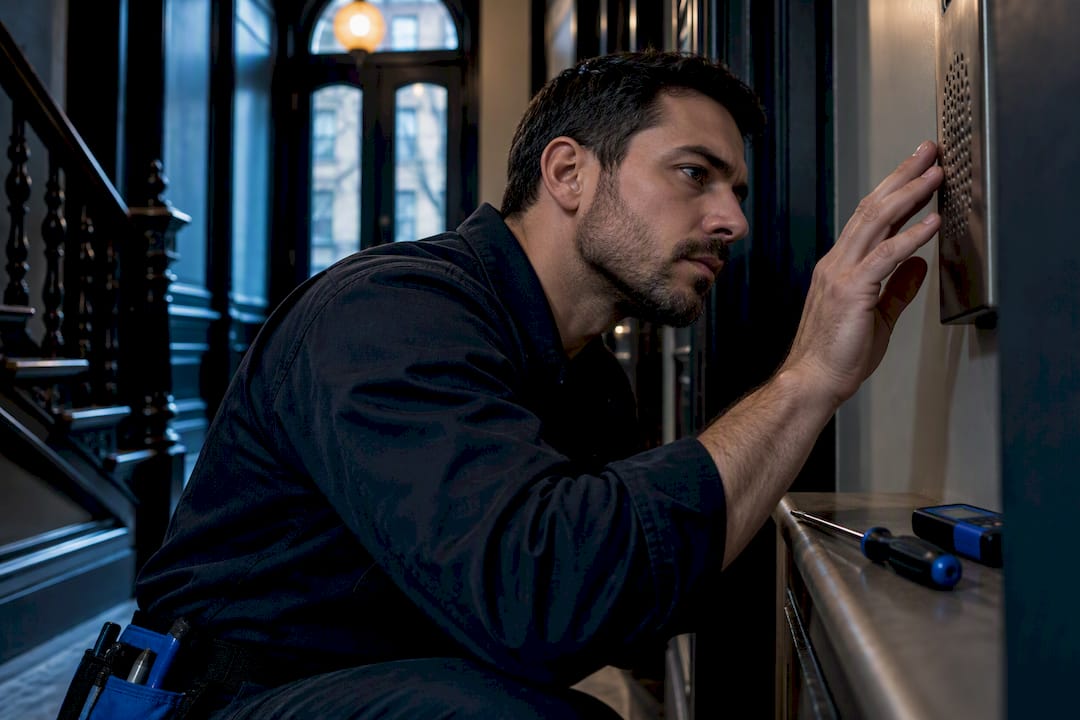
Security systems are defined as the integrated physical and digital controls that protect an organization’s critical assets, people, and operations from disruption. The role of security systems in business continuity goes far beyond locking doors or recording footage. Business continuity planning, as recognized by frameworks from CISA and the Information Security Forum, requires security to function as an operational dependency, not an afterthought. When a fire alarm triggers an automated lockdown, or an access control system isolates a compromised zone, the business keeps running. YDA Security Systems NYC works with commercial clients across Manhattan, Brooklyn, Queens, and Staten Island to build exactly this kind of protection into their operations from the ground up.
How do physical security systems support operational resilience?
Physical security systems directly reduce the frequency and severity of operational disruptions. Integrating fire alarms and surveillance into a continuity plan lowers insurance costs and accelerates recovery by enabling automated, coordinated crisis responses. Modern systems allow remote lockdowns and real-time incident verification, which means your team can confirm and contain a threat without being physically present on site.
The impact of security on operations becomes clearest when you examine what happens without these systems. A retail location in Brooklyn with no verified alarm response loses an average of several hours to false alarm investigations. A commercial building in Queens with IP-based surveillance and automated alerts can verify an incident, notify responders, and lock down affected zones within minutes. That difference in response time directly translates to less downtime and lower recovery costs.
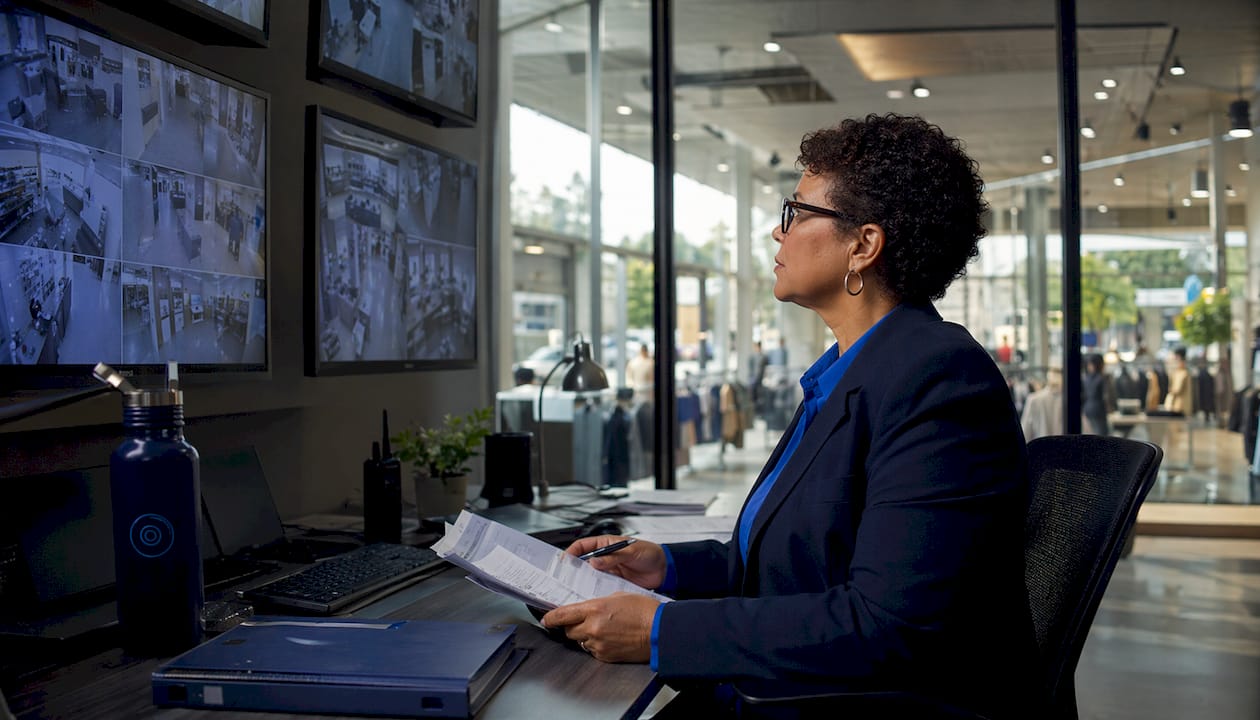
Security technology’s real value lies in improving decision-making by focusing on relevant alerts and verified incidents rather than noise. AI-enabled detection helps security teams prioritize response and reduce disruption. This is why modern commercial surveillance installations use motion analytics and zone-based alerting rather than recording everything and reviewing it after the fact.
Key physical security components that support continuity include:
- Commercial video surveillance with remote monitoring and real-time alert verification
- Access control systems that enforce zone restrictions and generate audit trails for compliance
- Fire alarm and life safety systems integrated with building management for automated evacuation and lockdown
- Intercom and door buzzer systems that control entry without requiring staff to leave their posts
- Magnetic locks and door hardware that default to a safe state during power or network failures
Pro Tip: When specifying access control for a continuity plan, require fail-safe or fail-secure modes to be documented for every door. A door that defaults to unlocked during a power failure can undermine an entire evacuation or lockdown procedure.
Why is cybersecurity critical to business continuity planning?
Cybersecurity business continuity planning addresses a different but equally urgent category of threat. Where physical security prevents unauthorized entry, cybersecurity prevents unauthorized access to the systems that run your business. The distinction between business continuity planning and disaster recovery matters here: continuity planning keeps operations running during an active threat, while disaster recovery restores systems after the fact.
Ransomware is the clearest example of why this distinction matters. Ransomware appeared in 44% of breaches in the 2025 Verizon Data Breach Report. An average ransomware incident locks businesses out of critical systems for about 24 days. That is not a recovery problem. That is a continuity failure, and it requires a continuity response.
The 3-2-1 backup rule is the minimum standard for cyber resilience: three copies of data, on two different media types, with one copy stored off-site or air-gapped. Organizations with intact, tested backups recovered from ransomware within one week 46% of the time. Those without secure backups took significantly longer, often weeks or months.
The steps that reduce ransomware’s impact on continuity follow a clear sequence:
- Implement immutable, air-gapped backups that ransomware cannot encrypt or delete, and test them for recovery speed quarterly.
- Deploy multi-factor authentication across all remote access points, email, and administrative accounts to block credential-based intrusions.
- Apply network segmentation so that a compromised workstation cannot reach financial systems, operational technology, or backup infrastructure.
- Enforce zero trust access controls that verify every user and device before granting access, regardless of network location.
- Document a cyber recovery runbook that assigns specific roles, communication channels, and decision authorities for the first 24 hours of an incident.
Secure backups must be treated as critical assets and protected with defenses comparable to production systems. A backup that an attacker can reach and encrypt is not a backup. It is a liability.
What frameworks guide continuity-focused security planning?
CISA’s CI Fortify initiative represents the most current federal guidance on security measures for businesses that operate critical infrastructure. CI Fortify emphasizes two specific capabilities: isolation and recovery. Operators should sustain service delivery in isolation for weeks or months, meaning their core operations must function even when disconnected from external networks, cloud services, and third-party vendors.
This is a significant shift from traditional continuity thinking. Most organizations plan for short outages measured in hours. CI Fortify guidance requires planning for extended isolation measured in weeks. That means manual fallback procedures, local data stores, and physical security systems that operate independently of internet connectivity.
The table below compares two planning approaches against CI Fortify’s isolation and recovery criteria:
| Planning criterion | Reactive continuity approach | Resilience-first approach |
|---|---|---|
| Network dependency | Operations halt if internet fails | Local systems sustain core functions |
| Backup access | Cloud-only backups | Air-gapped, locally accessible backups |
| Access control | Cloud-managed credentials | On-premise or hybrid credential management |
| Incident response | Vendor-dependent | Documented manual procedures |
| Recovery rehearsal | Annual tabletop exercise | Quarterly isolation drills with real systems |
Moving from attack prevention to resilience building requires embedding security controls that function even under active compromise or network isolation. For physical security, this means specifying access control hardware that stores credentials locally and operates without a cloud connection. For cybersecurity, it means testing whether your team can actually run core operations manually before an incident forces them to try.
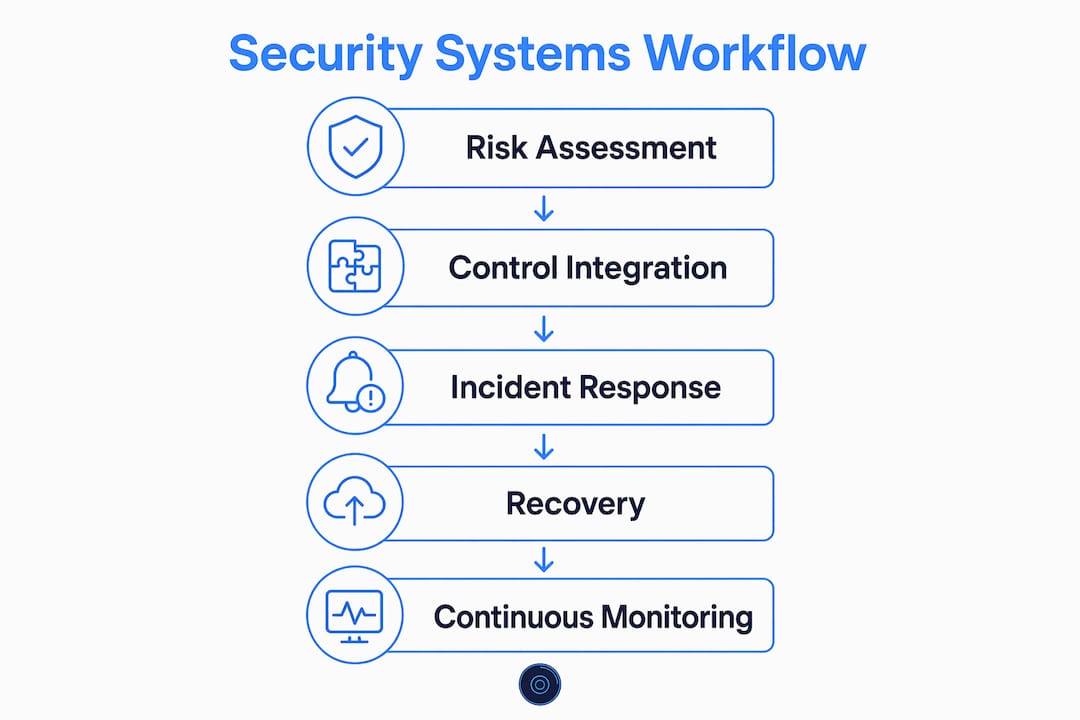
Pro Tip: Schedule a half-day isolation drill annually. Disconnect your primary internet connection and test whether your team can process orders, access critical files, and control building access using only local systems. The gaps you find are your real continuity risks.
Dependency mapping is the most common gap in continuity planning. Most organizations cannot accurately list every system, vendor, and process that their physical and cyber security infrastructure depends on. Building that map is the first step toward meaningful resilience.
How should security align with your risk management strategy?
True business continuity requires security, risk, and leadership alignment around what the business cannot afford to lose, rather than solely focusing on IT technicalities. Service level agreements and recovery time objectives must reflect actual business priorities, not just what is technically feasible to restore.
Security leaders must reframe security as a business continuity imperative, focusing on operational availability rather than fear-based loss prevention. A Manhattan law firm’s continuity plan must prioritize client data access and communication systems. A Brooklyn manufacturer’s plan must prioritize production floor access control and equipment monitoring. The security architecture follows the business priority, not the other way around.
Physical security should be prioritized based on asset criticality and operational dependencies, because a security incident often cascades into business operations, finance, or customer experience issues. Security executives recommend phased resilience strategies based on consequence and exposure. That means identifying your highest-consequence assets first and building security measures around them before addressing lower-risk areas.
Effective alignment across an organization requires input from multiple functions:
- IT and cybersecurity teams define technical recovery objectives and system dependencies
- Operations and facilities teams identify which physical spaces and equipment are critical to daily output
- Finance and legal teams quantify the cost of downtime and regulatory exposure from a security failure
- Executive leadership sets recovery time objectives that reflect the business’s actual tolerance for disruption
- HR and communications teams prepare staff notification and crisis communication protocols
Treating business continuity as a cross-functional challenge means integrating IT, legal, HR, communications, finance, and leadership from the start. Organizations that assign continuity planning solely to IT consistently underestimate the operational and reputational costs of a security failure. Access control systems that enforce zone restrictions and generate audit trails give every one of these teams the data they need to respond effectively.
Key Takeaways
Security systems are the operational foundation of business continuity, and organizations that treat them as a cross-functional priority recover faster and sustain fewer losses during disruptions.
| Point | Details |
|---|---|
| Physical security reduces downtime | Automated alerts, remote lockdowns, and verified incident response cut recovery time significantly. |
| Ransomware demands a continuity response | With an average 24-day lockout, ransomware requires tested backups and isolation plans, not just antivirus. |
| CISA CI Fortify sets the resilience standard | Organizations must plan to operate in isolation for weeks, using local systems and manual fallbacks. |
| Recovery objectives must reflect business priorities | Security architecture and SLAs should be built around what the business cannot afford to lose. |
| Cross-functional alignment is non-negotiable | IT, operations, finance, and leadership must all contribute to a continuity plan that actually works. |
How YDA Security Systems NYC strengthens your continuity planning
Physical security is the layer of your continuity plan that protects everything else. YDA Security Systems NYC designs and installs commercial security camera systems and integrated access control solutions for businesses across Manhattan, Brooklyn, Queens, and Staten Island. Our licensed technicians specify systems that operate independently of cloud connectivity, support local credential management, and integrate with fire alarm and life safety infrastructure. We also provide commercial door hardware and locksmith services that ensure your physical access points perform reliably under every condition your continuity plan anticipates. Contact YDA Security Systems NYC to schedule a consultation and build physical security into your continuity strategy from the start.
FAQ
What is the role of security systems in business continuity?
Security systems protect critical assets, control access, and enable rapid incident response, all of which keep operations running during a disruption. They function as operational infrastructure, not just perimeter defense.
How does ransomware affect business continuity planning?
Ransomware locks businesses out of critical systems for an average of 24 days, making it a continuity threat rather than just a recovery problem. Continuity plans must include immutable backups, network segmentation, and documented manual procedures.
What is CISA’s CI Fortify initiative?
CI Fortify is a CISA program that directs critical infrastructure operators to develop isolation and recovery capabilities, enabling them to sustain essential operations for weeks or months without external network access.
Why does access control matter for business continuity?
Cloud-based access control systems enforce zone restrictions, generate audit trails, and can operate in degraded network conditions, making them a direct contributor to operational resilience during a security incident.
How should organizations prioritize security investments for continuity?
Prioritize based on asset criticality and operational dependency. Identify which systems and spaces are essential to daily output, then build security measures around those assets before addressing lower-risk areas.