Broken key extraction is the process of removing a snapped key fragment from a lock cylinder without damaging the internal pins or plug. Getting a broken key out requires the right tools, the right lubricant, and a clear understanding of the lock’s position before you touch anything. Professional locksmiths succeed in 90–95% of extractions without damage, while DIY attempts carry up to a 60% risk of worsening the situation. That gap exists because most people reach for the wrong tool or apply force in the wrong direction. This guide covers every step of safe extraction, from assessing the fragment’s position to knowing when to call a licensed locksmith in Manhattan, Brooklyn, Queens, or Staten Island.
How to get a broken key out: assessing the situation first
The single most important step before attempting any extraction is identifying where the key fragment sits inside the lock. This assessment determines whether DIY removal is realistic or whether you need a professional immediately.
Identify the fragment’s position
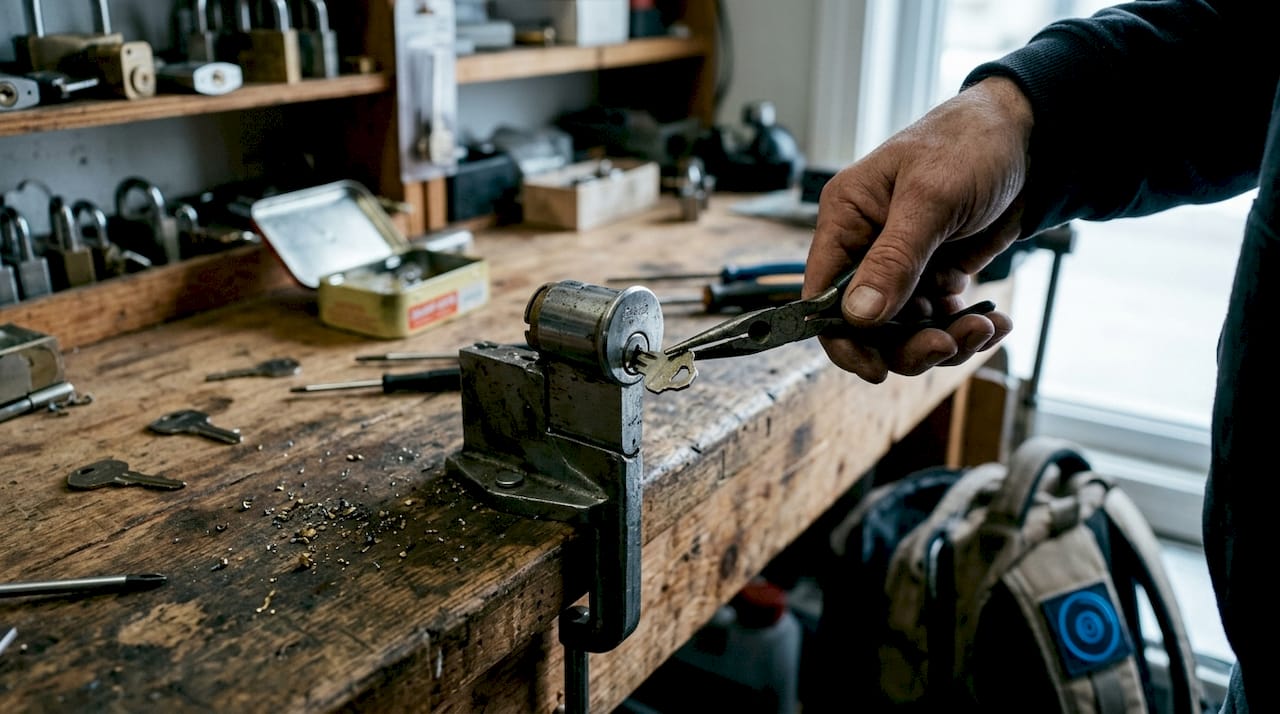
A protruding fragment is one you can see and partially grip. A flush fragment sits level with the keyway opening. A buried fragment has been pushed past the keyway and sits deep inside the cylinder. Only a protruding fragment is a reasonable candidate for DIY extraction. Flush and buried fragments require professional tools, and attempting DIY on buried fragments risks pushing the piece deeper and permanently damaging the lock mechanism.
Check the lock plug position
The lock plug is the rotating cylinder that turns when you insert a key. The plug must sit in a neutral vertical position before any extraction attempt. If the plug is turned even slightly, the internal pins bind against the key fragment and trap it mechanically. You can use a small flathead screwdriver inserted gently into the keyway to rotate the plug back to neutral. Never force this step. If the plug resists, stop and call a locksmith.
Risk factors that rule out DIY
Several conditions make DIY extraction too risky to attempt:
- The fragment is flush or buried inside the cylinder
- The lock is a high-security model such as Medeco or Mul-T-Lock, which require specialized extraction methods and are not suitable for DIY
- The lock is partially turned and the plug will not return to neutral
- You have already attempted extraction and the fragment has moved deeper
- The lock is part of a commercial access control system or a high-traffic entry point
Pro Tip: Apply a small amount of powdered graphite to the keyway before any extraction attempt. This reduces friction and makes it easier to maneuver tools without scratching the cylinder walls.
Lubricants: what to use and what to avoid
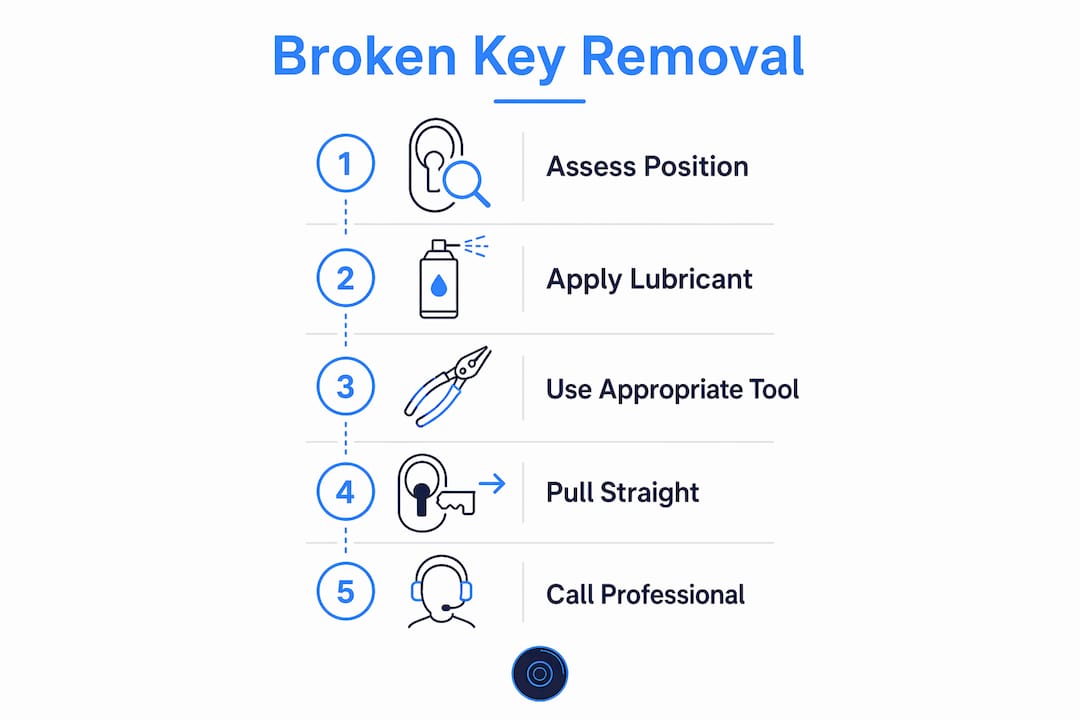
Lubrication is non-negotiable before extraction. WD-40 and oil-based lubricants strip the factory grease inside the lock, leave a sticky residue that attracts dust, and cause long-term jamming. The correct choice is dry powdered graphite or dry silicone spray. Both reduce friction without contaminating the pin chambers. Apply sparingly directly into the keyway, wait 30 seconds, then proceed.
Step-by-step DIY methods to remove a broken key safely
These methods apply only when the fragment is visibly protruding from the keyway and the lock plug is in the neutral position. Work slowly and apply no rotational force at any point.
Method 1: needle-nose pliers or tweezers
- Shine a flashlight into the keyway to confirm the fragment’s exact position.
- Apply dry graphite or silicone spray into the keyway and wait 30 seconds.
- Insert the tip of needle-nose pliers or fine-tipped tweezers alongside the fragment, gripping the exposed metal edge.
- Pull straight out with steady, even pressure. Do not twist, wiggle side to side, or jerk the fragment.
- If the fragment does not move within two or three gentle pulls, stop immediately.
This method works best when at least 3–4 millimeters of the key fragment extends beyond the keyway face. Less than that and the pliers will slip, potentially pushing the fragment deeper.
Method 2: modified jigsaw or coping saw blade
A thin jigsaw blade or coping saw blade can hook the serrated edge of the key fragment and pull it out. This technique is widely used by locksmiths as a field improvisation when specialized tools are unavailable.
- Break off a small section of a fine-tooth jigsaw blade, approximately 2–3 inches long.
- Insert the blade into the keyway alongside the fragment, teeth facing outward toward the key’s serrated edge.
- Maneuver the blade until a tooth catches on the key’s serration.
- Pull straight out with steady pressure, keeping the blade flat against the keyway wall.
- Repeat if the blade slips, repositioning before each attempt.
Pro Tip: Hardware stores sell dedicated broken key extractor sets for under $15. These include hooked and spiral tools designed specifically for this task and are far more reliable than improvised blades.
Common mistakes to avoid
- Pushing the fragment inward at any point during extraction
- Using a magnet, which does not work on brass or nickel-silver keys and wastes time
- Applying rotational force, which causes metal mushrooming that displaces pins and escalates the repair from extraction to full lock replacement
- Using super glue on the fragment, which risks seeping into pin chambers and permanently bonding internal parts
- Attempting extraction on a car door lock without first confirming the lock type, since automotive locks often have tighter tolerances than residential deadbolts
Even a successful DIY removal can leave metal shavings inside the cylinder that impair lock function over time. A professional inspection after any extraction confirms the lock operates reliably before you depend on it again.
When and why to call a professional locksmith
Professional extraction is the right call in most situations. The risk-to-reward ratio of DIY drops sharply the moment the fragment is not clearly visible and grippable.
Signs that DIY is not the right approach
- The fragment is flush with or buried inside the keyway
- The lock plug will not return to neutral position
- You have already attempted extraction once without success
- The lock is a high-security cylinder such as Medeco or Mul-T-Lock
- The lock is on a commercial property with a master key system or electronic access control integration
What professional locksmiths do differently
Locksmiths use thin hooked and spiral extraction tools that grip the key’s serrated edge and pull straight out without touching the pins. These tools are precision-machined for specific keyway profiles, which is why they succeed where improvised blades fail. After extraction, a professional lubricates the cylinder with dry graphite, tests the lock through multiple cycles, and inspects the pins for damage. If pins are damaged, rekeying or cylinder replacement is performed on the spot.
Pricing and availability in NYC
Professional broken key extraction costs between $45 and $150 depending on lock complexity and urgency. Standard residential calls typically fall in the $45–$85 range. Emergency or high-security lock extractions run $95–$200. For NYC property owners in Manhattan, Brooklyn, Queens, and Staten Island, licensed locksmiths are generally available within one to two hours for non-emergency calls. Emergency response times are shorter. The cost of professional extraction is almost always less than the cost of replacing a damaged lock cylinder, which can run $150–$400 or more for quality hardware.
YDA Security Systems NYC provides residential locksmith services and commercial extraction across all five boroughs except the Bronx, with licensed and insured technicians and a 1-year warranty on all work.
Troubleshooting when extraction efforts fail
If the fragment will not move after careful attempts, the situation has moved beyond DIY territory. Continuing to force it causes more damage and higher repair costs.
What not to do when the fragment is stuck
- Never use super glue. Glue seeps into pin chambers and bonds internal parts permanently, turning a $75 extraction into a full lock replacement.
- Never use a magnet. Brass and nickel-silver keys are non-magnetic, so this method simply does not work.
- Never push or tap the fragment inward. This buries it past the point where any tool can reach it.
- Never apply penetrating oil such as WD-40. It contaminates the cylinder and complicates professional extraction.
Preventative steps to avoid future breakage
Key breakage is rarely random. Worn keys, poorly maintained locks, and keys copied from worn originals are the primary causes. Keys cut from worn originals rather than cut by code are a leading cause of premature snapping. A key cut by code is machined to the manufacturer’s original specifications, not traced from a worn template. Always request code-cut duplicates from a licensed locksmith.
Lock maintenance also matters. A dry or corroded lock puts extra stress on the key with every turn. Applying dry graphite to the keyway twice a year keeps the cylinder operating smoothly and reduces the torque required to turn the key. Reviewing your lock hardware and security setup periodically helps catch worn cylinders before they cause a lockout.
“The most expensive broken key situation is the one where someone spent 20 minutes forcing the fragment before calling a locksmith. At that point, we are often replacing the entire lock rather than just extracting a fragment. A two-minute assessment before touching anything saves significant money and time.”
For NYC property owners concerned about broader security, proper lock maintenance connects directly to reducing break-in risk. A lock that jams, sticks, or shows wear is a vulnerability, not just an inconvenience.
YDA Security Systems NYC: professional locksmith services for NYC properties
When a broken key situation goes beyond what a DIY attempt can safely resolve, YDA Security Systems NYC provides fast, damage-free extraction for residential and commercial properties across Manhattan, Brooklyn, Queens, and Staten Island. Our licensed and insured technicians carry professional extraction tools for all standard and high-security keyway profiles, and every service includes cylinder lubrication, function testing, and a full inspection of the lock mechanism. For clients who need new keys after extraction, we provide residential door hardware and code-cut key services on the same visit. With over 5,000 satisfied clients and a 1-year warranty on all installations and repairs, YDA Security Systems NYC delivers reliable results without the risk of costly lock damage.
Key takeaways
Safe broken key extraction requires assessing the fragment’s position, using the correct lubricant, and applying straight pulling force without rotation or pushing.
| Point | Details |
|---|---|
| Assess before touching | Identify whether the fragment is protruding, flush, or buried before attempting any removal. |
| Use dry lubricant only | Apply powdered graphite or dry silicone spray. Never use WD-40 or oil-based products. |
| Neutral plug position | Confirm the lock plug is vertical and neutral before any extraction attempt. |
| Know when to stop | If the fragment is flush, buried, or won’t move after two gentle attempts, call a professional. |
| Prevent future breaks | Request code-cut duplicate keys and lubricate the cylinder twice a year to reduce breakage risk. |
FAQ
How do you remove a broken key from a lock at home?
Use needle-nose pliers or a modified jigsaw blade to grip and pull the fragment straight out, but only if it protrudes visibly from the keyway. Apply dry graphite first and confirm the lock plug is in the neutral position before attempting.
Can I use super glue to extract a broken key?
No. Super glue seeps into the pin chambers and can permanently bond internal lock components, turning a simple extraction into a full lock replacement. Locksmiths strongly advise against this method.
How much does professional broken key extraction cost in NYC?
Professional extraction typically costs between $45 and $150 for standard residential locks. Emergency calls or high-security cylinders can run $95–$200. This is almost always less expensive than replacing a damaged lock.
What if the broken key is flush with the keyway?
A flush or buried fragment requires professional extraction tools. Attempting DIY risks pushing the fragment deeper and damaging the internal pins. Call a licensed locksmith immediately and do not insert any tool into the keyway.
How do I prevent keys from breaking in the lock again?
Request replacement keys cut by code rather than copied from a worn original, and apply dry powdered graphite to the keyway twice a year. Worn or dry cylinders put excess stress on the key with every turn and are the most common cause of breakage.