Hire a licensed low-voltage contractor to design and certify structured data cabling for your NYC property — start with a site survey and a documented scope before any cable is pulled.
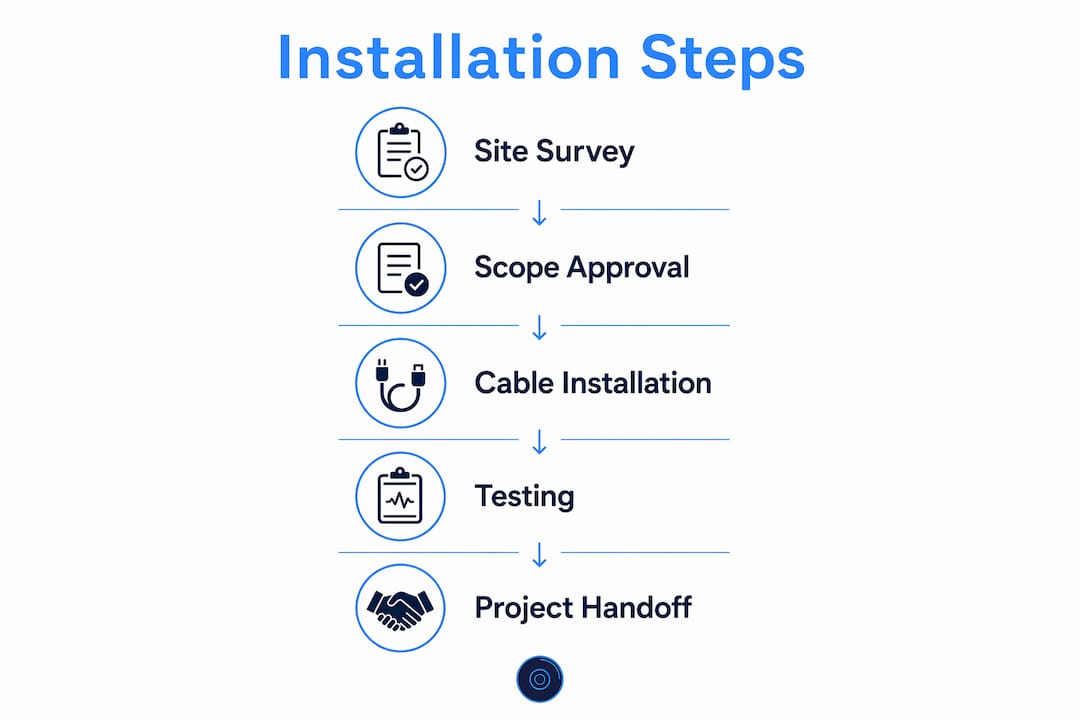
- Site survey first: A qualified technician maps device locations, pathway routing, and telecom room requirements before ordering materials, preventing costly rework from missed pulls or mislabeled panels.
- Permit and licensing note: Under NYC DOB guidance, low-voltage work under 50 V (data, signaling, CCTV, access control) is generally exempt from traditional electrical permits when performed by a licensed master electrician or qualified person. Fire alarm wiring falls outside that exemption and requires specialized licensing and additional permits under New York State rules. Any penetrations through fire-rated walls must be sealed with certified fire-stop materials to remain code-compliant.
- Handoff deliverables: Demand as-built drawings, labeled patch panels and test reports referencing TIA-568/TIA-606 standards, and certification results that include insertion loss, NEXT, and return loss measurements — not just a simple wire-map continuity check.
Table of Contents
Why YDA Security Systems NYC delivers structured cabling you can rely on
YDA Security Systems NYC is the licensed, insured low-voltage contractor serving Manhattan, Brooklyn, Queens, and Staten Island — providing professional cabling installation backed by a 1-year installation warranty and a team with extensive experience and many satisfied clients.
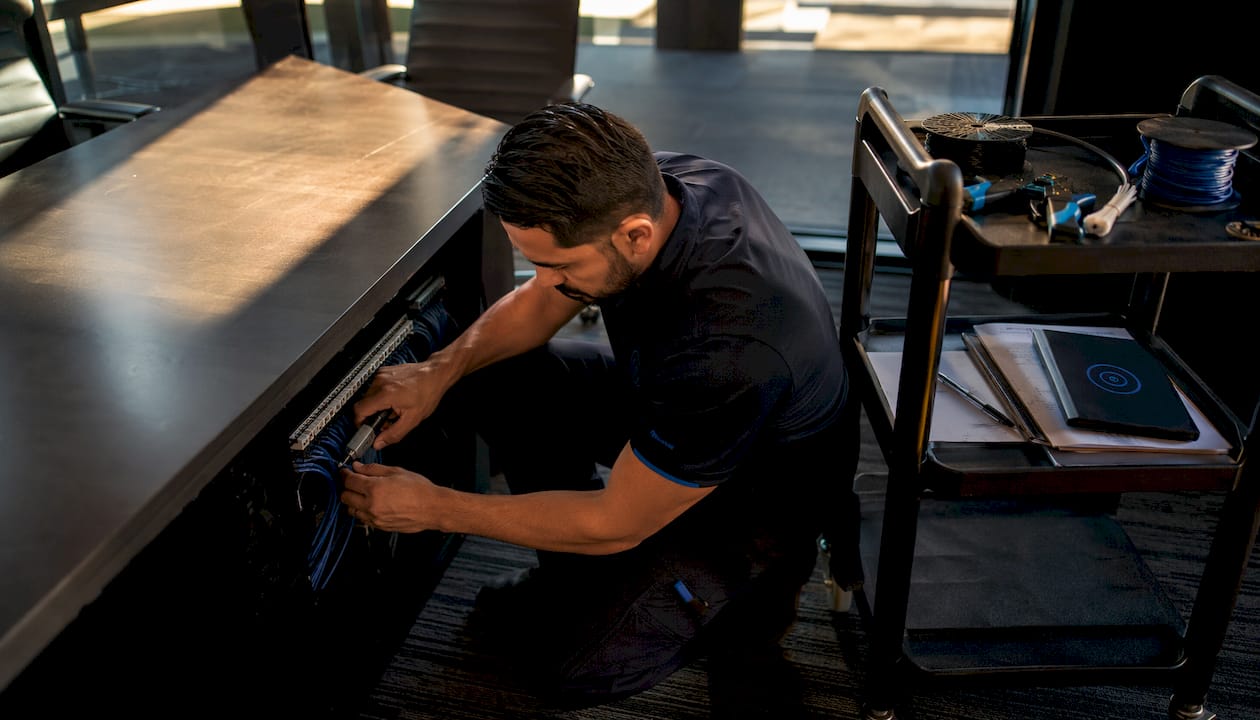
Every project begins with a thorough site survey and a signed scope that lists outlet counts, cable categories, pathways, and any special requirements. That signed scope prevents scope creep and protects your budget. Commercial installs typically use Cat6A for horizontal runs and single-mode fiber for backbone connections, with PoE provisioning sized for IP cameras and access-control readers. Physical-layer discipline matters here: over-tightened cable ties, exceeded bend radii, and sloppy patch-panel terminations are among the most common hidden causes of intermittent camera and access-control failures.
YDA’s structured cabling services include: structured data cabling, low-voltage wiring for commercial CCTV, PoE provisioning, fiber backbone runs, patch panel termination, conduit and trunking, access-control cabling, fire alarm coordination where required, and full documentation and certification testing.
| Project phase | Key requirement |
|---|---|
| Site survey & scope | Outlet counts, cable categories, pathway routing, signed scope |
| Design | Cat6A horizontal, fiber backbone, PoE load planning, TR sizing |
| Installation | Conduit separation from power, bend-radius control, proper termination |
| Certification testing | TIA-568 insertion loss, NEXT, return loss — not just continuity |
| Handover documentation | As-built drawings, TIA-606 labeled panels, tester model and calibration date on reports |
Pro Tip: Request the as-built drawings and test-result files as a contractual deliverable before final payment — well-documented cabling is what determines how quickly your systems can be restored after any fault or incident.
Well-organized, documented cabling infrastructure also speeds troubleshooting and supports business continuity, reducing diagnosis time from hours to minutes. Design for scalability from day one: extra conduit capacity, spare patch-panel ports, and consistent labeling practices prevent disruptive, expensive upgrades as your property’s security needs grow.
Contact YDA Security Systems NYC to schedule a site survey and receive a documented scope for your property. Whether you manage a commercial building, a residential complex, or a hotel security system, we deliver certified, warranted cabling installations across Manhattan, Brooklyn, Queens, and Staten Island.
FAQ
Does low-voltage cabling in NYC require a permit?
Low-voltage work under 50 V (data, CCTV, access control) is generally exempt from traditional electrical permits when performed by a licensed master electrician or qualified person, but fire alarm wiring requires specialized licensing and separate permits under New York State rules.
What cable types are standard for commercial security cabling?
Cat6A is the standard for horizontal runs in commercial buildings, supporting higher bandwidth and PoE-intensive applications; single-mode fiber connects MDFs and IDFs over longer distances.
What deliverables should I require at project handoff?
Require as-built drawings, TIA-606 labeled patch panels, and certification test reports that include insertion loss, NEXT, and return loss measurements with the tester model and calibration date recorded.
Why does professional installation matter for security cabling?
Poor termination practices and exceeded bend radii are a leading cause of intermittent camera and access-control failures — faults that often appear as software or network problems rather than physical-layer issues.
Key Takeaways
Professional structured data cabling in NYC requires a licensed low-voltage contractor, a signed scope, Cat6A or fiber infrastructure, TIA-568 certification testing, and complete as-built documentation at handover.
| Point | Details |
|---|---|
| NYC permit rules | Low-voltage work under 50 V is generally permit-exempt; fire alarm wiring requires specialized licensing. |
| Cable standards | Cat6A for horizontal runs; single-mode fiber for backbone connections in commercial buildings. |
| Certification testing | TIA-568 requires insertion loss, NEXT, and return loss — a wire-map test alone is not sufficient. |
| Documentation | As-built drawings and TIA-606 labeled panels are required deliverables, not optional extras. |
| YDA Security Systems NYC | Licensed, insured installer serving Manhattan, Brooklyn, Queens, and Staten Island with a 1-year installation warranty. |