Removing a snapped key from a lock is achievable with the right tools and technique, provided part of the key fragment is still visible at the keyway opening. The industry term for this process is broken key extraction, a standard locksmith procedure that ranges from a simple DIY pull to a precision operation requiring spiral extractor tools. Safe removal depends entirely on the key’s position inside the cylinder, the lock type, and the tools you have on hand. This guide covers every practical step, from initial assessment through extraction, and explains exactly when a licensed locksmith is the only responsible choice.
How to remove a snapped key from a lock: assess the situation first
The single most important step before touching the lock is determining where the broken fragment sits. A fragment that protrudes even slightly from the keyway gives you a workable grip. A fragment that sits flush with the face of the cylinder, or recessed behind it, is a different problem entirely.
DIY extraction is only advisable when part of the key is visibly protruding. If the fragment is flush or recessed, stop immediately. Inserting tools blindly into a flush or recessed fragment typically drives it past the last pin stack, which converts a simple extraction into a cylinder repair or full replacement.
Before you attempt anything, check these conditions:
- The lock is a standard pin tumbler cylinder, the most common type found in residential and commercial doors across Manhattan, Brooklyn, Queens, and Staten Island.
- You have adequate lighting. Use a flashlight or phone light to see the fragment’s exact position.
- The keyway is clean and free of debris. Dirt or grit increases friction and makes extraction harder.
- You have not already tried to turn the lock with the broken piece inside. Turning the cylinder with a fragment inside is the most common error that causes expensive pin chamber damage.
Pro Tip: Before reaching for any tool, photograph the lock face with your phone. The image helps you track the fragment’s position and gives a licensed locksmith critical information if you need to call one.
What tools do you need for safe key extraction?
Preparation determines whether you extract the fragment cleanly or damage the lock. The right tools are specific, and substitutions often cause more harm than the original break.
| Tool | Purpose | Why it matters |
|---|---|---|
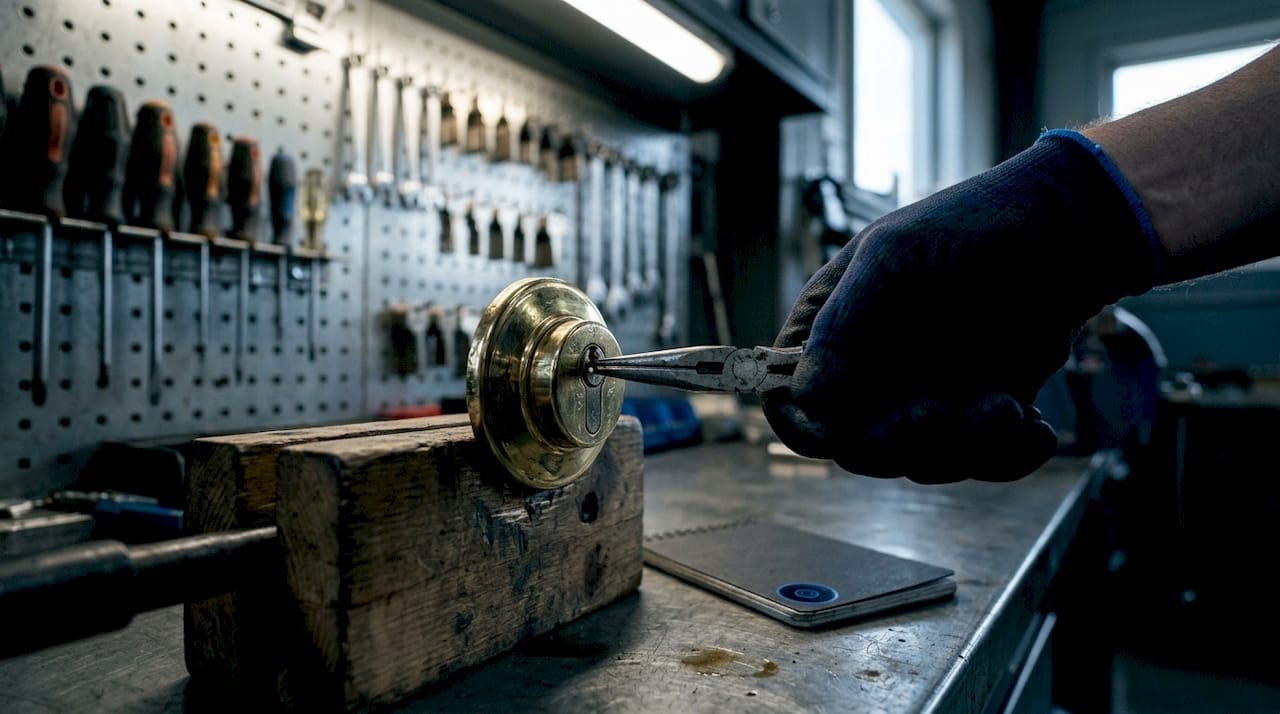
| Precision needle-nose pliers | Grip and pull a protruding fragment | Thin jaws fit the keyway without pushing the fragment deeper |
| Dry graphite powder or silicone spray | Lubricate the lock cylinder | Reduces friction, so the fragment slides out more easily |
| Flashlight or magnifying glass | Illuminate and inspect the keyway | Confirms fragment position before tool insertion |
| Safety pin or straightened paperclip | Improvised hook for shallow fragments | Catches the key’s cuts when pliers cannot reach |
| Surgical forceps or precision tweezers | Alternative grip tool | Narrower than standard tweezers, navigates keyway warding safely |
Standard eyebrow tweezers are a common mistake. Their wide, flat tips cannot navigate the zig-zag grooves of a keyway without pushing the fragment deeper. Precision needle-nose tweezers or surgical forceps are the correct choice.
Two products to avoid completely: WD-40 and super glue. Oil-based lubricants like WD-40 attract dust and grime, leaving sticky residues that impair internal springs and pins over time. Super glue flows into the pin chambers and springs, causing irreversible lock destruction that requires full cylinder replacement. Neither product belongs anywhere near a lock cylinder.
To create an improvised hook, bend the tip of a safety pin or paperclip into a small, tight curve no larger than 2–3 millimeters. The hook needs to catch the serrated cuts on the key’s edge, not the flat spine.
Step-by-step process to extract a broken key from a lock
Work slowly. Rushing the removal significantly reduces success and risks lock damage. Every step below assumes the fragment is at least partially visible.
-
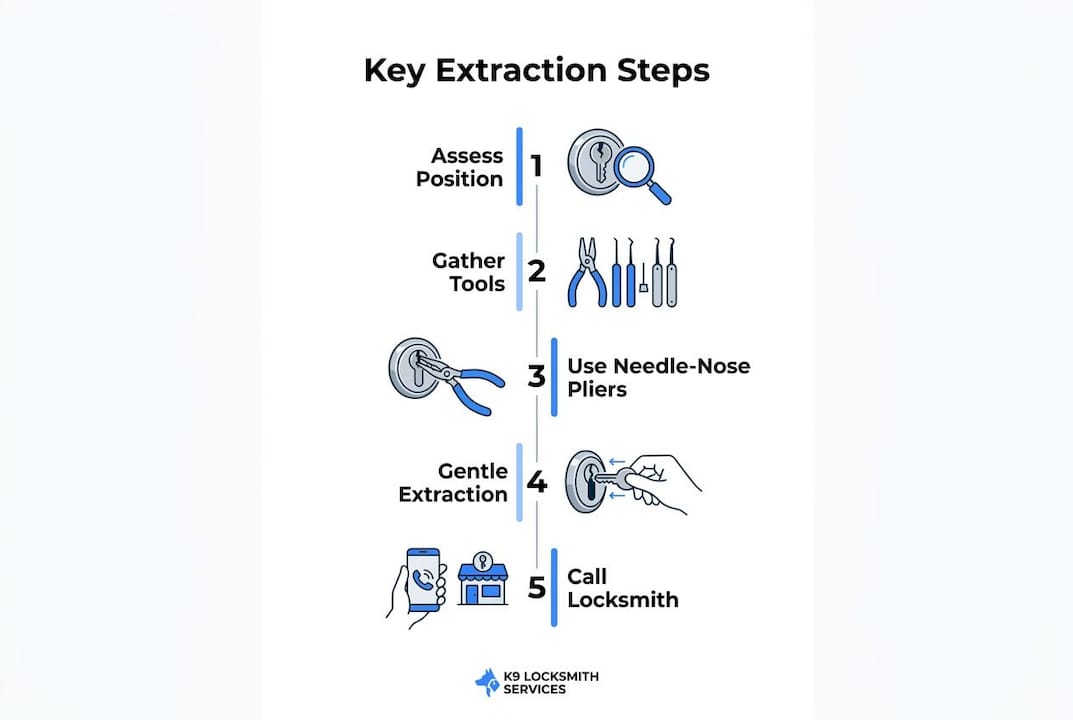
Apply dry lubricant first. Spray a small amount of dry graphite powder or silicone-based lubricant directly into the keyway. Let it settle for 30 seconds. Tapping the lock cylinder lightly after applying lubricant helps settle the internal pins and eases the fragment’s movement.
-
Inspect the fragment’s orientation. Use your flashlight to confirm which direction the key’s cuts face. The serrated edge is your extraction point. You need to hook or grip that edge, not the smooth spine.
-
Attempt plier extraction if the fragment protrudes. Insert the tips of precision needle-nose pliers into the keyway alongside the fragment. Grip the fragment’s edge firmly. Pull straight out with slow, steady pressure. Do not rotate or twist. Twisting causes mushrooming of the metal, which jams the fragment further into the pin stacks and makes later extraction far more difficult.
-
Use the hook tool if pliers cannot reach. Slide your improvised hook into the keyway along the serrated edge of the fragment. Apply gentle outward pressure while slowly rotating the hook to catch a cut. Once the hook catches, pull straight out with consistent, light force.
-
Wiggle gently if the fragment resists. A very slight side-to-side motion, no more than 1–2 millimeters, can help dislodge a fragment that has settled against a pin. Never force it. If the fragment does not move within a few attempts, stop.
-
Retrieve and inspect the fragment. Once out, compare it to the remaining key stub to confirm you have the complete piece. A missing section means part of the fragment is still inside.
Pro Tip: Rest your wrist or forearm against a solid surface while working. A steady hand gives you far more control over the pliers or hook, and reduces the chance of accidentally pushing the fragment deeper.
When should you stop DIY and call a professional locksmith?
Limit DIY extraction attempts to 15 minutes of gentle work. If the fragment has not moved after that window, continued effort increases the risk of permanent damage to the cylinder. Knowing when to stop is as important as knowing how to start.
Stop immediately and call a licensed locksmith if you notice any of the following:
- The fragment is flush with or recessed behind the cylinder face.
- The fragment has moved deeper into the lock during your attempts.
- The lock cylinder feels stiff or gritty when you apply light turning pressure.
- You hear or feel any grinding, which signals pin chamber contact.
- The keyway is too narrow for your tools to enter without force.
“Professional locksmiths use specialized spiral extractors that grip the key fragment’s cuts for safe, quick removal without damaging the lock. These tools allow extraction in under 30 seconds, avoiding costly cylinder replacement common with improper DIY attempts.”
Spiral extractors are purpose-built for broken key extraction. Their threaded tips engage the serrated cuts of the fragment and pull it out in a single controlled motion. No DIY tool replicates this function. A licensed locksmith also performs a lock health check after extraction, confirms the cylinder operates correctly, and cuts a fresh key to the factory code. Warranty-backed locksmith service includes testing lock health post-extraction and cutting fresh keys to factory code, which reduces the risk of future breakage from a worn or improperly cut replacement.
For NYC property owners managing residential buildings or commercial spaces in Manhattan, Brooklyn, Queens, or Staten Island, a professional extraction also produces a service invoice, which matters for property management records and insurance documentation.
How to prevent key breakage and maintain your locks
A snapped key is rarely a random event. Metal fatigue, poor lubrication, and worn key blanks are the three leading causes. Addressing all three reduces the chance of a repeat incident.
- Lubricate locks twice a year. Apply dry graphite powder to the keyway in spring and fall. Avoid oil-based products, which attract grime and degrade internal components over time.
- Replace keys every two to three years. Brass and nickel-silver key blanks develop micro-fractures with repeated use. A key that feels slightly flexible or shows visible wear at the bow or blade is overdue for replacement.
- Use one hand to turn the key. Applying sideways pressure while turning is the primary mechanical cause of key fractures. Insert the key fully, then turn with a straight, controlled motion.
- Never force a stiff lock. A lock that resists turning signals a lubrication or alignment issue. Forcing it transfers stress directly to the key blade, which is the weakest point in the system.
- Schedule annual lock inspections. A licensed locksmith can identify worn cylinders, misaligned strike plates, and other conditions that increase key stress before a break occurs.
For NYC properties, residential door hardware services include lock inspections, cylinder rekeying, and hardware upgrades that extend the service life of your entry points significantly.
YDA Security Systems NYC: professional broken key extraction for NYC properties
When DIY extraction is not an option, YDA Security Systems NYC provides licensed locksmith services across Manhattan, Brooklyn, Queens, and Staten Island. Our technicians carry professional spiral extractor sets, dry lubricants, and replacement cylinders, so most broken key extractions are resolved in a single visit without lock replacement. Every service includes a post-extraction lock health check and a 1-year warranty on workmanship. For property managers and building owners who need documentation, we provide a full service invoice on completion. Whether you need broken key extraction for a residential apartment or a commercial entry door, YDA Security Systems NYC delivers fast, reliable results backed by over 5,000 satisfied clients across NYC. Contact us directly to schedule a same-day service call.
Key Takeaways
Safe broken key extraction requires correct tool selection, a visible fragment, and strict limits on DIY attempt duration to avoid permanent cylinder damage.
| Point | Details |
|---|---|
| Assess fragment position first | Only attempt DIY removal if the fragment visibly protrudes from the keyway. |
| Use dry lubricant before any tool | Apply graphite powder or silicone spray and tap the cylinder before gripping the fragment. |
| Pull straight, never twist | Twisting causes metal mushrooming that jams the fragment deeper and complicates removal. |
| Stop after 15 minutes | Extended DIY attempts increase the risk of permanent pin chamber damage. |
| Call a licensed locksmith when in doubt | Spiral extractor tools and professional lock health checks protect your cylinder and cut fresh keys to factory code. |
FAQ
Can I remove a snapped key myself?
You can attempt DIY removal only if part of the fragment is visibly protruding from the keyway. If the fragment is flush or recessed, stop and call a licensed locksmith to avoid cylinder damage.
What is the best tool to extract a broken key from a lock?
Precision needle-nose pliers or surgical forceps are the most effective DIY tools. Professional locksmiths use spiral extractors, which grip the fragment’s cuts and remove it in under 30 seconds without damaging the lock.
Why should I avoid WD-40 or super glue on a stuck key fragment?
WD-40 leaves oily residue that attracts grime and impairs internal lock springs. Super glue flows into pin chambers and causes irreversible damage, making professional extraction impossible and requiring full cylinder replacement.
How long should I attempt DIY broken key extraction?
Limit gentle DIY attempts to 15 minutes. Prolonged effort without progress significantly increases the risk of permanent lock damage and may void any existing hardware warranty.
How can I prevent my key from snapping in the lock again?
Lubricate your locks with dry graphite powder twice a year, replace key blanks every two to three years, and never apply sideways pressure while turning the key. Annual lock inspections by a licensed locksmith catch worn cylinders before they cause a break.