Security systems reduce business liability by actively deterring incidents, generating legally admissible evidence, and demonstrating the “reasonable security” standard that courts and insurers now require. For business owners in Manhattan, Brooklyn, Queens, and Staten Island, this is not a passive benefit. A well-documented security program built around CCTV, access control, and alarm systems can lower insurance premiums by 5%–25% and provide a credible legal defense when premises liability claims arise. The distinction between a business that records incidents and one that actively prevents them is now a defining factor in how courts evaluate negligent security cases.
How security systems reduce business liability through insurance savings
The most direct financial benefit of a security investment is a reduction in property and liability insurance premiums. Businesses with comprehensive security systems achieve property insurance reductions between 5% and 20%. That means a business paying $10,000 annually in premiums can save up to $2,000 per year from security investments alone, before accounting for tax deductions on equipment costs.
CCTV systems carry particular weight with insurers. CCTV installations lead to 10%–25% premium discounts on premises liability coverage. For a mid-size retail or commercial property in NYC, that translates to thousands of dollars in annual savings. Insurers treat documented camera coverage as a direct reduction in claims risk.
Access control systems add another layer of insurer confidence. When a business can demonstrate that only authorized personnel enter restricted areas, the likelihood of theft, injury, and unauthorized access claims drops measurably. Insurance carriers increasingly factor documented active security programs into premium calculations through risk scoring models. A passive alarm alone no longer moves the needle the way a fully integrated system does.
-
CCTV coverage of entry points, parking areas, and common spaces qualifies for the highest premium discounts.
-
Access control logs provide documented proof of who entered a space and when, which directly supports claims defense.
-
Alarm systems with monitored response reduce response time and demonstrate active risk management to insurers.
-
Regular security system inspections and maintenance records show insurers that equipment is operational and not just installed.
Pro Tip: Contact your commercial insurer before installation and ask specifically which security features qualify for premium discounts. Some carriers require UL-listed equipment or third-party monitoring contracts to apply the full discount.
What is the difference between active and passive security systems for liability?
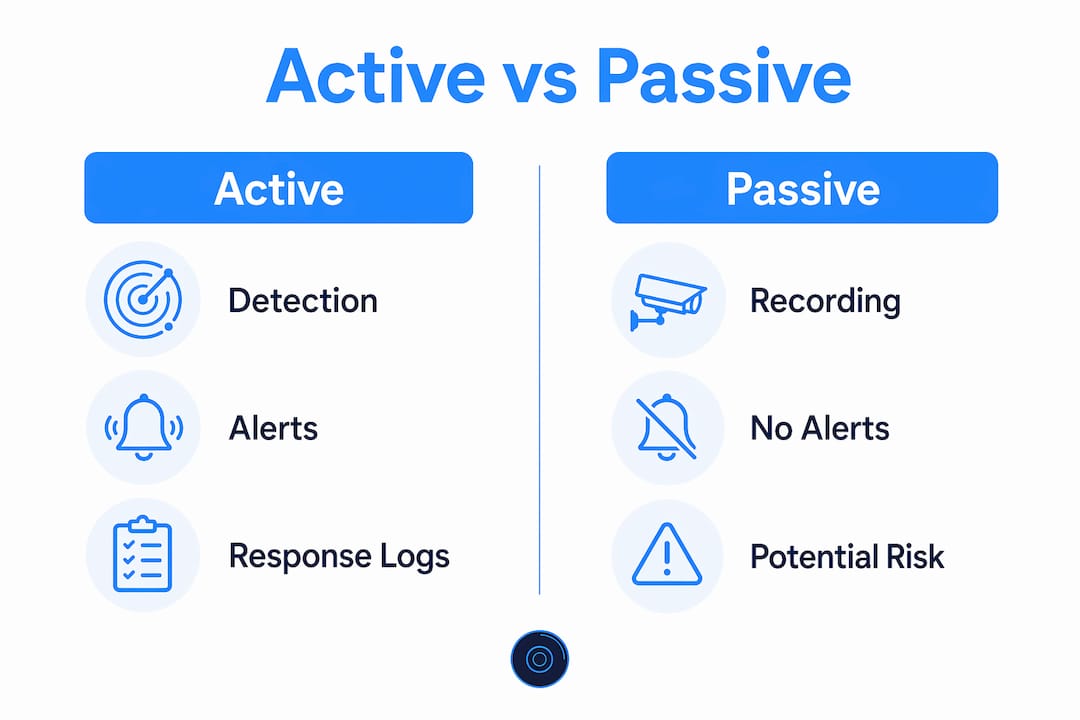
Passive security systems record events. Active security systems detect, alert, and respond to them. That distinction carries significant legal weight in premises liability cases.
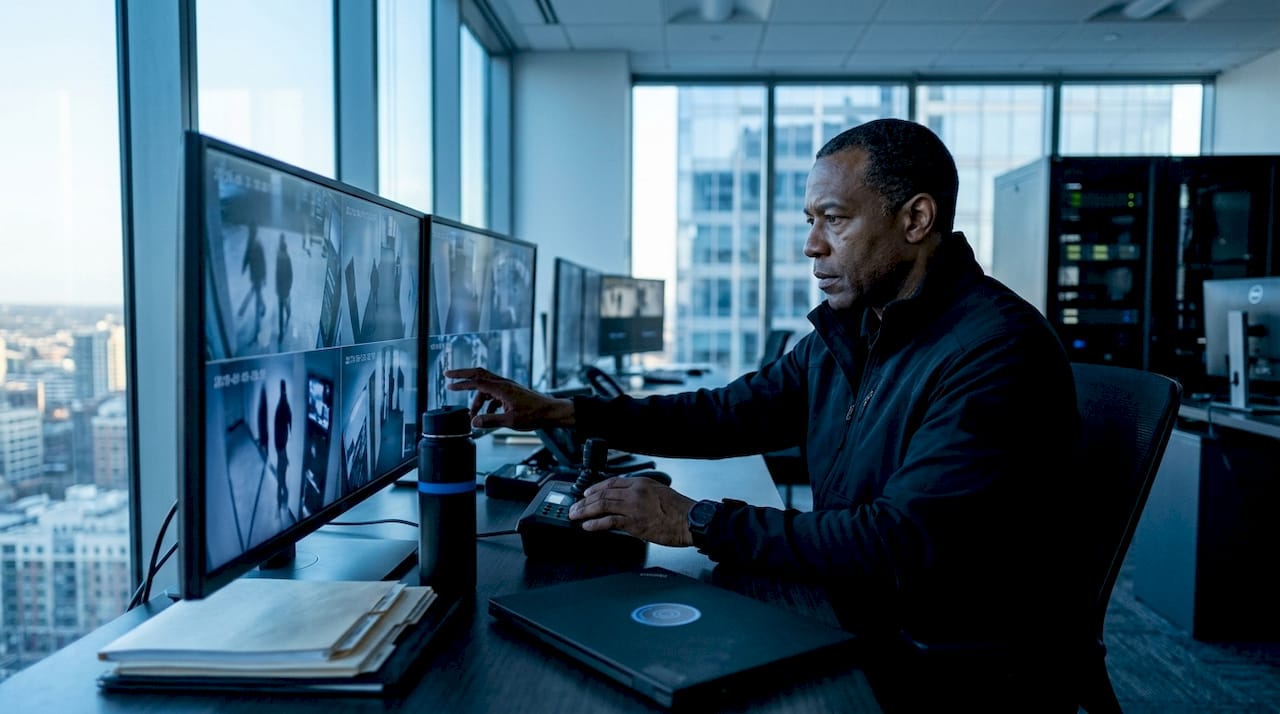
Passive surveillance systems can increase legal risk by proving that owners observed hazards with no responsive action. A camera that captures a slip-and-fall, an assault, or a trespasser without triggering any alert or response does not demonstrate reasonable care. It demonstrates awareness without action, which plaintiffs’ attorneys use to argue negligence.
Active systems change that equation. Active detection systems that generate timestamped alerts and document responses create strong legal defense records. When a system logs a detection event, dispatches a notification, and records the response, it shows a court that the business treated security as an ongoing operational responsibility, not a box to check.
The legal concept of foreseeability is central here. Logged detection and response to precursor events build the legal case that owners acted reasonably under foreseeability standards. If a business can show that it detected early warning signs of a threat and escalated its response, it is far better positioned to defend a negligent security claim than one that simply installed cameras and hoped for the best.
| System type | Legal function | Liability impact |
|---|---|---|
| Passive CCTV only | Records events after the fact | Can document owner awareness without response, increasing risk |
| Active monitored CCTV | Detects, alerts, and logs responses | Supports reasonable care defense with timestamped records |
| Access control with audit logs | Restricts and documents entry | Reduces unauthorized access claims and supports incident reconstruction |
| Integrated alarm with response | Triggers alerts and dispatches response | Demonstrates active risk management to courts and insurers |
Pro Tip: If your current system only records footage without generating alerts or response logs, you may be building the plaintiff’s case rather than your own defense. Upgrade to a monitored system that documents every detection event and the action taken.
What are the best practices for preserving security evidence after an incident?
Evidence preservation is where many businesses fail after an incident occurs. The footage exists, but it disappears before anyone acts on it.
Surveillance footage is frequently overwritten within 7 days under default system settings. If a business does not act immediately after an incident, that footage is gone. Courts treat the loss of footage as spoliation, and failure to preserve video evidence can lead to adverse jury inferences. That means a jury may be instructed to assume the missing footage would have been unfavorable to the business.
Early and disciplined preservation of surveillance footage prevents spoliation and directly reduces claim costs. The moment an incident is reported, a litigation hold must be issued to prevent any automatic overwriting. This is a procedural step that requires no technical expertise, only a clear internal protocol.
The following steps form a defensible evidence preservation process:
-
Issue a written litigation hold notice to your IT or security vendor within 24 hours of any reported incident.
-
Export and store the relevant footage in a secure, access-controlled location separate from the live system.
-
Document the chain of custody, including who accessed the footage, when, and for what purpose.
-
Preserve all incident logs, access control records, and alarm response records from the same time window.
-
Retain geo-tagged video archives and any remote security operations center (RSOC) logs as supplementary evidence.
-
Review your footage storage practices to confirm retention periods meet your legal and insurance requirements.
Pro Tip: Build your incident response protocol into your security vendor contract. Require that your vendor can export and hold footage on request within a defined time window, and confirm that your system supports extended retention for flagged events.
Which security technologies meet the reasonable security standard in 2026?
The legal definition of “reasonable security” is not fixed. The standard for reasonable security is an active, documented, and continuously updated security program, not just installed hardware. Courts evaluate whether a business’s security measures were proportionate to the known risks at that specific property.
Technology has raised the baseline. What qualified as reasonable security five years ago may not satisfy a court or insurer today. Businesses operating in high-traffic commercial environments in NYC, particularly in Manhattan and Brooklyn, face heightened scrutiny because the risk profile of those locations is well established.
“Adequate security is not a checkbox. Courts are starting to notice when businesses install hardware and call it done. The legal standard now requires documented, active, and proportionate risk management that evolves with the threat environment.”
The technologies and program elements that align with the current standard include:
-
AI-enabled CCTV that detects behavioral anomalies and generates real-time alerts, rather than simply recording.
-
Cloud-based access control with full audit logs, remote management, and time-stamped entry records. Cloud-based access control systems give businesses a documented, reviewable record of every access event.
-
24/7 remote monitoring through a security operations center, with incident logs that document detection and response.
-
Autonomous patrol systems in high-risk commercial properties, which courts and insurers now recognize as best practice for premises liability defense.
-
Documented security program reviews, conducted at regular intervals, showing that the business assessed its risk profile and updated its response accordingly.
The legal definition of adequate security is dynamic, tied to technology evolution and the specific risk profile of each property. A parking garage in Queens carries different foreseeability factors than a hotel lobby in Midtown Manhattan. The security program must reflect that. Documented escalation procedures, precursor event logs, and regular system audits are the elements that convert a hardware installation into a legally defensible security program.
Why access control matters goes beyond physical security. It creates the audit trail that supports both insurance claims and legal defenses when incidents occur.
YDA Security Systems NYC: security solutions built for liability reduction
YDA Security Systems NYC designs and installs security systems for commercial properties across Manhattan, Brooklyn, Queens, and Staten Island, with a direct focus on the liability and insurance outcomes that matter to business owners. Our licensed and insured technicians install CCTV, access control, alarm systems, and intercom solutions that meet the active monitoring and documentation standards courts and insurers now expect. Every installation comes with a 1-year warranty and is backed by over 5,000 completed projects across NYC.
For businesses in the hospitality sector, our hotel security systems address the specific liability exposure that comes with high-traffic public spaces, guest access management, and 24/7 operations. For all other commercial properties, our full security services include system design, installation, maintenance, and documentation support. Contact YDA Security Systems NYC to schedule a consultation and build a security program that actively reduces your liability exposure.
Key Takeaways
Security systems reduce business liability most effectively when they combine active monitoring, documented response protocols, and regular program reviews that meet the evolving legal standard of reasonable security.
| Point | Details |
|---|---|
| Active beats passive | Passive cameras that record without alerting can increase liability by proving owner awareness without response. |
| Insurance savings are measurable | CCTV and access control systems qualify for 10%–25% premium discounts on premises liability coverage. |
| Evidence preservation is critical | Footage overwritten within 7 days creates spoliation risk; issue a litigation hold within 24 hours of any incident. |
| Reasonable security is a program | Courts evaluate documented, continuously updated security programs, not just installed hardware. |
| Documentation wins defenses | Timestamped detection logs, access records, and response documentation are the foundation of a successful liability defense. |
FAQ
How do security systems lower insurance premiums for businesses?
Businesses with CCTV, access control, and alarm systems qualify for property insurance discounts of 5%–20%, with CCTV specifically driving 10%–25% reductions on premises liability coverage. Insurers treat documented active security programs as a direct reduction in claims risk.
What is the legal standard for reasonable security in 2026?
Courts define reasonable security as an active, documented, and continuously updated security program proportionate to the known risks of the property. Installed hardware alone does not satisfy this standard without supporting documentation and response protocols.
Can passive CCTV cameras increase a business’s legal liability?
Yes. Passive surveillance systems that record without generating alerts or responses can document owner awareness of hazards without any corrective action, which plaintiffs use to argue negligence in premises liability cases.
What happens if surveillance footage is not preserved after an incident?
Footage overwritten under default settings creates spoliation risk. Courts can issue adverse jury instructions, meaning jurors may be told to assume the missing footage would have harmed the business’s case.
Which security features provide the strongest liability defense?
Active monitored CCTV with timestamped alerts, cloud-based access control with full audit logs, and documented incident response protocols provide the strongest combined defense against negligent security claims.