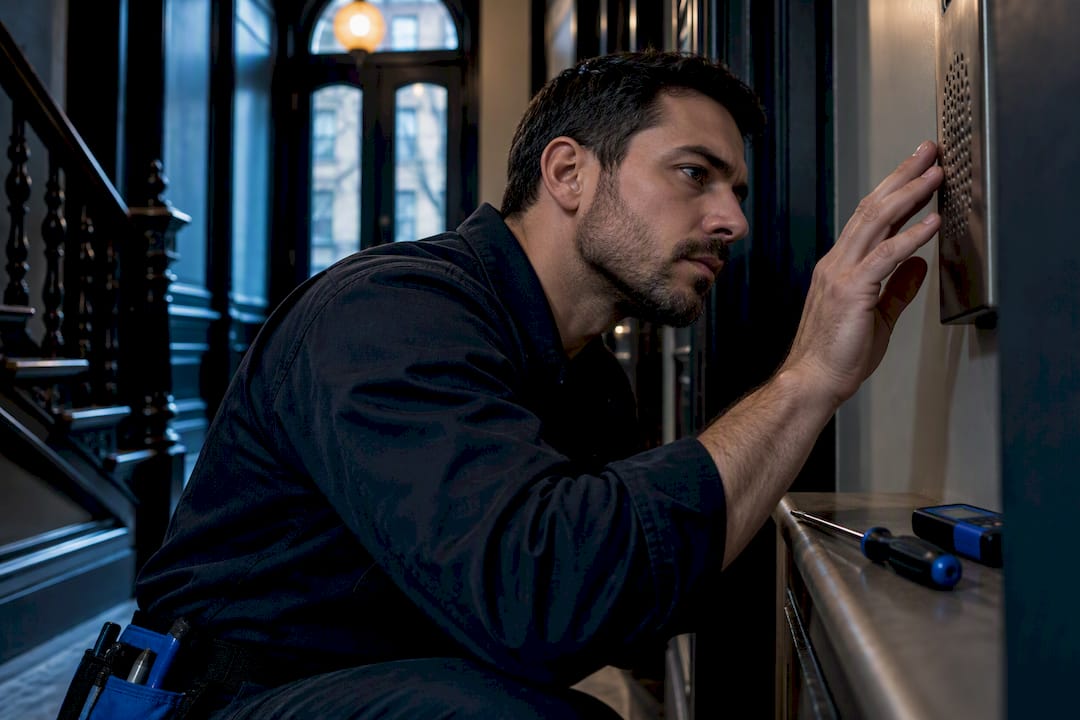
Welcome to a practical guide that answers one of the most common (and most misunderstood) security questions: how many security cameras are actually needed? Whether you’re protecting a home, managing an apartment building, or planning a security camera layout in NYC, the real challenge isn’t buying more cameras—it’s knowing where to place them and how to plan proper coverage. Too few cameras leave dangerous blind spots, while too many can waste money without improving safety. In this guide, we’ll break down how to determine the right number of security cameras based on property type, camera placement, and smart coverage planning, so you can make informed decisions that actually protect people, property, and peace of mind.
The number of security cameras needed depends on the size of the property, the number of entry points, and coverage requirements. Most homes need 2–6 cameras, while apartment buildings typically require 8–20 or more cameras, depending on entrances, common areas, and layout. Proper camera placement and coverage planning are more important than the total number of cameras.
How Many Security Cameras Are Typically Needed?
When people search for how many security cameras are needed, they are usually looking for a quick, practical answer they can trust. While there is no single number that fits every property, there are well-established ranges based on real-world security planning. These estimates help set expectations, but they should always be adjusted based on layout, entry points, and risk areas rather than square footage alone.
General Camera Count Estimates by Property Type
The following ranges reflect what is commonly recommended by security professionals after evaluating typical properties. These numbers assume thoughtful camera placement and basic coverage planning, not random installation.
- Small Home (2–4 cameras): Most small homes can achieve solid security coverage by focusing on the main entry points, such as the front door, back door, and driveway or garage area. In many cases, one interior-facing camera may be added for common areas if needed, but exterior coverage usually delivers the most value.
- Medium Home (4–6 cameras): Medium-sized homes often require additional cameras to cover multiple exterior access points, side yards, and detached garages. Interior cameras may also be used to monitor main living areas or stairways, especially if there are multiple floors or frequent visitors.
- Apartment Building (8–20+ cameras): Apartment buildings require a significantly higher number of cameras due to shared spaces and multiple access points. Common areas such as entrances, hallways, stairwells, elevators, parking areas, and package rooms all factor into the total count. Larger buildings or properties with complex layouts may need more than 20 cameras to achieve effective coverage.
Why Square Footage Alone Is Not Enough
A common mistake is assuming that larger properties automatically need more cameras based purely on size. In practice, square footage is one of the least reliable indicators of how many security cameras are needed.
What matters more is how people move through the space and where security risks actually exist.
- Entry Points Matter More Than Size: A compact property with multiple doors, shared entrances, or fire exits may require more cameras than a larger space with limited access points.
- Risk Areas Drive Camera Needs: Parking areas, loading zones, mailrooms, and rear entrances typically require dedicated coverage regardless of how large or small the building is.
- Layout Influences Coverage Efficiency: A well-designed layout may allow a single camera to cover multiple critical areas, while a poorly designed layout can require additional cameras to eliminate blind spots.
Using Estimates as a Starting Point, Not a Rule
These camera count ranges are best used as a starting framework rather than a final decision. Two properties of similar size can have very different security needs based on usage, traffic patterns, and environmental factors. This is why experienced security planning focuses first on camera placement and coverage strategy, then adjusts the total number of cameras accordingly.
Understanding these typical ranges makes it easier to plan realistically, avoid overbuying equipment, and ensure that security efforts are focused where they matter most. In the next section, we will look more closely at the specific factors that determine how many security cameras a property actually needs, including entry points, risk areas, and camera capabilities.
Key Factors That Determine How Many Security Cameras You Need
Determining how many security cameras are needed is less about hitting a specific number and more about understanding the unique characteristics of the property you are protecting. In real-world security planning, camera count is a result of thoughtful assessment, not guesswork. Factors like property type, access points, risk areas, camera capabilities, and the surrounding environment all work together to shape an effective and efficient security setup. When these elements are evaluated properly, you end up with coverage that feels intentional rather than excessive or inadequate.
Property Type
The type of property plays a foundational role in deciding how many security cameras are required. Different buildings create different risks, traffic patterns, and coverage challenges.
- Single-Family Home:
A single-family home typically requires fewer cameras because access points are limited and movement patterns are predictable. Coverage usually focuses on exterior doors, garages, and one or two key outdoor areas. Interior cameras may be added for specific concerns, but most homes can achieve solid security with a small, well-placed system. - Multi-Unit Apartment Building:
Apartment buildings demand more cameras due to shared spaces and multiple access points. Common areas such as entrances, hallways, stairwells, and parking zones all need consideration. The goal is not to monitor residents, but to create accountability and visibility in shared spaces where incidents are more likely to occur. - Mixed-Use Buildings:
Mixed-use properties introduce additional complexity by combining residential and commercial activity. These buildings often require separate coverage strategies for retail spaces, residential entrances, and service areas. Camera placement must account for higher foot traffic and longer operating hours, which typically increases the overall camera count.
Number of Entry and Exit Points
Every way in or out of a building represents both a security priority and a potential blind spot if left uncovered. Entry and exit points often determine the baseline number of cameras needed before additional coverage is considered.
- Doors:
Main and secondary doors should always be covered, as they are the most common access points. Cameras positioned here are most effective when they clearly capture faces rather than just movement. - Garages:
Garages are frequently overlooked but often serve as indirect entry points. Whether attached to a home or part of a shared parking structure, garages benefit from cameras at vehicle entrances and pedestrian access doors. - Fire Exits:
Fire exits are designed for safety but can be misused if not monitored. Cameras placed outside these exits help deter unauthorized access without interfering with emergency use. - Side and Rear Entrances:
Side and rear entrances are attractive to trespassers because they are less visible from the street. Covering these areas reduces opportunities for unnoticed entry and balances overall coverage.
High-Risk Areas
Beyond entrances, certain areas consistently present higher risk due to limited visibility, increased activity, or reduced oversight. These spaces often justify additional cameras.
- Parking Lots:
Parking areas experience frequent vehicle and pedestrian movement, making them common locations for incidents. Cameras here should prioritize wide visibility while still allowing identification of people and vehicles. - Hallways:
In apartment buildings, hallways act as connectors between units and exits. Strategic coverage can help document activity without needing a camera on every floor corner. - Lobbies:
Lobbies serve as transition points between public and private spaces. A single well-placed camera can often cover a large area while reinforcing a sense of security for residents and visitors. - Trash Areas:
Trash and recycling zones are surprisingly common trouble spots. Poor lighting and low traffic make them attractive for misuse, so targeted coverage can be very effective. - Roof Access:
Roof access points are often ignored but can pose safety and liability risks. Cameras here help monitor unauthorized access without needing continuous supervision.
Field of View and Camera Quality
Camera technology directly affects how many units are required. Higher-quality cameras with appropriate fields of view can reduce the total number needed when used correctly.
- Wide-Angle vs Narrow-Angle:
Wide-angle cameras cover more area but may sacrifice detail at a distance. Narrow-angle cameras capture clearer detail but cover less space. Choosing between them depends on whether the priority is broad awareness or detailed identification. - Overlapping Coverage:
Some overlap is beneficial, especially in critical areas like entrances. Overlapping views provide backup if one camera fails and help capture incidents from multiple angles. - Avoiding Blind Spots:
Blind spots usually result from poor planning rather than too few cameras. Careful placement and testing of camera angles prevent gaps that could otherwise require unnecessary additional cameras.
Local Environment
The surrounding environment influences both risk level and camera performance, making it an important part of coverage planning.
- Crime Rate:
Areas with higher crime rates may justify more comprehensive coverage, particularly around entrances and shared spaces. In lower-risk areas, fewer cameras may still provide adequate security. - Foot Traffic:
High foot traffic increases the likelihood of incidents and the need for visibility. Buildings near busy streets, transit hubs, or commercial zones often require additional cameras to manage activity. - Lighting Conditions:
Poor lighting can limit camera effectiveness. In some cases, improving lighting reduces the need for extra cameras, while in others, specialized low-light cameras are necessary to maintain coverage.
Bringing all of these factors together allows you to move beyond generic camera counts and toward a security plan that makes sense for the property itself. By understanding how property type, access points, risk areas, camera capabilities, and the local environment interact, you can make informed decisions that balance coverage, cost, and effectiveness. In the next section, this foundation will be used to explore how these principles apply specifically to apartment buildings and their unique security needs.
How Many Cameras Are Needed for a Typical Apartment Building?
When planning apartment building cameras, the most accurate recommendations come from real-world property assessments, not generic formulas. The number of cameras needed depends on building size, resident traffic, access points, and how shared spaces are actually used day to day. The goal is consistent coverage that improves safety and accountability without creating unnecessary complexity or cost.
Small Apartment Buildings (Under 10 Units)
Small apartment buildings typically require 6 to 10 security cameras to achieve effective coverage. While these buildings have fewer units, a single weak access point can impact every resident, making thoughtful placement essential.
- Main Entrance: This camera should be positioned to clearly capture faces as people enter and exit. Eye-level placement and proper lighting are more important than wide coverage here.
- Rear Entrance: Side or rear doors are common targets for unauthorized access. These entrances should receive the same quality of coverage as the front door.
- Hallways: Interior hallways benefit from cameras placed at key junctions or near exits. One camera per floor is often enough when positioned correctly.
- Parking Areas: Coverage should focus on entry and exit paths rather than individual parking spaces, helping capture vehicle movement and pedestrian activity.
In smaller buildings, fewer cameras with strong angles and clear image quality often outperform larger systems with poor placement.
Mid-Size Apartment Buildings (10–50 Units)
Mid-size apartment buildings usually need 10 to 20 cameras, depending on layout complexity and shared amenities. These buildings experience higher foot traffic and more varied movement patterns, which increases the need for strategic coverage.
- Elevators: Cameras inside elevator cabs or positioned at elevator lobbies help document high-traffic movement and reduce incidents without compromising privacy.
- Stairwells: Stairwell cameras should monitor entry and exit points rather than continuous stair movement, focusing on access control.
- Mail and Package Areas: Package rooms and mail areas are frequent targets for theft, making them a high-priority camera location.
- Multiple Entrances: Buildings with more than one entry point require consistent coverage across all access doors to avoid security gaps.
Based on on-site evaluations, mid-size buildings benefit most from coverage planning that mirrors actual resident behavior rather than relying solely on architectural layouts.
Large Apartment Buildings (50+ Units)
Large apartment buildings generally require 20 or more cameras and a structured security strategy. At this scale, cameras are part of a broader system that supports building operations and risk management.
- Zoning: Dividing the property into security zones such as residential floors, parking structures, and amenities helps maintain consistent coverage and simplifies monitoring.
- Monitoring Rooms: Centralized monitoring areas allow staff or management to review footage efficiently and respond faster to incidents.
- Maintenance Access Points: Mechanical rooms, basements, and service corridors are critical but often overlooked areas that require camera coverage to prevent unauthorized access.
- High-Traffic Common Areas: Lobbies, gyms, lounges, and other shared spaces need broader coverage due to higher usage and increased liability concerns.
As apartment buildings increase in size and complexity, determining how many cameras are needed becomes a planning exercise rather than a guessing game. Once the right camera count is established, the next step is designing a layout that turns coverage into a cohesive, effective security system.
Security Camera Layout Basics: Placement Matters More Than Quantity
When planning a security system, many people focus on how many cameras to install instead of how those cameras are positioned. In practice, a well-designed security camera layout almost always outperforms a larger system with poor placement. The goal is not to blanket a property with cameras, but to capture clear, usable footage in the areas that matter most. Understanding layout fundamentals helps prevent wasted equipment, blind spots, and the false sense of security that comes from cameras that record video but fail to deliver actionable evidence.
Why Poor Placement Leads to Wasted Cameras
Security cameras only provide value when they capture meaningful, identifiable footage. Poor placement often results in cameras that are technically working but practically useless.
- Limited identification value: Cameras positioned too high or too far away often record movement without capturing clear facial details, reducing the usefulness of the footage.
- Blind spots and gaps: Without intentional layout planning, critical transition areas like entrances and exits can remain uncovered.
- False sense of security: A high camera count can look impressive but still fail to protect the property if footage cannot be used to identify people or events.
An effective security camera layout prioritizes visibility and clarity over sheer quantity.
Common Security Camera Placement Mistakes
Many placement problems stem from rushed installations or copying layouts that do not match the property’s design. These mistakes are common in both residential and apartment building environments.
Cameras Placed Too High
Mounting cameras excessively high is a frequent mistake, especially in an effort to keep them out of reach or out of sight.
- Poor facial visibility: High-mounted cameras often capture the tops of heads rather than faces.
- Reduced image detail: Greater distance from the subject can limit clarity, even with high-resolution cameras.
- Lower investigative value: Footage may be less useful for identifying individuals or supporting incident reviews.
Overlapping Coverage
Some overlap is useful, but excessive overlap wastes cameras and storage without improving security.
- Redundant footage: Multiple cameras capturing the same angle do not add meaningful coverage.
- Neglected priority zones: Overlapping views can leave other high-risk areas without coverage.
- More complex monitoring: Reviewing footage becomes harder when several cameras show nearly identical scenes.
Ignoring Lighting Angles
Lighting conditions directly affect image quality, yet they are often overlooked during planning.
- Glare and washout: Cameras aimed at bright lights or sunlight can produce unusable footage.
- Poor night performance: Inadequate lighting can limit clarity even with night-vision features.
- Inconsistent visibility: Changing light conditions throughout the day can impact reliability.
Best Practices for an Effective Security Camera Layout
A strong security camera layout focuses on capturing clear, reliable footage where it matters most. These principles apply across homes, apartment buildings, and mixed-use properties.
Entry-First Strategy
Entrances and exits should always be the foundation of any layout plan.
- Primary access points: Front doors, rear doors, and side entrances should receive top priority.
- Secondary exits: Fire exits, garages, and service doors are often overlooked but frequently used.
- Face-focused angles: Cameras should be positioned to capture faces as people enter or leave.
Cross-Coverage for Critical Areas
Cross-coverage uses complementary angles to reduce blind spots without unnecessary duplication.
- Supporting viewpoints: One camera can confirm what another records from a different angle.
- Improved context: Multiple perspectives help clarify movement and behavior.
- System resilience: If one camera is obstructed or fails, another still provides coverage.
Clear Facial Capture Zones
The most valuable security footage shows who was present, not just that someone passed through.
- Face-level positioning: Cameras should be mounted at heights that naturally capture faces.
- Controlled distances: Placement should allow enough detail for identification without excessive zoom.
- Consistent framing: Entry zones should be predictable so faces are reliably captured.
Understanding the Role of Security Camera Layout
Security camera layout is the backbone of an effective surveillance system. It determines how cameras work together, how efficiently coverage is achieved, and whether footage is actually useful when incidents occur. A thoughtful layout ensures that every camera has a purpose and contributes to real security rather than inflating camera counts.
With these layout fundamentals in place, it becomes easier to adapt planning to more complex environments. The next section explores how these principles translate to dense, high-traffic properties and what changes when designing a security camera layout for NYC buildings.
Security Camera Layout In NYC: Special Considerations
Planning a security camera layout in NYC requires a different mindset than designing systems for suburban homes or newer commercial buildings. New York City properties come with physical, legal, and practical constraints that directly affect how cameras should be placed and how many are actually effective. NYC buildings are dense, heavily trafficked, and often decades old, which means security planning needs to reflect real-world conditions, not ideal ones.
NYC Building Challenges
Many NYC properties were not designed with modern surveillance systems in mind. Understanding these challenges upfront helps prevent poor placement decisions and coverage gaps later.
- Limited Space:
Hallways, lobbies, and entryways in NYC buildings are often narrow, which limits camera angles and mounting options. Cameras must be positioned carefully to capture usable footage without obstructing movement or creating distorted views. - Older Infrastructure:
Pre-war and mid-century buildings may have concrete walls, outdated electrical systems, or limited wiring access. These factors can restrict camera placement and influence whether wired, wireless, or hybrid systems make the most sense. - Shared Entrances:
Many apartment buildings have a single main entrance used by residents, guests, delivery drivers, and service providers. This creates high traffic density and makes entrance coverage one of the most critical parts of the security camera layout. - High Foot Traffic:
NYC buildings experience constant movement throughout the day and night. Cameras must be positioned to capture faces clearly without being overwhelmed by motion alerts or obstructed by crowd flow.
Legal And Privacy Considerations
Security camera layout in NYC must follow strict privacy expectations. Proper placement protects residents while avoiding legal and ethical issues.
- Avoiding Cameras Inside Apartments:
Cameras should never be installed inside individual apartments or positioned to view into private living spaces. Even accidental visibility through doors or windows can create serious privacy concerns. - Common Areas Only:
Cameras should focus on shared spaces such as entrances, hallways, lobbies, and mechanical rooms. These areas provide security value while remaining compliant with privacy standards. - Signage Best Practices:
Clear signage informing residents and visitors that video surveillance is in use helps build transparency and trust. Signs should be visible at building entrances and other monitored areas.
Typical NYC Apartment Camera Layout
While every building is different, most effective security camera layouts in NYC follow similar coverage priorities based on risk and access points.
- Street-Facing Entrance:
This is the highest priority camera location. Cameras should capture faces at eye level as people enter and exit, not just record general movement. - Vestibules:
Small entry vestibules benefit from interior cameras that provide a second angle of identification, especially when exterior views are obstructed by lighting or weather conditions. - Elevators:
Elevator cameras help monitor traffic between floors and can be critical during incidents. Placement should avoid excessive ceiling height that reduces facial clarity. - Basement And Boiler Rooms:
Basements often house mechanical equipment and secondary entrances. These low-traffic areas are common targets for unauthorized access and should not be overlooked. - Roof Access:
Roof doors are frequently forgotten but provide a direct access point to the building. Cameras here help prevent unauthorized entry and improve overall coverage completeness.
A well-planned security camera layout in NYC balances visibility, privacy, and practicality. By accounting for building limitations, legal expectations, and real-world usage patterns, property owners can create a system that actually improves safety rather than just adding equipment. In the next section, we’ll look at how camera placement and coverage planning work together to eliminate blind spots and maximize protection.
Sample Camera Layout Scenarios (Visual Descriptions)
Seeing how camera placement works in real buildings makes security planning far more practical than abstract advice. The following scenarios reflect common property types and show how experienced professionals think about camera count, placement, and coverage planning in real-world conditions. These examples are meant to guide decision-making, not replace a site-specific assessment. In many cases, sketching these layouts on a floor plan or simple diagram can make blind spots and coverage gaps easier to identify before installation.
Scenario 1: 6-Unit Walk-Up
Small walk-up buildings may seem straightforward, but poor placement can quickly create blind spots. The goal is to cover all access points and shared spaces without installing unnecessary cameras.
Number of Cameras:
A typical 6-unit walk-up usually requires 5 to 7 security cameras to achieve reliable coverage.
Where They’re Placed:
- Front Entrance Camera: Positioned to clearly capture faces of anyone entering or exiting the building.
- Rear or Side Exit Camera: Covers secondary access points that are often used less frequently but present higher risk.
- Lobby or Vestibule Camera: Monitors activity immediately after entry, where incidents often occur.
- Stairwell Camera: Placed at the base or top of the stairwell to track movement between floors.
- Basement or Utility Area Camera: Protects storage rooms, laundry areas, or building systems if accessible.
Why Those Locations Matter:
- Access Control: Entrances and exits are the most common points of unauthorized entry.
- Movement Tracking: Stairwells and lobbies show how individuals move through the building.
- Asset Protection: Basements and utility areas often house valuable or critical infrastructure.
Scenario 2: 25-Unit Mid-Rise
Mid-rise apartment buildings introduce higher foot traffic and more shared spaces, which increases the importance of coverage planning. Strategic placement helps balance security needs with system efficiency.
Number of Cameras:
Most 25-unit mid-rise buildings need between 12 and 18 cameras, depending on layout and amenities.
Where They’re Placed:
- Main Building Entrance: Captures all primary resident and guest access with clear facial visibility.
- Secondary Entrances: Covers side or rear doors used by residents or staff.
- Lobby Camera: Monitors visitor activity, loitering, and package movement.
- Elevator Lobby or Elevator Interior Cameras: Tracks vertical movement between floors.
- Select Hallway Cameras: Focused on high-traffic floors or access-critical areas rather than every level.
- Parking Area Cameras: Covers vehicle entry points and pedestrian paths.
- Package or Mail Room Camera: Protects high-theft-risk areas.
Why Those Locations Matter:
- Traffic Visibility: High-use areas are where most incidents occur.
- Accountability: Elevators and lobbies provide clear timelines of movement.
- Loss Prevention: Package rooms and parking areas are common targets for theft or vandalism.
Scenario 3: Mixed-Use NYC Building
Mixed-use buildings combine public commercial spaces with private residential areas, making zoning and separation essential. Security camera layout in NYC buildings must also account for heavy foot traffic and older construction.
Number of Cameras:
Most mixed-use NYC buildings require 18 to 30 or more cameras, depending on size and access complexity.
Where They’re Placed:
- Street-Level Commercial Entrance Cameras: Monitor storefront access and sidewalk-facing activity.
- Residential Entrance Camera: Separates tenant access from public commercial traffic.
- Lobby and Vestibule Cameras: Tracks transitions between public and private spaces.
- Elevator and Stairwell Cameras: Controls vertical movement between commercial and residential floors.
- Service and Delivery Area Cameras: Monitors vendor access and after-hours activity.
- Basement or Mechanical Room Cameras: Protects building systems and restricted areas.
- Roof Access Camera: Secures an often-overlooked entry point.
Why Those Locations Matter:
- Zone Separation: Prevents unauthorized movement between commercial and residential areas.
- Public Interaction Control: Street-facing cameras deter incidents and provide visibility.
- Infrastructure Security: Mechanical and roof areas are critical but frequently ignored.
These scenarios show how camera placement and coverage planning work together to create effective security without excess equipment. Visualizing these layouts on diagrams or floor plans often makes it easier to spot blind spots and optimize camera angles early. With these examples in mind, the next section will explore common mistakes people make when planning camera layouts and how to avoid them.
Common Mistakes People Make When Deciding How Many Cameras They Need
Even with good intentions, many people make avoidable mistakes when planning a security camera system. These issues usually stem from skipping strategy and focusing on hardware too early. Understanding where things often go wrong can help you avoid wasted money, poor coverage, and a false sense of security.
Buying Cameras Before Planning the Layout
Purchasing cameras before planning the layout is one of the most frequent and costly mistakes. Without a clear placement strategy, it becomes difficult to determine how many cameras are truly needed or whether the selected cameras are appropriate for the space.
- Lack of coverage strategy: Cameras are installed reactively instead of intentionally, which often leaves blind spots at entrances, corners, or transition areas.
- Incorrect camera selection: Without knowing mounting locations and distances, people may choose cameras with the wrong lens type, resolution, or field of view.
- Unnecessary spending: Cameras may end up unused, poorly positioned, or replaced later once layout problems become obvious.
A simple walkthrough of the property or a review of floor plans before purchasing equipment can prevent these issues and lead to a far more effective camera layout.
Over-Focusing on Quantity Instead of Coverage
It is common to assume that installing more cameras automatically improves security. In reality, coverage quality matters far more than camera count.
- Redundant coverage: Multiple cameras may end up recording the same area while other critical zones remain unmonitored.
- Missed high-risk areas: Entry points or access routes can be overlooked when the focus is on adding cameras rather than planning coverage zones.
- System complexity: Larger systems are harder to monitor, manage, and maintain without necessarily delivering better security.
A smaller number of well-placed cameras often provides better protection than a larger system with poorly planned coverage.
Ignoring Maintenance and Storage Requirements
Security cameras require ongoing attention after installation. Failing to plan for maintenance and video storage can reduce system effectiveness over time.
- Limited storage capacity: High-resolution video consumes storage quickly, which can result in overwritten footage or unexpected costs.
- Maintenance oversight: Cameras may need cleaning, adjustment, or software updates to maintain image quality and reliability.
- System failures going unnoticed: Without routine checks, cameras may stop recording or lose clarity without immediate detection.
Planning for long-term maintenance and storage ensures the system continues to function as intended.
Forgetting the Role of Lighting Conditions
Lighting conditions directly affect how usable security footage will be. Ignoring lighting during planning can result in unclear or unusable video.
- Low-light challenges: Cameras placed in dark areas may struggle to capture detail without proper night vision or supplemental lighting.
- Glare and backlighting issues: Bright lights, reflections, or direct sunlight can obscure faces and important details.
- Changing light throughout the day: Areas that look clear during daylight may become difficult to monitor at night if lighting changes are not considered.
Evaluating lighting conditions during both day and night helps ensure consistent, reliable camera performance.
How to Decide the Right Number of Cameras for Your Property (Step-by-Step)
Choosing the right number of security cameras is not about guessing or following a generic formula. It is a practical decision that comes from understanding how your property is used, where risks exist, and what you want your security system to achieve. Following a clear, step-by-step process helps you avoid blind spots, reduce unnecessary cameras, and build a system that delivers real value instead of just visual coverage.
Map All Entry And Exit Points
The first step is identifying every possible way someone can enter or leave the property. These access points are the backbone of any effective security camera plan.
- Primary entrances: Front doors, main lobbies, and reception areas should always be covered because they handle the highest volume of traffic and provide the best opportunity to capture clear, usable footage.
- Secondary access points: Side doors, rear entrances, garages, and service entrances are commonly used during off-hours and are frequent targets for unauthorized access.
- Emergency exits: Fire exits and stairwell doors may not be used daily, but monitoring them helps prevent misuse and ensures accountability when they are accessed.
Mapping entry and exit points ensures that your security strategy focuses on real vulnerabilities rather than random placement.
Identify High-Risk Zones
After mapping access points, the next step is identifying areas where security incidents are more likely to occur. High-risk zones often vary by property type but follow consistent patterns.
- High-traffic areas: Lobbies, hallways, and shared spaces benefit from monitoring due to constant movement and frequent interactions.
- Low-visibility spaces: Basements, storage rooms, and mechanical areas often lack natural visibility and are easy to overlook without dedicated coverage.
- Outdoor exposure points: Parking lots, alleys, and building perimeters are common locations for theft, vandalism, and unauthorized activity.
Focusing cameras on high-risk zones helps maximize security impact without spreading coverage too thin.
Decide Your Coverage Goals
Before selecting cameras, it is important to define what you want the footage to accomplish. Different goals require different placement strategies and camera counts.
- Identification: If the goal is to identify individuals, cameras must be positioned to capture faces clearly rather than wide, distant views.
- Monitoring: For observing general activity in hallways or parking areas, wider-angle views provide better situational awareness.
- Deterrence: Visible cameras placed in strategic locations can discourage unwanted behavior even if they are not capturing detailed close-up footage.
Clear coverage goals prevent overbuying equipment that looks impressive but does not produce useful results.
Choose The Right Camera Types
The type of camera you choose directly affects how many cameras you need. Selecting the right equipment can reduce the total number required while improving overall coverage.
- Wide-angle cameras: These cover larger areas and are ideal for open spaces like lobbies, parking areas, and shared common spaces.
- Fixed-lens cameras: Best suited for entrances and exits where consistent framing and clear identification are more important than wide coverage.
- Low-light or night-vision cameras: Essential for areas with poor lighting, helping maintain visibility without adding extra cameras to compensate for darkness.
Matching camera types to specific locations allows you to achieve better coverage with fewer devices.
Adjust For Budget Without Sacrificing Security
Budget limitations are common, but they should guide prioritization rather than weaken essential coverage.
- Prioritize critical areas: Entry points and high-risk zones should always be fully covered before adding cameras to lower-risk spaces.
- Plan for scalability: Choose systems that allow you to add cameras later as needs change or budgets increase.
- Balance quality and quantity: Fewer high-quality cameras often provide more usable footage than many low-quality cameras with limited clarity.
This approach ensures that budget decisions lead to smarter planning instead of security gaps.
Quick Checklist Before Finalizing Your Camera Count
- Entry points covered: Every door and access point has a clear and intentional camera view.
- High-risk areas identified: Cameras are focused on zones with the highest likelihood of incidents.
- Coverage goals defined: Each camera has a specific purpose tied to identification, monitoring, or deterrence.
- Camera types matched to locations: Equipment selection supports efficient and effective coverage.
- Budget aligned with priorities: Essential security needs are met before expanding coverage.
By following this step-by-step process, you can confidently determine how many security cameras your property actually needs without guesswork or overcomplication. With a clear plan in place, the next step is understanding how to bring those cameras together into a cohesive layout that delivers consistent, reliable coverage across the entire property.
Planning security cameras shouldn’t feel like guesswork. If you want a setup that eliminates blind spots, avoids overbuying equipment, and actually fits your property, our team can help. Visit our website to get expert guidance, proven layouts, and security solutions designed around real-world buildings—not generic advice. Take the next step toward smarter, more effective security today.
FAQs: How Many Security Cameras Are Needed
- How many security cameras are needed for a home?
Most homes need between 2 and 6 security cameras, depending on the number of entry points, property size, and areas that require coverage, such as doors, garages, and backyards. - How many security cameras are needed for an apartment building?
Apartment buildings typically need anywhere from 8 to 20 or more cameras. The exact number depends on entrances, hallways, elevators, parking areas, and overall building layout. - Is it better to have more cameras or better camera placement?
Better camera placement is more important than having more cameras. Strategically placed cameras provide stronger coverage and reduce blind spots without unnecessary equipment. - What areas should security cameras cover first?
Priority areas include main entrances, rear exits, parking lots, lobbies, hallways, elevators, stairwells, and package or mail rooms. - How do I plan security camera coverage properly?
Start by mapping all entry points and high-traffic areas, then plan camera angles to avoid blind spots. Coverage planning focuses on visibility and overlap only where necessary. - What is the best security camera layout for apartment buildings?
The best layout focuses on entrances first, followed by shared common areas. Cameras should be positioned to capture faces clearly while respecting privacy laws. - Are there special considerations for security camera layouts in NYC?
Yes. NYC buildings often have limited space, shared entrances, and high foot traffic. Cameras must be placed in common areas only and comply with privacy regulations. - Can too many security cameras cause problems?
Yes. Too many cameras can increase costs, create redundant footage, complicate monitoring, and provide little added security if placement is poor. - Do security cameras need to cover every hallway?
Not always. Hallways with high traffic or access to exits are higher priority. Coverage planning helps determine which hallways truly need cameras. - Should I get a professional assessment to decide how many cameras I need?
A professional assessment can help identify blind spots, optimize camera placement, and prevent overspending, especially for apartment buildings or complex properties.
Conclusion
When it comes to deciding how many security cameras are needed, the most effective approach is always rooted in strategy, not sheer quantity. Adding more cameras without a clear plan rarely improves security and often leads to unnecessary costs, cluttered footage, and overlooked blind spots. Thoughtful camera placement, intentional coverage planning, and a well-designed layout consistently outperform guesswork or over-installation, especially for homes and apartment buildings where entry points and common areas matter most. By focusing on where cameras provide real visibility and value rather than how many can be installed, property owners can achieve better protection, clearer footage, and long-term efficiency. And if there’s any uncertainty in the planning process, a professional assessment often saves money and frustration in the long run, making it a smart next step before moving forward.