
Closed-circuit television, known in the security industry as CCTV, is defined as a video surveillance system that continuously records and transmits footage to a designated monitor or storage device. The role of CCTV in common area security covers three core functions: deterring criminal activity, detecting incidents as they occur, and preserving evidence for legal or operational use. Research shows that visible cameras reduce opportunistic property crimes by 15% to 50%, making CCTV one of the most cost-effective security investments available to property managers, homeowners, and business owners. Understanding how to deploy, manage, and comply with regulations around CCTV separates a system that genuinely protects a property from one that only looks like it does.
How does CCTV deter and reduce crime in common areas?
CCTV deters crime primarily through the psychological effect it has on potential offenders. When a person considering a crime sees a visible camera, the perceived risk of identification and prosecution rises sharply. Studies show that 60% of convicted burglars chose a different target after spotting a camera. That behavioral shift is the foundation of CCTV’s deterrent value.
The impact is especially strong in parking structures. Camera networks in parking lots can cut property crime by roughly 40% to 50%. Property crimes, including vehicle break-ins, package theft, and vandalism, are the category most consistently reduced by visible surveillance. These are opportunistic offenses, and cameras remove the opportunity.
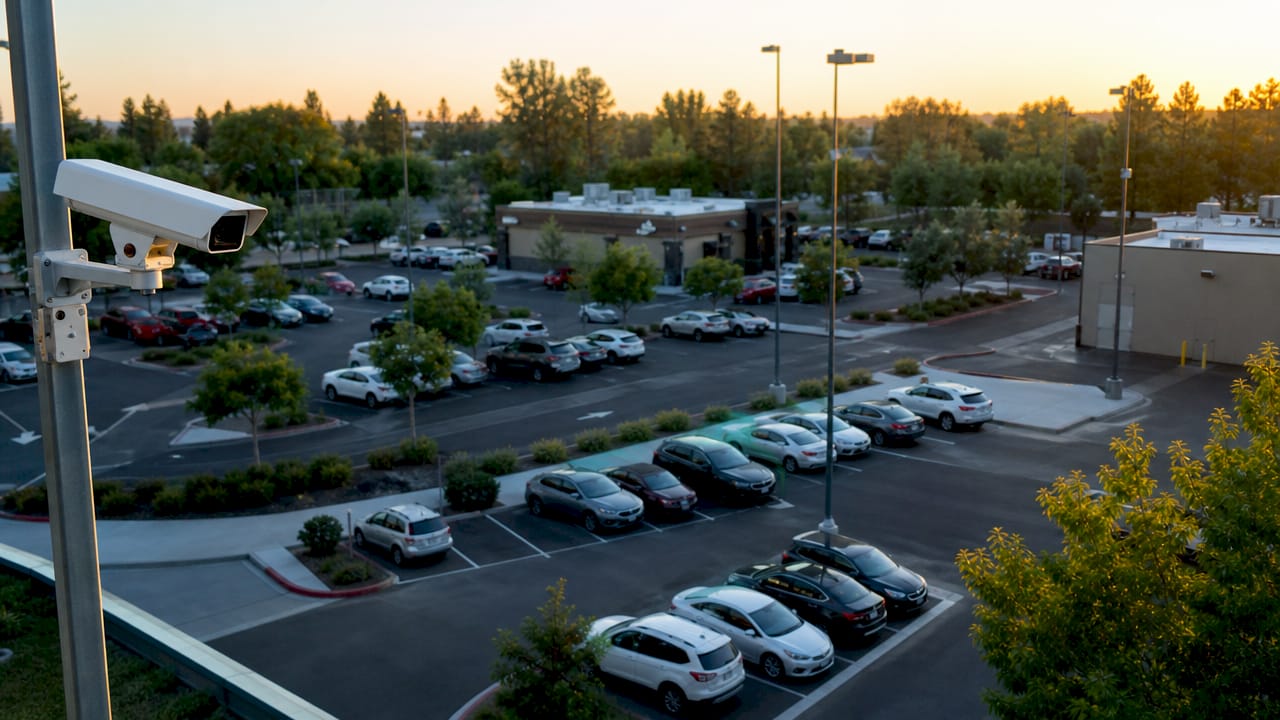
Deterrence alone, however, does not tell the full story. Passive monitoring reduces crime by approximately 1%, while active monitoring combined with security patrols raises deterrence up to 34%. That gap is significant. A camera recording to an unwatched server provides far less protection than one connected to a monitored control room or a remote monitoring service.
Pro Tip: Pair CCTV with access control systems and intruder alarms. Visible cameras at entry points signal to would-be offenders that the entire property is actively managed, not just passively recorded.
What are the legal and privacy considerations of installing CCTV in common areas?
CCTV surveillance in communal spaces is legally permitted in most jurisdictions, but placement and notification rules vary by state and municipality. Property managers who skip the legal groundwork risk fines, lawsuits, and damaged tenant relationships.
HOA boards and landlords generally have the authority to install cameras in lobbies, parking lots, hallways, and stairwells. These are areas where residents and visitors have no reasonable expectation of privacy. The legal line is clear: cameras may never point into private units, bathrooms, locker rooms, or any space where a person reasonably expects to be unobserved.
Key legal obligations for property managers include the following:
- Post visible signage at all camera locations. Most states require notice that surveillance is in use.
- Notify residents in writing before installation, particularly in HOA communities where governing documents may require a vote.
- Limit camera angles so they do not capture the interior of private units, even partially through windows or doorways.
- Store footage securely and restrict access to authorized personnel only. Many states have data protection rules governing who may view recorded footage.
- Consult local ordinances before installation. State laws on consent and data retention differ, and some cities impose stricter rules than state law requires.
Improper camera placement may violate privacy laws and generate resident complaints that are difficult to resolve after the fact. Reviewing placement plans with a licensed security professional and, when necessary, a property attorney protects you before installation rather than after.
What operational benefits does CCTV provide beyond security?
CCTV does more than prevent crime. Property managers use footage daily for operational tasks that have nothing to do with criminal activity. Modern CCTV systems support remote verification of deliveries, monitoring of cleanliness in shared spaces, and confirmation that emergency exits remain unobstructed.
These operational uses translate directly into tenant satisfaction. Tenants increasingly list building security as a top factor when choosing an apartment. A well-documented, visible security system signals that management takes the property seriously. That perception supports tenant retention and can justify higher rents in competitive markets.
Additional operational benefits include:
- Insurance advantages. Consulting your insurance carrier before installation can lead to lower premiums. Carriers often require footage retention of at least 30 days and documented maintenance logs as conditions for any discount.
- Dispute resolution. When residents disagree about an incident in a shared hallway or parking area, recorded footage provides an objective record. Surveillance footage is often the most reliable evidence in disputes, and its absence makes resolution substantially harder.
- Liability protection. If a slip-and-fall or property damage claim is filed against your building, footage from the incident date can confirm or refute the claim quickly.
Pro Tip: Keep a maintenance log for every camera. Date-stamped records of cleaning, testing, and repairs demonstrate due diligence and satisfy most insurance carrier requirements.
How to design and implement an effective CCTV system for common areas?
Effective CCTV design starts with a documented, context-specific security plan. Quality of placement and monitoring matters more than the quantity of cameras installed. A property with 40 poorly positioned cameras provides weaker coverage than one with 12 cameras placed at verified high-risk points.
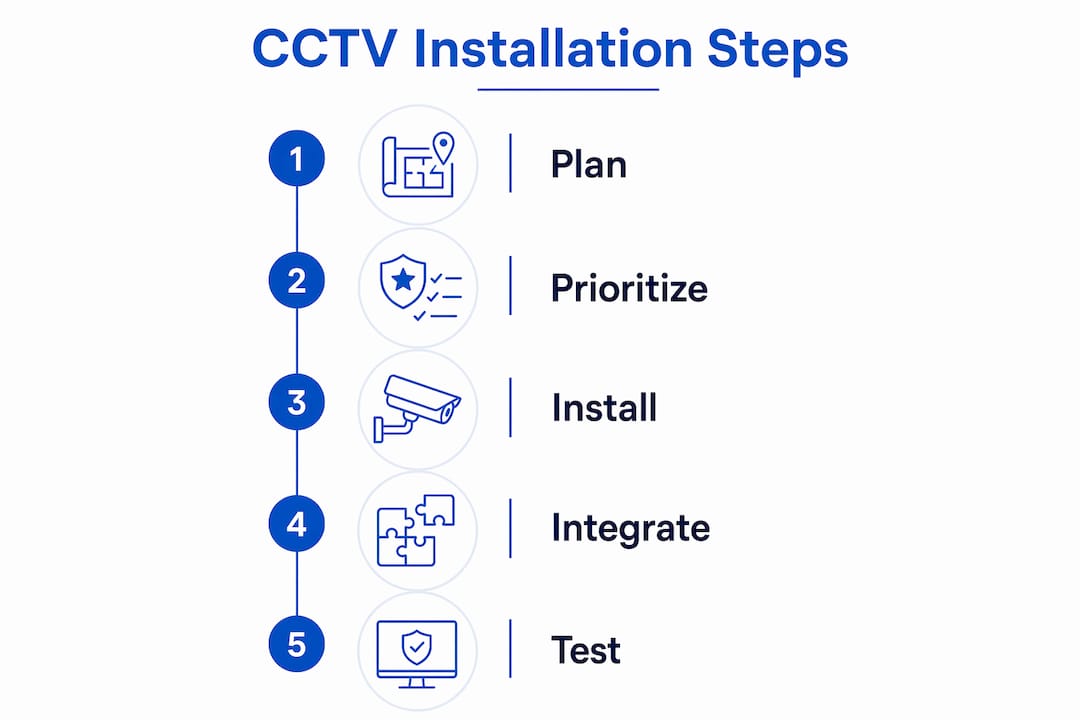
Prioritize high-traffic and high-risk locations
Target entrances, main exits, elevator lobbies, stairwells, parking structures, and mail rooms first. These are the locations where incidents are most likely to occur and where footage is most frequently needed. Secondary coverage can extend to laundry rooms, rooftop access points, and loading docks depending on the property type.
Use corridor mode for narrow hallways
Standard cameras capture a wide horizontal frame. In a narrow corridor, most of that frame captures walls rather than people. Corridor mode cameras rotate the sensor 90 degrees, producing a tall vertical image that fills the hallway from floor to ceiling. This maximizes pixel density on faces and figures, which is critical for usable evidence footage.
Integrate with access control and alarms
CCTV is the backbone of site security but is only effective when integrated with access control systems and intruder alarms, and operated by trained staff. A camera that records an unauthorized entry is useful. A camera linked to an access control system that triggers an alert the moment an unauthorized entry occurs is far more effective.
The table below compares two common implementation approaches for property managers evaluating system scope:
| Feature | Basic camera-only setup | Integrated security system |
|---|---|---|
| Crime deterrence | Moderate | High |
| Real-time incident response | Limited | Active |
| Evidence quality | Variable | Consistent |
| Insurance eligibility | Partial | Full |
| Operational management support | Minimal | Extensive |
Test systems regularly and train staff
A camera that has been offline for two weeks provides no protection and no footage. Schedule monthly system checks, confirm recording is active, and verify that storage capacity has not been exceeded. Train any staff or monitoring personnel on retrieval procedures so footage is accessible quickly when needed.
What challenges and limitations should property managers consider?
CCTV is not a standalone solution, and treating it as one is the most common mistake property managers make. Technology alone cannot guarantee safety. Effective surveillance relies on clear operational protocols for monitoring, footage retrieval, and incident response. Without those protocols, cameras become a false sense of security rather than a genuine one.
Specific limitations to plan for include:
- Spontaneous and violent crime. CCTV deters premeditated, opportunistic offenses most effectively. It has limited impact on impulsive or emotionally driven incidents, which often occur too quickly for any intervention.
- Unmonitored systems. A camera recording to an unwatched server deters some crime through visibility alone, but it cannot trigger a response during an active incident. Properties that cannot staff active monitoring should consider remote monitoring services.
- Maintenance gaps. Cameras with dirty lenses, misaligned angles, or full storage drives produce footage that is legally and operationally useless. Regular maintenance is not optional.
- Resident acceptance. Some tenants will raise privacy concerns even when cameras are placed legally and appropriately. Proactive communication, clear signage, and a written surveillance policy reduce complaints and build trust.
Security-systems.nyc: professional CCTV solutions for your property
Security-systems brings over 5,000 completed installations and a 1-year warranty to every CCTV project we handle for residential and commercial properties across New York City. Our licensed and insured technicians design systems around your property’s specific layout, traffic patterns, and compliance requirements, not a generic template.
Whether you manage a multi-unit residential building, a commercial office space, or a mixed-use property, Security-systems provides system design, professional installation, and guidance on footage retention and insurance compliance. We also integrate security camera systems with access control and intercom solutions for properties that need coordinated protection across every entry point. Contact Security-systems today to schedule a consultation and get a security plan built for your property.
FAQ
How does CCTV reduce crime in common areas?
Visible CCTV cameras raise the perceived risk of identification for potential offenders, which deters opportunistic crimes. Research shows that 60% of convicted burglars selected a different target after spotting a camera.
Are CCTV cameras legal in apartment hallways and lobbies?
Yes. Property owners and HOA boards may legally install cameras in lobbies, hallways, and parking areas. Cameras are prohibited in spaces where residents have a reasonable expectation of privacy, such as bathrooms or inside private units.
How long should CCTV footage be retained?
Insurance carriers often require a minimum of 30 days of stored footage as a condition for coverage discounts. Local laws may set different minimums, so confirm requirements with your carrier and local ordinances.
Does CCTV work without active monitoring?
Passive CCTV deters some crime through visibility, but active monitoring combined with security patrols raises deterrence significantly. Properties relying solely on recorded footage without live oversight should consider a remote monitoring service.
What common areas benefit most from CCTV coverage?
Entrances, parking structures, elevator lobbies, stairwells, and mail rooms are the highest-priority locations. Camera networks in parking structures alone can reduce property crime by 40% to 50%.
Key Takeaways
CCTV reduces common area crime most effectively when cameras are visible, actively monitored, and integrated with access control and alarm systems rather than deployed as a standalone recording tool.
| Point | Details |
|---|---|
| Deterrence requires visibility | Visible cameras reduce opportunistic property crimes by 15% to 50% when placed at high-traffic entry points. |
| Active monitoring multiplies impact | Passive recording deters minimally; active monitoring combined with patrols raises deterrence up to 34%. |
| Legal placement protects you | Cameras belong in lobbies, hallways, and parking areas, never in spaces with a reasonable expectation of privacy. |
| Corridor mode improves evidence quality | Rotating the sensor 90 degrees in narrow hallways maximizes pixel density and produces clearer facial footage. |
| Integration delivers full protection | Combining CCTV with access control, intruder alarms, and documented maintenance logs satisfies both security and insurance requirements. |